






Introduction
In 2017, astronomers detected an unprecedented object traveling through our solar system. Named ‘Oumuamua (Hawaiian for “scout” or “messenger”), this interstellar visitor sparked intense scientific curiosity and public fascination. Its unusual characteristics led to theories ranging from a natural asteroid to an extraterrestrial probe. This article explores what we know about Oumuamua, why it’s unique, and the ongoing debate about its origins.
Key Characteristics of Oumuamua
‘Oumuamua’s discovery by astronomers using the Pan-STARRS1 telescope in Hawaii marked the first confirmed detection of an interstellar object passing through our solar system. Below are key details about its observed features:
| Feature | Observation Details |
|---|---|
| Shape | Elongated, cigar-like (800m x 80m) |
| Speed | ~315,000 km/h |
| Rotation | Tumbling motion |
| Surface Characteristics | Dry, non-reflective surface |
| Acceleration | Exhibited unexplained acceleration |
These unique properties immediately distinguished ‘Oumuamua from typical asteroids or comets.
Why Is Oumuamua Special?
‘Oumuamua’s discovery raised questions for several reasons:
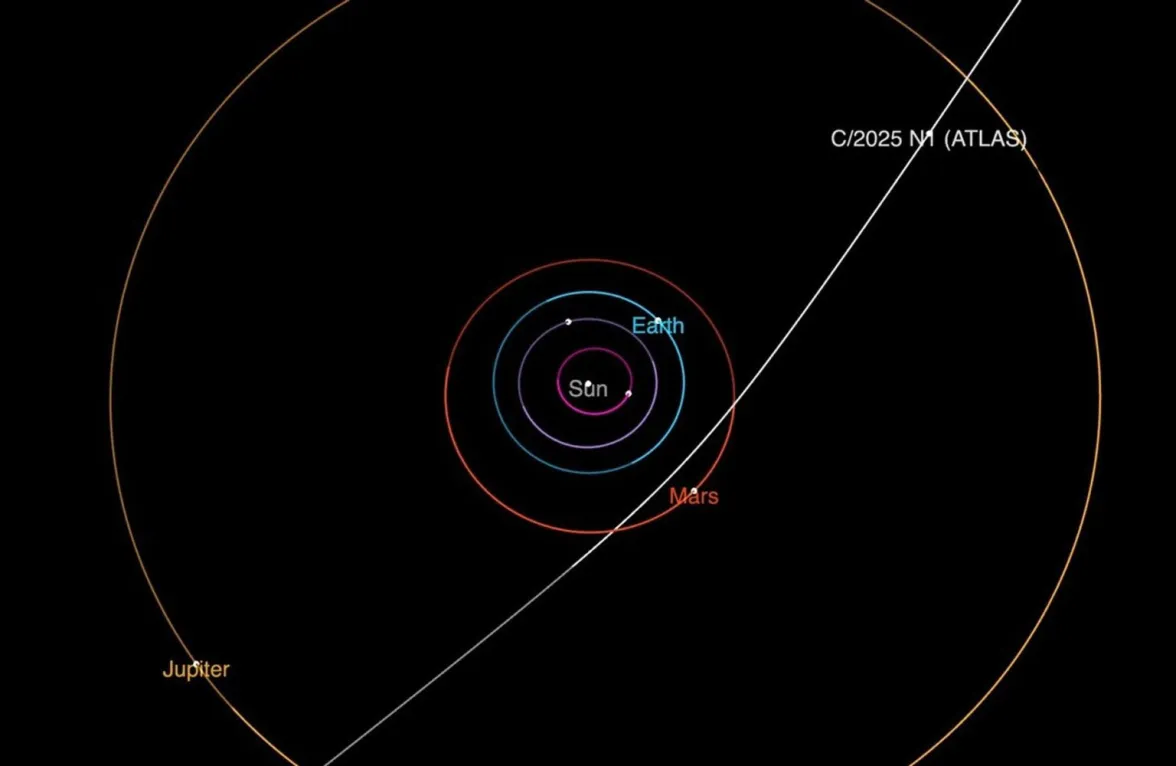
- Interstellar Origin: Its hyperbolic trajectory indicated that it came from outside the solar system, making it the first known object of this kind.
- Unusual Shape and Rotation: Its elongated form and erratic tumbling motion defied expectations for natural celestial bodies.
- Lack of a Cometary Tail: Unlike comets, ‘Oumuamua lacked visible gas emissions, even while accelerating unexpectedly away from the Sun.
Theories Explaining Oumuamua’s Origins
Scientists have proposed several theories to explain Oumuamua’s origins and behavior:
1. Natural Asteroid or Comet
One prominent theory is that ‘Oumuamua is a natural asteroid or comet ejected from its home star system during a planetary formation event. Celestial bodies can be flung into interstellar space through gravitational interactions with larger planets. If ‘Oumuamua were such an object, its elongated shape could result from repeated collisions or tidal stretching caused by gravitational forces.
However, its acceleration without a visible gas trail remains a puzzle. Normally, comets accelerate when sublimating ice forms a gaseous tail. The absence of such a visible trail makes this theory difficult to confirm without further evidence.
2. Hydrogen Iceberg Hypothesis
Proposed by Dr. Darryl Seligman and Dr. Gregory Laughlin, this theory suggests ‘Oumuamua is composed of solid hydrogen. In this model, the object could slowly release hydrogen gas as it warms from sunlight exposure, generating enough thrust to explain its unusual acceleration without producing a visible tail.
This hypothesis explains the object’s apparent lack of dust and outgassing but faces a challenge: hydrogen icebergs are theorized to be extremely rare and fragile. Surviving the journey through interstellar space without disintegrating seems improbable, raising doubts about this model’s viability.
3. Nitrogen Iceberg Hypothesis
Dr. Jennifer Bergner and Dr. Darryl Seligman suggested ‘Oumuamua could be a fragment of nitrogen ice from a Pluto-like exoplanet. This theory offers a compelling explanation for the object’s reflectivity and ability to accelerate without traditional cometary outgassing.
Nitrogen ice behaves differently than water ice and could sublimate efficiently without producing visible gas trails. Such nitrogen fragments might result from collisions or planetary impacts, sending icy shards into space. While still speculative, this theory aligns well with known chemical processes and astrophysical models.
4. Alien Probe Hypothesis
Dr. Avi Loeb, a Harvard astrophysicist, proposed that ‘Oumuamua could be an artificial object, possibly a light sail driven by radiation pressure from starlight. He argued that its unusual acceleration, combined with its thin, flat shape inferred from its light curve, aligns with the behavior of a solar sail — a hypothetical spacecraft propulsion system that uses light radiation for thrust.
Loeb’s theory remains controversial. Critics argue there is insufficient evidence to claim ‘Oumuamua is artificial, especially given the lack of radio signals or technological markers. However, Loeb’s argument highlights the importance of remaining open to unconventional explanations in astrophysical research.
5. Dust Bunny Hypothesis
This theory posits that ‘Oumuamua is a loosely bound structure of interstellar dust particles. Such an object would be extremely low in density but could still achieve the observed acceleration due to solar radiation pressure.
While the “dust bunny” hypothesis is plausible, the durability of such a fragile object surviving interstellar travel remains questionable. Additionally, the object’s tumbling motion seems inconsistent with a delicate structure composed of loosely packed material.
6. Fragment of a Dismantled Celestial Body
Another hypothesis suggests ‘Oumuamua could be a fragment from a larger celestial object, such as a planet or asteroid that broke apart due to tidal forces or a collision event. During a planetary encounter, gravitational stress can tear apart bodies, creating shards that travel through space.
This theory helps explain ‘Oumuamua’s unusual shape and chaotic tumbling rotation. However, this model does not fully account for its unexpected acceleration without traditional cometary activity.
Oumuamua and the Scientific Debate
While the alien probe theory captured public attention, most astronomers lean toward natural explanations. However, Oumuamua’s unusual behavior continues to challenge traditional models. Dr. Avi Loeb’s work has encouraged greater openness to unconventional ideas in astrophysics.
Key Research and Findings
- Pan-STARRS1 Telescope Discovery: The initial identification of ‘Oumuamua in October 2017.
- Spectroscopy Data Analysis: Showed no significant emission lines, ruling out typical comet behavior.
- Light Curve Analysis: Suggested its elongated shape and tumbling motion.
- Acceleration Data: Remains one of the most puzzling observations, fueling alternative theories.
What does the name ‘Oumuamua mean?
The name ‘Oumuamua comes from Hawaiian, meaning “scout” or “messenger,” reflecting its role as the first known interstellar object to pass through our solar system.
Why is Oumuamua considered unusual?
Its elongated shape, tumbling motion, unexplained acceleration, and lack of a visible tail make it distinct from known asteroids and comets.
Could ‘Oumuamua be an alien probe?
While Dr. Avi Loeb proposed this theory, most scientists favor natural explanations. The lack of radio signals or technological signatures weakens the alien probe hypothesis.
Where did ‘Oumuamua come from?
Its trajectory suggests an origin from the general direction of the Lyra constellation, but no definitive home system has been identified.
Will ‘Oumuamua return to our solar system?
No, ‘Oumuamua’s hyperbolic orbit means it is leaving the solar system permanently.
Conclusion
‘Oumuamua remains a fascinating enigma in astronomy. Its discovery has challenged scientific assumptions about interstellar objects and sparked new theories about cosmic phenomena. Whether it was a hydrogen iceberg, nitrogen fragment, or even an artificial probe, ‘Oumuamua has expanded our understanding of what may exist beyond our solar system. As telescopes improve, the search for similar objects will continue to reveal more about the universe’s mysteries.