






Planet Nine Discovery 2025: Astronomers Finally Catch Elusive Giant in Motion
For decades, the hunt for a mysterious outer solar system object has captivated astronomers, and now, the Planet Nine Discovery 2025 may be the breakthrough moment. A research team has detected a faint yet moving object across two major infrared surveys, potentially bringing humanity closer than ever to confirming a ninth planet orbiting our Sun.
Table of Contents
What Is Planet Nine and Why It Matters
The concept of Planet Nine was first proposed to explain strange gravitational patterns observed in the orbits of trans-Neptunian objects (TNOs). Unlike Pluto, which was downgraded to a dwarf planet in 2006, Planet Nine is hypothesized to be a massive object, perhaps five to ten times Earth’s mass, orbiting far beyond the Kuiper Belt.
The significance of confirming Planet Nine lies not only in completing our solar system’s map but also in reshaping how we understand planetary formation and migration.
The Planet Nine Discovery 2025: What Did Astronomers Find?
In what might become one of the most impactful astronomical findings of the decade, a team led by Terry Long Phan of National Tsing Hua University analyzed archived infrared data from two major space-based surveys:
- IRAS (Infrared Astronomical Satellite), 1983
- AKARI (Japanese infrared telescope), 2006
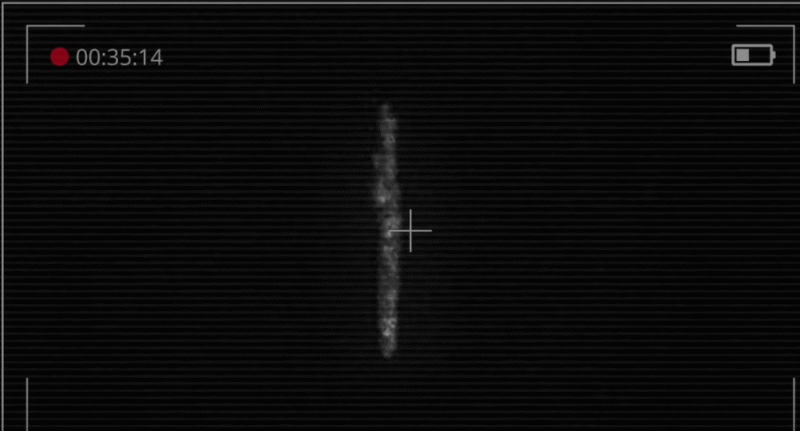
By comparing the same region of sky in these datasets, the team detected a faint object that exhibited noticeable movement, strongly suggesting it is orbiting our Sun.
This movement, albeit subtle, was consistent with a body located roughly 700 AU from Earth. For perspective, that’s about 65 billion miles away, far beyond Pluto.
Why the Planet Nine Discovery 2025 Is Different from Past Claims
Earlier candidates for Planet Nine have appeared only briefly in single datasets, making them difficult to verify. This 2025 discovery is different for several reasons:
- Dual Observation: The object was independently spotted in two separate infrared datasets over a 23-year interval.
- Infrared Signature: It shows a heat signature expected from a cold, massive object in the outer solar system.
- Orbital Motion: Its displacement is consistent with a distant, slow-moving planet in a highly elongated orbit.
This raises confidence that this isn’t just background noise or a passing object, but potentially the long-sought ninth planet.
The Characteristics of the Possible Planet Nine
Based on preliminary estimates, this newly observed object may be:
- 5 to 10 times more massive than Earth
- Composed largely of rock and ice
- Extremely cold (near absolute zero)
- Orbiting the Sun every 10,000 to 20,000 years
Its sheer distance and orbit place it in a region of the solar system that remains largely unexplored.
Tools Used in the Planet Nine Discovery
The breakthrough was made possible by combining historical data and modern analysis:
- Infrared Telescopes: IRAS and AKARI detected heat signatures that optical telescopes might miss.
- Image Differencing: By overlaying images taken decades apart, astronomers identified minute motion.
- Cross-Verification: Astrophysicists verified the data using orbital models that match gravitational predictions made in earlier simulations.
What’s Next? Confirming the Planet Nine Discovery
The object has yet to be visually confirmed by modern telescopes. However, the following observatories are being prepared to track it:
- Dark Energy Camera (Chile) – Offers powerful sky-scanning capability.
- Vera C. Rubin Observatory – Expected to revolutionize sky surveys with nightly all-sky coverage.
- Nancy Grace Roman Space Telescope – Will add deep-field infrared observations that can help determine mass and orbital path.
If Confirmed: What Planet Nine Means for Science
The implications of confirming Planet Nine go far beyond naming a new celestial body. It could:
- Validate gravitational models suggesting unseen mass in our solar system.
- Challenge existing theories of solar system formation.
- Explain the clustering of extreme trans-Neptunian objects (ETNOs).
- Offer insight into similar distant planets around other stars.
It may even lend credence to hypotheses about rogue planets or past planetary ejections from the inner system.
Could Planet Nine Be a Captured Exoplanet?
Some researchers have proposed a wild but scientifically plausible theory: Planet Nine may be a captured exoplanet. During the early days of our solar system, it’s possible that the Sun’s gravity snatched a wandering planet from a nearby star system.
This would explain its unusual orbit, distance, and potential composition.
Why It Took So Long to Spot
Detecting a planet at 700 AU is incredibly difficult. Here’s why:
- Dimming Light: Even massive objects are nearly invisible in visible light at those distances.
- Cold Temperatures: Without heat, thermal radiation is minimal.
- Slow Movement: A complete orbit can take tens of thousands of years, making motion hard to detect in short observational spans.
- Crowded Infrared Background: Infrared data is filled with noise from distant galaxies, dust clouds, and stars.
That makes the Planet Nine Discovery 2025 all the more remarkable.
Final Thoughts: Are We on the Brink of a New Planetary Era?
The idea of Planet Nine has long occupied a curious middle ground between science fiction and legitimate astrophysics. But the Planet Nine Discovery 2025 may be tipping the scales firmly toward reality.
If confirmed in the coming years, this discovery will not only rewrite textbooks, it will open a whole new frontier in solar system exploration.
FAQ
What is the Planet Nine Discovery 2025?
The Planet Nine Discovery 2025 refers to the detection of a moving object across two historical infrared surveys, suggesting it could be a massive, distant planet orbiting the Sun.
How far is Planet Nine from Earth?
It is estimated to be about 700 astronomical units (AU) from Earth—more than 65 billion miles away.
How does Planet Nine affect other objects in the solar system?
Its gravity may explain the strange, clustered orbits of trans-Neptunian objects (TNOs) and extreme Kuiper Belt bodies.
When will we confirm if it’s a planet?
Confirmation may come in the next few years via new observations from the Vera Rubin Observatory and other advanced telescopes.