




In a revolutionary discovery that promises to reshape our approach to lunar exploration, NASA-led scientists have confirmed that solar wind creates water on the Moon through a series of chemical reactions. This groundbreaking research, published in JGR Planets in 2025, not only enhances our understanding of lunar chemistry but also presents transformative possibilities for future crewed missions. The study confirms the long-held theory that solar wind hitting the lunar surface triggers chemical reactions producing hydroxyl and water molecules, a process with enormous implications for the Artemis program and humanity’s long-term presence beyond Earth.
Table of Contents
The discovery that solar wind creates water on the Moon represents a potential paradigm shift in how we approach resource utilization in space. As NASA prepares to return humans to the lunar surface through the Artemis missions, this newfound water source could dramatically reduce mission costs and increase operational capabilities by enabling astronauts to “live off the land” rather than depending entirely on supplies from Earth.

How Solar Wind Creates Water on the Moon: The Science Explained
Understanding the Solar Wind-Lunar Water Connection
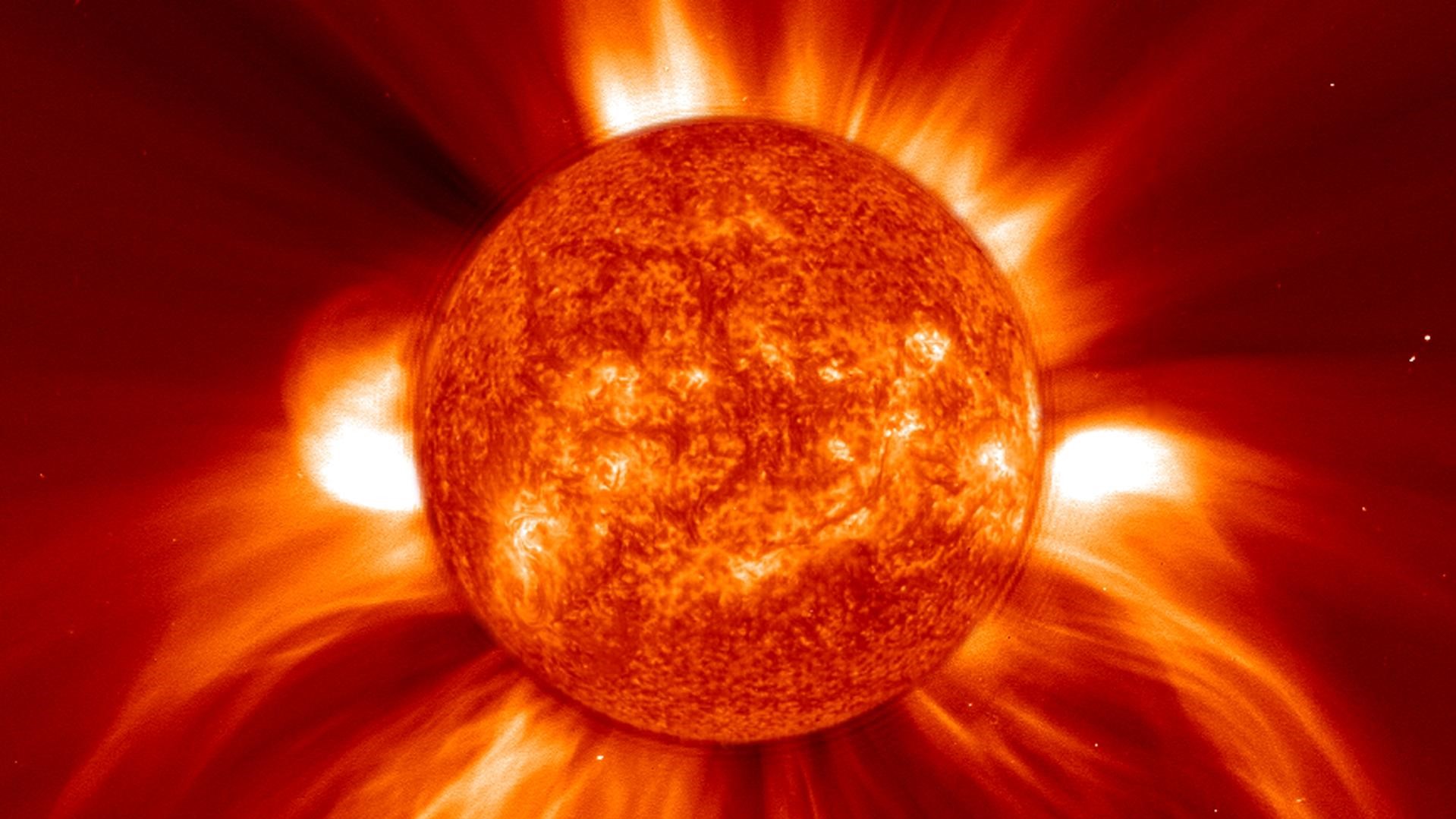
The solar wind represents one of the Sun’s most far-reaching influences across our solar system. This continuous stream of charged particles, primarily protons and electrons, emanates from the Sun’s corona and travels through space at extraordinary speeds exceeding one million miles per hour. Unlike Earth, which is shielded by its robust magnetic field and atmosphere, the Moon has no protection against solar wind, leaving its surface directly exposed to this constant bombardment of solar particles and so it is totally possible that solar wind creates water on the moon.
This direct exposure creates ideal conditions for lunar water formation. When high-energy protons from the solar wind strike the lunar surface, they combine with electrons in the soil to form hydrogen atoms. These newly created hydrogen atoms then migrate through the lunar regolith (the layer of loose material covering the Moon’s surface) until they encounter oxygen atoms present in common lunar minerals such as silica. This chemical marriage results in either hydroxyl (OH) molecules—a precursor to water, or complete water (H₂O) molecules.
The Chemical Process of Lunar Water Formation via Solar Wind
The precise mechanism of how solar wind creates water on the Moon follows this step-by-step process:
- Protons from the solar wind bombard the lunar surface at speeds exceeding one million miles per hour
- These protons capture electrons within the lunar regolith, transforming into neutral hydrogen atoms
- The hydrogen atoms migrate through the lunar soil material
- When these hydrogen atoms encounter oxygen bound in silicate minerals, they form bonds creating either hydroxyl (OH) or water (H₂O) molecules
- These molecules remain trapped within or just below the surface material
This elegant natural process effectively transforms the Moon’s sun-exposed surface into a water production facility powered entirely by solar energy, a remarkable system with profound implications for future exploration efforts.
NASA’s Methodical Investigation: Confirming Solar Wind Creates Lunar Water
Apollo Samples Prove Critical to Water Discovery
In a perfect demonstration of the enduring scientific value of the Apollo program, lunar samples collected by Apollo 17 astronauts in 1972 provided crucial evidence in confirming the fact that solar wind creates water on the moon. NASA scientists subjected these preserved lunar materials to laboratory tests that replicated the effects of solar wind exposure equivalent to approximately 80,000 years on the lunar surface.
Using a specialized particle accelerator to create an artificial “solar wind,” researchers bombarded the lunar dust samples and carefully measured the resulting chemical changes. Through spectroscopic analysis, they observed a significant drop in the reflectance spectrum in the infrared region, precisely where water molecules typically absorb energy. This spectral signature closely matched what scientists would expect to see if both hydroxyl and complete water molecules had formed in the samples, providing compelling evidence for the solar wind-water formation mechanism.
Daily Cycles Reveal Solar Wind’s Continuous Water Production
One of the most revealing aspects of the NASA study was the observation of daily cycles in the strength of water-related signals across the lunar surface. In certain regions, water signatures appear stronger during the cooler morning hours, gradually diminish as the surface heats up during the lunar day, and then intensify again as temperatures drop in the evening.
This cyclical pattern strongly indicates that solar wind creates water on the Moon throughout the day. As the surface temperature changes, water molecules alternate between remaining trapped in the regolith and becoming mobile enough to migrate deeper or even escape into space. This dynamic process reveals that lunar water formation is not a one-time event but an ongoing process that continually refreshes the Moon’s water inventory, a crucial insight for resource utilization planning.
Implications for the Artemis Program: Lunar Water as a Critical Resource
How Lunar Water Will Transform Artemis Missions
NASA’s Artemis program, which aims to establish a sustainable human presence on the Moon this decade, considers water resources among its most critical concerns. The confirmation that solar wind creates water on the Moon strengthens the case for the program’s emphasis on in-situ resource utilization (ISRU). This lunar water can serve multiple essential functions:
- Drinking water for astronauts after proper purification
- Radiation shielding material for habitats when frozen into ice blocks
- Oxygen for breathing when separated from hydrogen through electrolysis
- Rocket propellant production when split into hydrogen and oxygen
- Agricultural support for potential food production systems
The ability to access water created through solar wind interaction with the lunar surface could dramatically reduce the mass that needs to be launched from Earth, where every pound costs approximately $10,000 to transport to the Moon. This economic reality makes lunar water extraction potentially one of the most valuable processes for enabling long-term lunar exploration.
South Pole Landing Sites: Where Solar Wind Water Meets Frozen Deposits
The Artemis program has selected the Moon’s South Pole region as its primary target for human landing missions, and the distribution of water resources played a significant role in this decision. This region contains numerous permanently shadowed craters where temperatures remain below -250°F (-157°C), creating cold traps where water ice has accumulated over billions of years.
The new understanding of how solar wind creates water on the Moon complements these existing ice deposits. While permanently shadowed regions contain concentrated water ice, sun-exposed areas continuously receive new water molecules through solar wind interaction. This creates a complementary resource strategy: harvest concentrated ice from shadowed regions while potentially developing technologies to capture the more dispersed water being continually created by solar wind on the lunar surface.
Technical Challenges in Lunar Water Extraction and Processing
Methods for Extracting Solar Wind-Created Water
Accessing water created by solar wind on the Moon presents unique engineering challenges. Unlike concentrated ice deposits, solar wind-created water exists in extremely low concentrations, typically just parts per million, distributed throughout the upper few millimeters of lunar regolith. Several promising extraction techniques are under development:
- Thermal extraction: Heating regolith to 800-900°C to release water vapor that can then be condensed and collected
- Microwave processing: Using microwave radiation to selectively heat and extract water molecules from regolith
- Chemical processing: Employing reactants that can liberate bound hydroxyl groups from minerals
- Mechanical concentration: Processing large volumes of regolith to concentrate water-bearing materials before extraction
Each approach offers distinct advantages and challenges, with optimal solutions likely involving combinations of techniques tailored to specific lunar environments and mission requirements.
Energy Requirements for Water Extraction on the Moon
The energy cost of water extraction remains one of the most significant barriers to practical utilization of solar wind-created lunar water. Current estimates suggest extracting one kilogram of water from regolith containing parts-per-million concentrations could require 100-200 kilowatt-hours of energy, a substantial demand in the lunar environment.
Solar power provides an abundant energy source during the lunar day, but the approximately 14-Earth-day lunar night requires alternative power solutions for continuous operation. Nuclear power sources, like the Kilopower reactor being developed by NASA, could provide the consistent energy needed for water processing operations throughout the lunar day-night cycle. Balancing energy investment against water yield remains a critical equation in making lunar water extraction economically viable.
Global Distribution of Water Created by Solar Wind on the Moon
Mapping Solar Wind-Created Water Across the Lunar Surface
Remote sensing missions, including NASA’s Lunar Reconnaissance Orbiter (LRO), have provided considerable data about the distribution of water signatures across the lunar surface. While permanently shadowed regions near the poles show the strongest evidence for concentrated water ice, the mechanisms confirmed by the NASA study suggest that solar wind-created water should exist across the entire lunar surface exposed to the Sun.
This widespread distribution has profound implications for mission planning, as it potentially means water resources are not limited to the challenging environments of permanently shadowed craters. Future missions could access water resources at various lunar locations, expanding the viable landing sites for extended missions beyond the polar regions currently favored by the Artemis program.
Future Missions to Map Lunar Water Resources
Building on the confirmation that solar wind creates water on the Moon, space agencies are planning dedicated missions to map lunar water resources with unprecedented precision. Technologies such as:
- Neutron spectrometers that can detect hydrogen concentrations below the surface
- Infrared imaging systems capable of distinguishing water and hydroxyl signatures
- Mass spectrometers to directly sample and analyze volatile compounds
- Ground-penetrating radar to map subsurface ice deposits
These instruments will provide crucial data about where water exists, in what form, and at what concentrations. This knowledge will prove essential for optimizing future resource utilization strategies and landing site selections for missions intending to harvest lunar water created by solar wind.
Commercial Opportunities in Lunar Water Extraction
Emerging Private Sector Interest in Lunar Water
The confirmation that solar wind creates water on the Moon has catalyzed commercial interest in lunar resource extraction. Several private companies are developing technologies specifically designed to extract and process lunar water, seeing potential future markets in providing water-derived rocket propellant to government and commercial missions operating in cislunar space.
Companies like Astrobotic, Moon Express, and Blue Origin have expressed interest in lunar water utilization as part of their long-term business strategies. This commercial engagement represents one of the first potentially viable economic activities in a developing lunar economy, where water from solar wind could become a tradable commodity supporting transportation infrastructure beyond Earth orbit.
Economic Models for Lunar Water Utilization
For commercial lunar water extraction to become viable, operations must achieve costs lower than the alternative of launching water from Earth. Current launch costs of approximately $10,000 per pound establish the competitive threshold that lunar water processing must beat. As launch costs continue to decline with reusable rocket technology, this threshold becomes more challenging to meet.
Economic models suggest that the most viable initial market for lunar water will be as rocket propellant for spacecraft already operating in cislunar space. The high cost of lifting propellant out of Earth’s gravity well creates a price point that potentially makes lunar water economically attractive, even with the substantial investment required to establish extraction operations on the lunar surface.
Beyond Lunar Water: Additional Resources from Solar Wind
Helium-3: Another Solar Wind Gift to the Moon
The solar wind delivers more than just the hydrogen needed for water formation. It also implants other elements into the lunar regolith, including helium-3, an isotope rare on Earth but potentially valuable as a fuel for nuclear fusion. The same processes and technologies developed to extract solar wind-created water could be adapted to harvest helium-3, further enhancing the value proposition of lunar operations.
Some estimates suggest that the Moon holds over one million tons of helium-3, delivered over billions of years of solar wind bombardment. While commercial fusion using helium-3 remains speculative, it represents a potential long-term resource that, like water, arrives continuously via the solar wind and becomes incorporated into the lunar regolith.
Integrated Resource Utilization Systems
The most efficient approach to lunar resource utilization will likely involve integrated systems that extract multiple resources simultaneously from processed regolith. Such systems could separate water, oxygen, metals, and rare elements in a single processing chain, maximizing the return on the considerable energy investment required for extraction operations.
This holistic approach to resource utilization represents the frontier of sustainable space exploration architecture, where solar wind-deposited materials on the lunar surface become the foundation for an increasingly self-sufficient human presence beyond Earth.
Technological Innovations for Lunar Water Extraction
Current Prototype Technologies for Water Extraction
Several innovative technologies are currently under development specifically designed to extract water from lunar regolith. These range from relatively simple thermal approaches to more complex chemical processing systems. Thermal extraction methods involve heating regolith to temperatures exceeding 800°C to drive off water molecules, which can then be condensed and collected.
NASA’s RESOLVE (Regolith and Environment Science and Oxygen and Lunar Volatile Extraction) prototype represents one of the most developed systems for lunar water extraction. This integrated package includes capabilities to drill into the lunar surface, heat regolith samples, and analyze the released gases, providing both scientific data about water concentrations and demonstrating extraction technology. Similar systems could be adapted to process regolith exposed to solar wind, potentially on a continuous basis to harvest this slowly regenerating resource.
Energy Efficiency Innovations for Water Processing
The energy cost of water extraction remains one of the most significant barriers to practical utilization of solar wind-created water on the Moon. Recent innovations in thermal management could dramatically improve efficiency, including advanced heat recuperation systems that capture and reuse thermal energy that would otherwise be wasted.
Researchers are also exploring catalytic approaches that could lower the temperature required for extraction, potentially reducing energy requirements by 30-40%. These catalysts would facilitate the release of bound hydroxyl groups at lower temperatures, making the process of harvesting water from solar wind more energy-efficient and therefore more economically viable for both scientific and commercial operations.
The Future of Lunar Exploration with Solar Wind-Created Water
Transforming Mission Architectures with In-Situ Resources
The confirmation that solar wind creates water on the Moon represents a potential inflection point in how we design space missions. Future mission architectures will likely incorporate water harvesting as a fundamental capability rather than an experimental addition. This shift toward resource-centric mission design could enable longer durations, more ambitious objectives, and greater operational flexibility than would be possible with Earth-launched supplies alone.
As advanced technologies mature, missions could increasingly rely on lunar water for propellant production, life support, radiation shielding, and other applications, dramatically expanding what’s possible within the constraints of launch mass limitations. This resource-intensive approach represents a fundamental departure from the “bring everything you need” paradigm that has dominated space exploration since its beginnings.
Beyond the Moon: Solar Wind Water Throughout the Solar System
The principles and technologies developed to utilize solar wind-created water on the lunar surface will inform approaches to resource utilization throughout the solar system. Mercury, asteroids, and the moons of other planets, particularly those without substantial atmospheres, likely host similar water-creation mechanisms through solar wind bombardment.
From extracting water from Martian regolith to harvesting resources from asteroids, the lunar experience will serve as a crucial proving ground for sustainable exploration strategies. In this way, the humble chemical reaction between solar protons and lunar minerals may ultimately enable humanity’s expansion into the solar system, beginning with our closest celestial neighbor and extending to the broader frontiers of space.
Technical Glossary: Understanding Solar Wind and Lunar Water Terminology
Regolith: The layer of loose, heterogeneous material covering the bedrock of the Moon, consisting of dust, soil, broken rock, and other related materials.
Solar Wind: A stream of charged particles, primarily electrons and protons, flowing outward from the Sun through the solar system at speeds of about 400 kilometers per second.
Hydroxyl (OH): A chemical group consisting of one oxygen atom and one hydrogen atom, considered a precursor to water formation.
In-Situ Resource Utilization (ISRU): The practice of collecting, processing, storing, and using materials found at the location of a space mission rather than bringing them from Earth.
Artemis Program: NASA’s program to return humans to the Moon by 2026-2027, establish sustainable lunar exploration, and prepare for eventual human missions to Mars.
Permanently Shadowed Regions (PSRs): Areas, primarily in polar craters, that never receive direct sunlight and maintain extremely cold temperatures where volatiles like water can remain stable.
Spectroscopy: The study of the interaction between matter and electromagnetic radiation, used to identify materials based on how they absorb and emit light at different wavelengths.
Volatiles: Chemical elements and compounds with low boiling points that are readily vaporized, including water, carbon dioxide, ammonia, and methane.
Timeline: Key Developments in Lunar Water Research
1961-1972: Apollo program brings back lunar samples but operates under the assumption that the Moon is completely dry.
1994: NASA’s Clementine mission provides the first hints of potential water ice in permanently shadowed craters at the lunar poles.
1998: NASA’s Lunar Prospector mission detects hydrogen concentrations at the lunar poles consistent with water ice.
2008-2009: India’s Chandrayaan-1 mission, carrying NASA’s Moon Mineralogy Mapper, provides spectroscopic evidence of hydroxyl and water molecules across the lunar surface.
2009: NASA’s LCROSS mission impacts a permanently shadowed crater and confirms the presence of water ice.
2018: Researchers publish evidence of surface water ice in permanently shadowed regions using data from multiple missions.
2020: NASA confirms water molecules in sunlit regions of the lunar surface using SOFIA airborne observatory.
2025: NASA-led study confirms solar wind as a mechanism for creating water on the lunar surface.
2026-2027: Planned Artemis III mission to land astronauts at the lunar South Pole, with water resource utilization capabilities.
Comprehensive FAQ about Solar Wind Creating Water on the Moon
Q: So solar wind creates water on the Moon, but how much?
A: While exact quantities remain under study, current estimates suggest the solar wind creates water on the moon at very low concentrations, typically parts per million in the upper few millimeters of regolith across the lunar surface. However, given the Moon’s large surface area, the total amount produced over time becomes significant.
Q: Is water from solar wind immediately usable by astronauts?
A: No. Solar wind-created water on the Moon exists in extremely low concentrations and would require extraction and purification before use. It exists primarily as hydroxyl groups chemically bound to minerals or as dispersed water molecules, not as accessible liquid water or ice.
Q: How does this discovery affect the Artemis program?
A: The confirmation that solar wind creates water on the Moon strengthens the case for in-situ resource utilization as a key component of the Artemis program. It provides additional confidence that water resources exist not just in permanently shadowed regions but potentially across much of the lunar surface.
Q: Could similar processes create water on other airless bodies?
A: Yes. The process by which solar wind creates water on the moon likely occurs on other airless bodies exposed to the solar wind, including Mercury, asteroids, and some moons of other planets. This makes the findings relevant to resource utilization strategies throughout the solar system.
Q: How is solar wind-created water different from the ice at the lunar poles?
A: Polar ice represents concentrated deposits of frozen water, likely accumulated over billions of years from multiple sources and preserved in extremely cold permanently shadowed regions. Solar wind-created water exists at much lower concentrations but is more widely distributed across the lunar surface.
Q: How will astronauts extract water created by solar wind?
A: Astronauts will likely use specialized equipment to heat large quantities of lunar regolith, causing water molecules to vaporize. These water vapors would then be condensed into liquid form, collected, and purified. This process requires significant energy input but could provide a renewable water source since solar wind creates water on the Moon.
Q: Does Earth experience water creation from solar wind?
A: No. Unlike the Moon, Earth is protected by its magnetic field and atmosphere, which deflect and absorb most of the solar wind before it can reach the surface. This protection prevents the direct interaction between solar wind particles and Earth’s surface materials that creates water on the Moon.
Q: How was the solar wind-water connection discovered?
A: Scientists had theorized about the connection for years, but the definitive evidence came from laboratory experiments using Apollo lunar samples. By exposing these samples to simulated solar wind and measuring the resulting chemical changes, researchers confirmed that protons from solar wind could indeed combine with oxygen in lunar minerals to form water molecules.
Q: Will solar wind-created water be enough for future lunar bases?
A: While solar wind creates water on the Moon, the low concentration means it would require processing large volumes of regolith to extract meaningful quantities. Future lunar bases will likely use a combination of water sources, including polar ice deposits and solar wind-created water, depending on their location and specific needs.
Q: What instruments can detect solar wind-created water on the Moon?
A: Specialized spectroscopic instruments that detect infrared absorption at specific wavelengths can identify water and hydroxyl signatures. NASA’s Moon Mineralogy Mapper on the Chandrayaan-1 mission and the SOFIA airborne observatory have both detected signals consistent with water molecules on the lunar surface created by solar wind interaction.
Conclusion: The Transformative Potential of Solar Wind-Created Lunar Water
The discovery that solar wind creates water on the Moon bridges fundamental planetary science with practical space engineering, transforming our understanding of the lunar environment while simultaneously opening new possibilities for human exploration. This natural process, occurring continuously across the sunlit lunar surface, represents both an intriguing scientific phenomenon and a potential resource that could help enable humanity’s sustainable return to the Moon.
As we stand at the threshold of a new era of lunar exploration through the Artemis program, the knowledge that water forms continuously through solar wind interaction with the lunar surface will shape our approach to establishing a long-term human presence beyond Earth. The technology developed to extract and utilize this water will not only support lunar operations but will inform resource utilization strategies throughout the solar system.
The humble chemical reaction between solar protons and lunar minerals, a process occurring silently for billions of years, may ultimately become a cornerstone of humanity’s expansion into space, beginning with our closest celestial neighbor and extending to the broader frontiers of the solar system. In this way, the fact that solar winds creates water on the Moon represents far more than a scientific curiosity; it offers a promising path toward sustainable exploration of worlds beyond our own.