





Introduction: An Unusual Discovery Beyond Our Moon
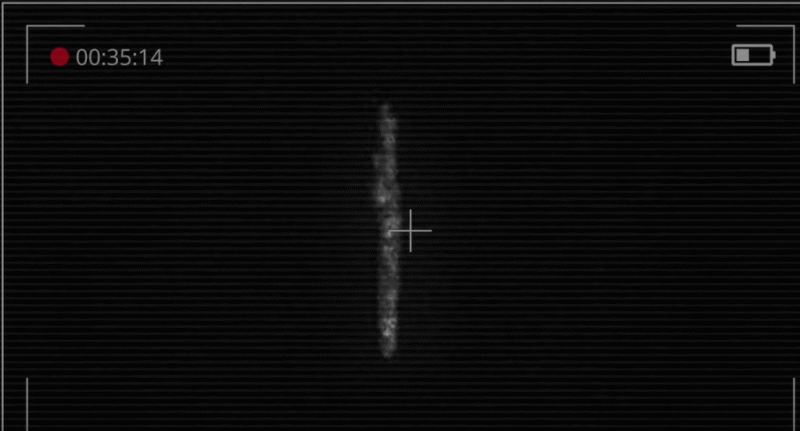
In the vast expanse of space surrounding our planet, scientists have discovered a mysterious orbiting object that has puzzled experts since 2019. Designated A10BMLZ, this object follows an extreme elliptical trajectory that takes it from just a few hundred kilometers above our atmosphere to beyond the Moon’s orbit. What makes it particularly fascinating is that it defies conventional categorization, astronomers have concluded it must be artificial in origin.
Table of Contents
The Bizarre Characteristics of A10BMLZ
The unusual behavior of A10BMLZ has left astronomers searching for explanations since its discovery by Hawaii’s Haleakala Observatory. It follows a retrograde orbit, moving in the opposite direction of Earth’s rotation, which would be highly inefficient for any human-made spacecraft. According to calculations, while several meters wide, it weighs less than one kilogram, giving it an extremely high area-to-mass ratio.
How This Object Challenges Scientific Understanding
A10BMLZ exhibits behavior that challenges conventional scientific understanding. Its unusual characteristics make it highly susceptible to solar radiation pressure, with photons from the sun easily altering its trajectory. Despite predictions that its unstable orbit would cause it to burn up within months of discovery, it has persisted in space for years, continuing its peculiar orbital dance around our planet.
Empty Trash Bag Objects: A Scientific Classification
The mysterious orbiting object falls into a category scientists have dubbed “Empty Trash Bag Objects” (ETBOs). As described by physicist Dr. Avi Loeb, ETBOs are:
“Fragments of space debris in near-Earth orbits that are pushed around by solar radiation pressure, similar to an empty lightweight trash bag tumbling in the wind.”
These objects are characterized by:
- High area-to-mass ratios
- Unpredictable orbital behavior
- Significant non-gravitational acceleration
- Susceptibility to solar radiation pressure
While many ETBOs are believed to be fragments from human space activities, the unusual retrograde orbit of A10BMLZ challenges this explanation.
Comparing A10BMLZ to ‘Oumuamua
Perhaps the most intriguing aspect of this mysterious orbiting object is its behavioral similarity to ‘Oumuamua, the first confirmed interstellar object detected passing through our solar system in 2017. Both exhibit:
- Unusual non-gravitational acceleration
- High area-to-mass ratios
- Tumbling motions
- Behavior consistent with being pushed by solar radiation
These shared characteristics have led some astronomers to propose that ‘Oumuamua might also have been an ETBO, albeit one of interstellar origin. The key difference appears to be the degree of control exhibited. While A10BMLZ changes trajectory frequently in unpredictable ways, ‘Oumuamua maintained a consistent tumbling rate throughout its solar system passage.
The Scientific Debate: Natural vs. Artificial Origins
The discovery of this mysterious orbiting object has intensified the scientific debate surrounding ‘Oumuamua’s nature. Conventional explanations for ‘Oumuamua have included it being a “dark comet“, a comet with an invisible tail. However, critics point out that if A10BMLZ is classified as artificial due to its solar radiation interaction, then ‘Oumuamua’s similar behavior should warrant the same consideration.
Potential Origins of Interstellar Objects
If A10BMLZ and possibly ‘Oumuamua are indeed artificial, where might they come from? Dr. Loeb has proposed several fascinating possibilities:
- Debris from Ancient Interstellar Probes: After billions of years traveling through interstellar space, micrometeorite bombardment and cosmic radiation could erode and break apart aging spacecraft, creating fragments with high area-to-mass ratios.
- Remnants of Megastructures: Pieces of theoretical megastructures like Dyson spheres could break apart as their host stars evolve, sending lightweight fragments into interstellar space.
- Artifacts from Past Visitations: Based on statistical models of galactic civilization development, some researchers have estimated that Earth may have been visited thousands of times throughout its history. This object could potentially be debris left behind from such visits.
The Retrograde Mystery of A10BMLZ
Perhaps the most perplexing aspect of this object is its retrograde orbit. Human-made spacecraft and satellites are almost universally launched in the same direction as Earth’s rotation to take advantage of the planet’s rotational velocity, saving significant amounts of fuel. Launching in a retrograde direction requires substantially more energy and would be highly inefficient.
This raises questions about its origin. If A10BMLZ is artificial but its orbit is inefficient for human spacecraft, what might explain its current trajectory? Possibilities include:
- It could be a fragment that changed orbital direction due to a collision
- Its current orbit might be the result of years of solar radiation pressure gradually altering its original path
- It could be of non-human origin, with its creators having different constraints or objectives
Technical Analysis of A10BMLZ’s Path
The orbital parameters of the mysterious orbiting object are truly extreme. Its orbit brings it as close as 600 kilometers from Earth’s surface at perigee and takes it out to 538,261 kilometers at apogee, approximately 1.4 times the average Earth-Moon distance.
This orbit isn’t stable in the long term. The object’s high susceptibility to solar radiation pressure means its trajectory changes continuously and unpredictably. Yet despite predictions of its imminent destruction, A10BMLZ has maintained its unusual orbit for years after its discovery.
Why A10BMLZ Challenges Scientific Classification
The mainstream scientific community has generally classified this object as likely being human-made space debris, despite the challenges in explaining its retrograde orbit. This conservative approach reflects the standard scientific principle that extraordinary claims require extraordinary evidence.
However, some researchers point out an apparent inconsistency in how similar objects are classified. The object 2020SO, which also exhibited acceleration from solar radiation pressure, was eventually identified as the Centaur upper stage from the 1966 Surveyor 2 lunar mission. Yet ‘Oumuamua, despite showing similar physical characteristics to known artificial objects, continues to be classified as natural.
The Search for Similar Objects
The discoveries of both A10BMLZ and ‘Oumuamua have prompted greater interest in finding similar objects. Advancements in survey telescopes and detection algorithms are increasing our ability to find small, fast-moving objects with unusual trajectories.
Current and upcoming projects like the Vera C. Rubin Observatory‘s Legacy Survey of Space and Time (LSST) will dramatically increase our capacity to detect and track unusual near-Earth objects, potentially leading to the discovery of more objects similar to A10BMLZ.
Media Coverage and Scientific Attention
Despite the potentially groundbreaking implications of this mysterious orbiting object, mainstream media coverage has been surprisingly limited. After initial reports in 2019, A10BMLZ largely faded from public discourse, a pattern similar to what happened with ‘Oumuamua after initial enthusiasm about its discovery.
This relative silence raises questions about why objects with potentially extraordinary implications don’t receive sustained scientific and media attention. Some researchers suggest that institutional biases against examining potential evidence of extraterrestrial technology may play a role in this apparent lack of follow-up.
Future Research Directions
Moving forward, several research approaches could help resolve the mystery of this object:
- Spectroscopic Analysis: Detailed spectroscopic observations could potentially reveal the object’s composition, helping determine whether it matches known spacecraft materials.
- High-Resolution Imaging: If the object makes a close approach to Earth, advanced telescopes might be able to resolve its shape, potentially revealing artificial features.
- Long-Term Trajectory Analysis: Continued tracking of the object’s orbit might reveal patterns in its behavior that could indicate whether it’s merely debris or something more complex.
Technical Glossary
- Empty Trash Bag Object (ETBO): Space debris characterized by high area-to-mass ratios that are significantly affected by solar radiation pressure
- Non-gravitational Acceleration: Acceleration of an object in space caused by forces other than gravity
- Retrograde Orbit: An orbit that moves in the opposite direction to the rotation of the body being orbited
- Perigee: The point in an orbit closest to Earth
- Apogee: The point in an orbit farthest from Earth
- Area-to-mass Ratio: The ratio between an object’s surface area and its mass, which determines its susceptibility to radiation pressure
- Interstellar Object: An astronomical object that originates from outside our solar system
FAQ: Frequently Asked Questions
Q: Could A10BMLZ be a piece of known human space debris? A: While it’s possible, its retrograde orbit makes this explanation problematic. Launching spacecraft in a retrograde direction requires significantly more fuel and would be highly inefficient for any known space mission.
Q: Why hasn’t A10BMLZ burned up in Earth’s atmosphere yet? A: Despite predictions that its unstable orbit would lead to atmospheric reentry within months of its discovery, the object’s extreme orbit takes it far beyond the Moon, potentially allowing it to maintain its trajectory for longer than initially expected.
Q: How is the mysterious orbiting object similar to ‘Oumuamua? A: Both objects exhibit non-gravitational acceleration consistent with solar radiation pressure effects, have high area-to-mass ratios, and show tumbling motions that have challenged conventional classification.
Q: If A10BMLZ is artificial, does that mean ‘Oumuamua was too? A: Not necessarily, but the similarities between the two objects suggest that if we classify one as artificial based on its physical characteristics, we should consider the same possibility for the other.
Chronological Timeline
2017 (October): ‘Oumuamua discovered by the Pan-STARRS telescope in Hawaii, becoming the first confirmed interstellar object detected passing through our solar system.
2019: The mysterious orbiting object A10BMLZ detected by the Haleakala Observatory in Hawaii, classified as an unusual “Empty Trash Bag Object” with an extreme elliptical orbit.
2019-2020: Initial predictions suggest A10BMLZ would likely reenter Earth’s atmosphere and burn up within months due to its unstable orbit.
2020: Object 2020SO discovered and initially classified as an asteroid, later identified as the Centaur upper stage from the 1966 Surveyor 2 lunar mission.
2023: Dr. Avi Loeb publishes further research suggesting connections between ETBOs and potential extraterrestrial technologies.
Present Day: A10BMLZ continues to orbit Earth in its unusual trajectory, defying early predictions of its demise.
Conclusion: The Ongoing Mystery
The story of this mysterious orbiting object and its potential connection to ‘Oumuamua illustrates a fascinating aspect of scientific discovery: sometimes the most intriguing findings are those that don’t fit neatly into our existing categories of understanding. While definitive proof of extraterrestrial technology remains elusive, objects like A10BMLZ challenge us to maintain an open mind about the possibilities.
Whether this mysterious orbiting object eventually proves to be exotic human space debris, a natural phenomenon we don’t yet understand, or something more extraordinary, its continued presence in Earth’s orbit reminds us that the space around our planet holds mysteries we are still working to unravel. As our detection capabilities improve and our understanding of orbital dynamics advances, we may find more mysterious orbiting objects that challenge our conventional explanations, each representing an opportunity to expand our knowledge of the cosmos.