





Beneath Malta: The Forgotten Depths of the Hypogeum
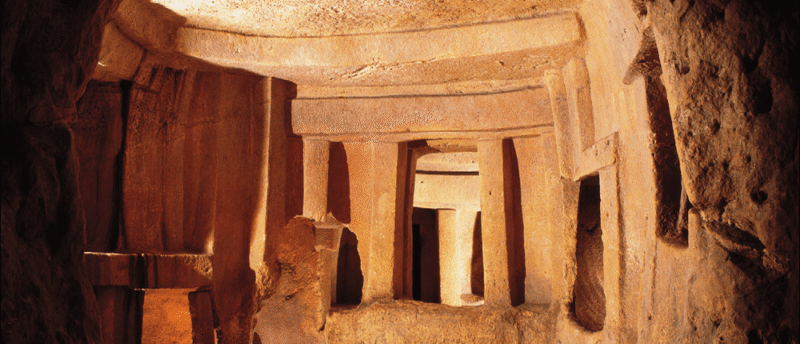
Hidden beneath the bustling streets of Paola, a small town on the island of Malta, lies one of the most enigmatic ancient structures ever unearthed: the Hal-Saflieni Hypogeum. Unlike the sun-baked temples of Egypt or the towering ziggurats of Mesopotamia, this subterranean marvel eludes the eye and humbles even the most seasoned archaeologist. It is here that the Hypogeum sonic mysteries begin to unfold, hinting at a forgotten legacy of acoustic engineering, ancient sound rituals, and spiritual resonance. Carved directly into Malta’s limestone bedrock, this megalithic complex is widely considered to be one of the oldest underground temples in the world.
The Hypogeum, whose name literally means “underground” in Greek, is thought to date back approximately 6,000 years. The structure spans multiple layers, three major levels have been identified, each meticulously hewn with an almost surreal degree of precision for a supposedly Neolithic culture. According to geologist Dr. Robert Schoch, the engineering challenge of creating the Hypogeum is profound. “It’s really just astounding to have carved it into the limestone,” Schoch said. “It shows incredible sophistication on a technological basis.”
This assessment from a professional geologist is not merely academic flattery. Limestone is a challenging medium, particularly with the rudimentary tools believed to have been available at the time. The Hypogeum’s layout is no random warren of tunnels, it is a planned, intricate design featuring corridors, chambers, stairs, and alcoves arranged in a manner that implies not only architectural knowledge but symbolic intent.
What makes the Hypogeum even more astonishing is the fact that it was hidden for millennia, only discovered by accident in 1902 when workers were digging to construct a water cistern. What they found was not just another burial chamber or storehouse, it was a sacred space teeming with historical and possibly metaphysical significance. And as we’ll see in the following sections, its secrets go far beyond its stone walls.
The subterranean temple was initially thought to be merely a communal burial site, consistent with the function of other Maltese megaliths. But its carefully layered construction, symbolic carvings, and unique acoustic properties suggest a far more complex purpose. In fact, many researchers now believe the Hypogeum may have served as a temple of transformation, a place where ancient humans could commune with divine entities through the power of sound, frequency resonance, and altered states of consciousness.
Later scientific inquiry would reveal that this ancient chamber is no static monument to the dead. It resonates, literally. The deeper you delve into the Hypogeum’s Oracle Room, the more apparent it becomes that this structure was not just built to house the remains of the deceased but perhaps to activate the living. Frequencies, brain states, and consciousness are interwoven into the very architecture of the site. It is a place where sound, stone, and spirit converge.
The Hypogeum sonic mysteries aren’t just Malta’s greatest archaeological treasure; they may be humanity’s most overlooked ancient acoustic device, a gateway into the unknown realms of consciousness and interdimensional contact. And it’s only the beginning of what this subterranean enigma has to reveal.
7,000 Skeletons and the Disappearance of the Long-Skulled Elites
Among the most haunting aspects of the Hypogeum sonic mysteries is not just the structure itself, but what it once contained. When the Hal-Saflieni Hypogeum was first uncovered in 1902, archaeologists were astonished to find more than 7,000 human skeletons buried within its chambers. These weren’t scattered remains, they were arranged with purpose, suggesting a significant ritualistic or ceremonial role.
What intrigued researchers the most was the peculiar cranial structure of many of these remains. As reported in a May 1920 National Geographic article, a significant number of the skeletons displayed unusually elongated skulls. This elongation was not the result of head-binding, a common practice in some ancient cultures, but appeared to be a natural biological feature. These so-called “long-skulled elites” were described as belonging to an unknown classification of humanity, one that mainstream science still has difficulty explaining.
Unfortunately, the archaeological record took a dark turn during World War II. Amid global turmoil, the Hypogeum site was left vulnerable, and many of the remains were looted or simply vanished. Today, the bulk of those original skeletons are lost to history. Yet, eleven of these elongated skulls were salvaged and reportedly placed in the National Museum of Archaeology in Valletta. Astonishingly, at least one of them exhibits a critical non-human anomaly: the absence of a sagittal suture, the fibrous joint that connects the two parietal bones of the human skull.
Such a feature has profound implications. In conventional anthropology, the absence of a sagittal suture is extremely rare and often associated with congenital conditions. But when found in conjunction with natural elongation, some researchers propose it may point to a non-human lineage, or perhaps a hybrid species.
One must ask: were these elongated skulls biological evidence of visitors from beyond our world? Or were they a genetic elite within ancient human societies, somehow connected to the Hypogeum sonic mysteries and resonance-based rituals?
Adding further mystique to the Hypogeum sonic mysteries is the enigmatic account of Lois Jessop, a woman who worked for the British Consulate in Malta. In the 1930s, Jessop claimed to have been granted access to the lowest chamber of the Hypogeum. There, she described witnessing a massive subterranean fissure, and on a ledge across from her, a group of very tall, white-haired humanoids. They noticed her and beckoned for her to descend, though she fled in fear.
While this story lacks scientific corroboration, its inclusion in the oral lore of the Hypogeum adds to the aura of secrecy and high strangeness surrounding the site. Could the elongated skulls and tall beings be related? Were they once residents or custodians of this subterranean realm?
As we move deeper into the Hypogeum’s Oracle Room and its acoustic engineering, the physical and metaphysical elements begin to merge. The presence of anomalous skeletons raises new possibilities, suggesting that the Hypogeum may have been more than a necropolis. It may have been a gateway, a literal and symbolic passage, between worlds.
The 110 Hz Resonance Phenomenon: Sound That Moves Through Stone and Flesh
Of all the Hypogeum sonic mysteries, perhaps none is as physically visceral or scientifically astonishing as the phenomenon of the 110 Hz resonance discovered in the Oracle Room. In 2014, archaeoacoustics researcher Linda Eneix led a team of interdisciplinary scientists, including experts in geology, audio engineering, and archaeology, to conduct sound testing in the Hypogeum’s most enigmatic chamber. What they discovered changed everything.
When a deep male voice vocalizes in the Oracle Room, the chamber amplifies and sustains the sound at precisely 110 hertz, a frequency range closely associated with altered states of consciousness and neural entrainment. The walls themselves seem to hum in sympathetic vibration, creating a tactile experience that resonates through the body and into the bones. Witnesses report feeling engulfed in sound, their perceptions shifting as they become immersed in an ancient, sonic cocoon.
The implications of this resonance go far beyond acoustical curiosity. Modern neuroscience recognizes that exposure to specific frequencies, particularly within the 90 to 120 Hz range, can influence brainwave activity. These frequencies overlap with the alpha and theta brainwave states associated with meditation, trance, and hypnagogic visions. This suggests that the Hypogeum was not simply constructed to house the dead but was intentionally tuned to induce altered states of consciousness.
Such acoustic engineering in a Neolithic temple raises profound questions. How could an ancient civilization, lacking any modern technology, design and carve a chamber to resonate at such a precise and psychoacoustically relevant frequency? Was this the result of trial and error? Or did they inherit knowledge, perhaps from an advanced lost civilization or an otherworldly source?
The sonic precision of the Hypogeum’s Oracle Room mirrors similar properties in other ancient monuments, including Newgrange in Ireland, Stonehenge in England, and Göbekli Tepe in Turkey. All exhibit standing wave formations and resonance effects that seem designed to amplify low-frequency sound. It’s as if these cultures shared an esoteric understanding that sound could be used to open portals, not just in space, but in the human mind.
In a world increasingly focused on material explanations, the Hypogeum sonic mysteries challenge us to reconsider the nature of consciousness, architecture, and the unseen forces that link the two. They beg the question: did the ancients build with stone… or with sound?
The Voice-Activated Machine Hypothesis: Ancient Tech or Divine Interface?
Could the Hypogeum’s acoustics be more than a ritualistic feature? Could they actually represent a form of forgotten technology, an ancient voice-activated mechanism? Among the most provocative interpretations of the Hypogeum sonic mysteries is the theory that the Oracle Room, and perhaps other parts of the complex, acted as interfaces, machines, operated by sound.
Echoing religious accounts such as the Ark of the Covenant and the Breastplate of Judgment, which allegedly responded to tonal chants by emitting light or divine power, the Hypogeum’s 110 Hz resonance opens the door to the idea that sound might have once functioned as a control system. Not metaphorically, but literally.
Historical parallels reinforce this possibility. In biblical tradition, the high priest would speak sacred tones while wearing a breastplate embedded with twelve stones, each representing a tribe of Israel. These tonal utterances were believed to activate the stones, causing them to light up and communicate divine judgment. Modern theorists argue this resembles an acousto-optical interface, perhaps like a voice-triggered transceiver or even a primitive resonance-based computer.
In the Hypogeum, the resonance seems intentionally tuned to human vocal ranges, especially male voices in the baritone spectrum. As explored in the earlier section, this resonance has a measurable effect on human neurology, influencing brainwave states. But what if its purpose went beyond human transformation? What if it was a trigger, an activation cue for the site itself or something buried deeper within?
Supporters of this theory often cite advanced principles of cymatics, a science exploring how sound frequencies shape matter. When exposed to specific tones, materials such as sand or water form intricate patterns, mandalas of resonance. Might the Hypogeum have been a giant cymatic chamber, activating hidden energies or mechanisms through chant and tone?
Archaeoacoustics experts note that the precise echoing and standing wave patterns found in ancient temples like the Hypogeum and Newgrange are rarely accidental. Modern concert halls require teams of architects and engineers to achieve similar results. So how could a so-called primitive culture achieve such refined acoustic functionality without technical aids, unless they inherited the knowledge or were guided by an advanced intelligence?
The Hypogeum sonic mysteries grow even more enigmatic in this light. Not only could the Oracle Room induce altered states for shamanic or divine contact, it might have been the interface to a machine, one triggered not by metal or code but by the harmonic qualities of the human voice. The voice as a key, unlocking a mechanism lost to time.
This possibility redefines the Hypogeum not merely as a temple or tomb but as a multidimensional technology, an instrument of consciousness manipulation, communication, and possibly, interdimensional interaction. The sonic interface hypothesis is not science fiction; it is grounded in resonance physics, historical parallels, and increasingly, interdisciplinary academic support.
Could the chants of the ancients have been passwords? Could this stone chamber be a machine disguised as a sanctuary? And if so, what, or who, was it meant to contact?
Shamanic Sound and Brainwave Manipulation: The Gateway to Other Realms
Among the most compelling aspects of the Hypogeum sonic mysteries is the idea that its creators understood how sound could alter human consciousness. This concept lies at the core of shamanic practices found around the world, from the steppes of Siberia to the Amazon rainforest, where rhythm, drumming, and chanting are used to traverse unseen realms. The Hypogeum may have served a similar purpose, acting as an acoustically tuned chamber designed to induce deep trance states and open the mind to non-ordinary realities.
Shamans, traditionally seen as intermediaries between the human and spirit worlds, use sound to initiate what neuroscientists now identify as brainwave entrainment. When exposed to rhythmic beats at a consistent frequency, often around 4 to 8 hertz, the brain begins to mirror that rhythm, shifting from beta (alert) waves to theta and delta frequencies associated with meditation, dreams, and mystical experiences.
In the Oracle Room, the 110 Hz frequency appears to create precisely this condition. Modern studies have shown that such frequencies can synchronize neural oscillations and activate limbic regions of the brain responsible for emotion and memory. When combined with the natural reverberation of the chamber and vocal toning, the effect can become immersive and transformational.
John Vivanco, a veteran remote viewer from the U.S. government’s Project Stargate program, confirms that altered states brought on by binaural beats and low-frequency sound can unlock extraordinary cognitive abilities. Vivanco and his team used brainwave entrainment to reach mental states conducive to remote viewing, clairvoyance, and what some describe as interspecies or interdimensional communication.
In this light, the Hypogeum may not have been merely an observatory of the past, but a training ground for consciousness explorers. It provided a controlled environment to activate latent psi faculties, such as intuition, telepathy, or even direct perception of non-physical entities. Shamans used drums; the builders of the Hypogeum used stone and voice.
This cross-disciplinary overlap, between ancient shamanic rituals and contemporary neurological science, underscores a profound truth: our ancestors may have understood that consciousness is not confined to the body or brain, but is a dynamic, frequency-responsive field. And they designed sacred architecture like the Hypogeum to interact with it.
As the Hypogeum sonic mysteries continue to unfold, the idea that this underground temple functioned as an acoustically active gateway to other realms gains scientific traction. The ancients, through ritual, resonance, and rhythm, may have developed techniques to pierce the veil of reality and access universal knowledge.
Modern researchers now revisit these ancient practices, not through superstition, but through EEG machines, resonance chambers, and psychoacoustic experiments. The past, it seems, may hold the key to unlocking a consciousness-enhanced future.
Extraterrestrials and the Oracle Room: A Portal to Contact?
As we follow the trail deeper into the Hypogeum sonic mysteries, they grow even more astonishing. Could the Hypogeum’s Oracle Room have functioned not only as a consciousness amplifier, but as a communication device with non-human intelligences? Among the most controversial and captivating theories within the scope of the Hypogeum sonic mysteries is the possibility that this subterranean complex was designed to facilitate contact with extraterrestrial or interdimensional beings.
A compelling account reinforcing this theory comes from Lois Jessop, a British consulate employee in the early 20th century. During a private tour of the Hypogeum, she was reportedly allowed access to its lowest levels. There, she claimed to witness an enormous subterranean fissure, and on a ledge across from her stood approximately 20 white-haired, eight-foot-tall humanoids who silently beckoned her to descend. Terrified, she fled. Though difficult to verify, her testimony resonates with similar tales of underground giants and silent watchers found in ancient mythologies.
These alleged encounters gain further credibility when considered alongside modern remote viewing sessions. In one instance, John Vivanco and his team described a similar experience while viewing the Arecibo Observatory. They encountered beings who identified themselves as benevolent, telepathic, and intent on collaboration. These sessions, powered by deep trance and frequency entrainment, reflect a methodology not unlike what may have occurred in the Oracle Room of the Hypogeum.
Could specific acoustic environments create a resonance state in which human consciousness becomes receptive to information beyond our normal sensory bandwidth? This hypothesis is at the heart of current interdisciplinary research in fields like neurotheology, parapsychology, and archaeoacoustics. The Oracle Room, with its precisely tuned 110 Hz frequency, may function as a consciousness gateway, amplifying human perception while thinning the veil between dimensions.
If we consider consciousness as a vibratory field, subject to entrainment, phase-locking, and harmonic resonance, then the Hypogeum could be a carefully engineered transceiver, much like a tuning fork, meant to synchronize human awareness with non-local intelligences. Ancient texts often speak of voices from the void, divine instructions received in caves, or communion with gods in echoing stone temples. The Hypogeum’s design echoes this archetype, perhaps preserving an ancient contact protocol hidden beneath the layers of orthodox archaeology.
Whether these intelligences originate from other planets, parallel dimensions, or archetypal planes of the psyche, the consistent role of sound and frequency in facilitating such encounters cannot be ignored. The Hypogeum sonic mysteries may hold the key to understanding how ancient humans initiated contact, and why.
As we peel back these layers, one thing becomes increasingly clear: the Hypogeum was not just a tomb, or even just a temple. It was a multidimensional interface, a point of convergence between the human and the unknown.
The Legacy of the Hypogeum in Archaeoacoustics Today
As interest in ancient mysteries continues to grow, the Hypogeum sonic mysteries have become a focal point for a new generation of researchers in the burgeoning field of archaeoacoustics. This interdisciplinary science combines archaeology, acoustics, anthropology, and psychoacoustics to examine how ancient civilizations used sound in their sacred architecture. And nowhere is this research more poignant, or provocative, than in the chambers of the Hal-Saflieni Hypogeum.
In 2014, archaeoacoustician Linda Eneix and her team demonstrated that the Oracle Room’s resonance at 110 Hz was not incidental, but designed. Their studies revealed that sound in this frequency range does more than simply echo, it penetrates. It vibrates the human body, stimulates the limbic system, and induces trance states. The Hypogeum, far from being a relic, is now understood as a kind of sonic technology, one rooted in the ancient world yet deeply aligned with modern findings in neurology and resonance physics.
This growing body of research has implications far beyond Malta. Similar studies at sites such as Newgrange in Ireland, Stonehenge in England, and Chavín de Huántar in Peru show that ancient peoples around the world engineered acoustic environments for ritual, healing, and possibly contact with other intelligences. The global recurrence of resonance chambers and frequency-specific designs suggests a shared esoteric science, one that viewed sound not as a byproduct of construction, but as a fundamental force.
Academic institutions and independent researchers alike have begun to invest in archaeoacoustic studies. New technologies such as 3D sonic mapping, vibration sensors, and EEG analysis are allowing scientists to recreate and measure the exact psychoacoustic effects experienced by those who once inhabited these ancient spaces. In the case of the Hypogeum, these technologies have confirmed what mystics and oral traditions long claimed: that this was not merely a crypt, but a chamber of awakening.
The Hypogeum sonic mysteries have inspired not just academics and esoteric researchers, but also artists, musicians, and spiritual practitioners. Some have attempted to recreate the Oracle Room’s acoustics in modern settings, using sound chambers and binaural frequencies to induce similar states of perception and healing. These efforts reflect a growing awareness that ancient wisdom may hold solutions to contemporary questions about consciousness, health, and our place in the cosmos.
In the end, the legacy of the Hypogeum is not just what lies beneath the Maltese soil. It is what rises in us when we begin to listen, truly listen, to the resonance of the past. As we attune ourselves to these ancient frequencies, we may discover not only where we come from, but where we are meant to go.
FAQ: Hypogeum Sonic Mysteries
What is the Hypogeum of Malta?
The Hypogeum, officially known as the Ħal Saflieni Hypogeum, is an underground megalithic temple located in Paola, Malta. Believed to be over 6,000 years old, it is one of the world’s oldest and most mysterious subterranean structures.
Why is the Hypogeum associated with sound and resonance?
Researchers discovered that the Oracle Room within the Hypogeum resonates at 110 Hz, a frequency linked to altered states of consciousness. This specific resonance may have been deliberately engineered to enhance ritual experiences and induce trance-like states.
What are the Hypogeum sonic mysteries?
The term refers to the acoustic phenomena, long-skulled skeletons, possible ancient technology, and alleged extraterrestrial contact linked to the Hypogeum. These elements suggest the site may have functioned as more than a burial chamber, it could have been a consciousness-altering device.
Are there elongated skulls linked to the Hypogeum?
Yes. Over 7,000 skeletons were originally discovered, many of which featured naturally elongated skulls. Some of these skulls lacked the sagittal suture found in all modern humans, raising questions about their origin and potential non-human lineage.
What is archaeoacoustics, and how does it relate to the Hypogeum?
Archaeoacoustics is the study of sound in ancient spaces. The Hypogeum has become a landmark for this field due to its precise 110 Hz resonance and its potential role in facilitating spiritual or interdimensional experiences through sound.