






Introduction
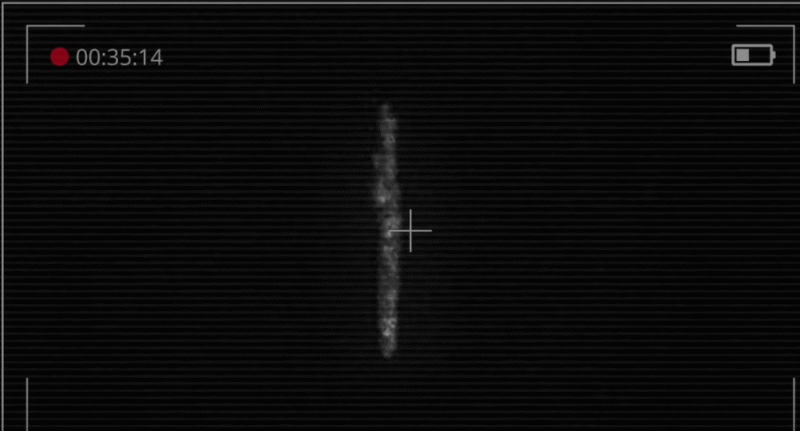
China has achieved a groundbreaking milestone in space exploration by successfully firing a precision lunar laser across over 80,000 miles to bounce off a satellite orbiting the Moon during daylight, showcasing their technological prowess and advancing their ambitious lunar ambitions. This remarkable achievement represents not just a technological triumph but a fundamental shift in how we conceptualize Earth-Moon communications and navigation systems. The successful daylight lunar laser reflection, conducted by China’s Deep Space Exploration Laboratory (DSEL), demonstrates unprecedented precision and opens new frontiers in space exploration technology. As nations race to establish permanent presences beyond Earth, this lunar laser technology breakthrough may prove to be the critical infrastructure backbone supporting humanity’s return to the lunar surface and beyond.

Table of Contents
The Revolutionary Breakthrough in Lunar Laser Technology
China’s recent achievement in space exploration marks a groundbreaking milestone in laser technology. The nation successfully fired a precision lunar laser across over 80,000 miles of space to bounce it off a satellite orbiting the Moon during daylight. This feat showcases China’s relentless pursuit of technological advancement and strengthens its position in the global space race. What makes this achievement particularly remarkable is the ability to overcome the substantial background noise created by sunlight, which typically overwhelms the returning laser signal during daylight operations.

The precision demonstrated in this lunar laser reflection represents a quantum leap in space communication capabilities. By establishing this technology, China has effectively created a new paradigm for high-precision navigation and communication between Earth and the Moon, a critical foundation for any sustainable lunar presence.
Understanding Satellite Laser Ranging: The Science Behind the Achievement
Satellite laser ranging is considered the gold standard for determining satellite orbits with pinpoint accuracy. The process involves firing nanosecond pulses from ground stations, which bounce off retroreflectors on spacecraft and return to reveal the distance down to centimeters. This technology has been used for decades with Earth-orbiting satellites, but applying it successfully to lunar distances under daylight conditions represents a significant technological advancement in lunar laser communications.
The fundamental challenge in lunar laser ranging lies in the extreme distances involved and the minuscule return signal that must be detected. The laser beam disperses over the vast distance, and only a tiny fraction of the original light returns to the receiver on Earth. Additionally, when operating during daylight, solar radiation creates significant background noise that can easily overwhelm the returning signal.
The Unparalleled Precision of China’s Lunar Laser Technology
While this technique is routine for low-Earth satellites, the challenge multiplies when dealing with the Earth-Moon distance, especially under daylight conditions. China’s recent success in overcoming solar background noise to achieve accurate measurements during daylight expands the limits of this technology significantly. The technical specifications of this achievement are staggering, demonstrating precision that was previously considered beyond current technological capabilities.
This remarkable precision is likened to “aiming at a sub-millimeter target, essentially a single hair, from over 6.2 miles away.” When scaled to the actual Earth-Moon distance of approximately 238,855 miles (384,400 kilometers), the precision becomes even more impressive. The ability to maintain this level of accuracy over such vast distances represents a fundamental breakthrough in lunar laser technology.
The Tiandu-1 Satellite: China’s Lunar Communications Hub
By achieving such accuracy, China can now gather orbital data whenever the Tiandu-1 satellite passes within view, enhancing the frequency and reliability of measurements. The Tiandu-1 satellite serves as a critical component in China’s broader lunar exploration infrastructure, providing essential communications and navigation capabilities for future missions.
This development is crucial for the planned Queqiao constellation, which aims to provide continuous communications and navigation support for various lunar missions. The lunar laser ranging technology will enable the constellation to function similarly to GPS satellites around Earth, but optimized for lunar operations, providing positioning, navigation, and timing services for vehicles operating on or around the Moon.
China’s Ambitious Lunar Exploration Roadmap
China’s space endeavors are part of a more extensive plan to establish a permanent foothold on the Moon. The Tiandu-1 satellite, along with Tiandu-2 and the Queqiao-2 relay satellite, form the backbone of China’s lunar exploration infrastructure. These satellites represent the initial infrastructure layer supporting China’s long-term lunar ambitions.
These satellites have already delivered detailed images of the lunar surface and demonstrated successful cross-link communications, paving the way for more ambitious missions. The establishment of reliable lunar laser communications infrastructure represents an essential foundation for any sustainable lunar presence, whether for scientific, commercial, or strategic purposes.
The 2030 Lunar Landing Target: Building a Chinese Presence on the Moon
The China National Space Administration (CNSA) has set an ambitious timeline, targeting a crewed lunar landing by 2030. This goal represents a significant milestone in China’s broader space exploration strategy and highlights the strategic importance of establishing a presence on the Moon. The construction of the International Lunar Research Station, a collaborative effort with Russia, is expected to begin by 2035.
Lunar laser ranging technology will play a pivotal role in various aspects of lunar exploration, including approach-and-landing guidance and the coordination of rover fleets exploring the Moon’s surface. The precision of laser ranging systems will enable spacecraft to navigate with unprecedented accuracy, reducing risks during critical mission phases such as landing operations.
Expanding the Horizons of Earth-Moon Communication Links
With the success of the daylight lunar laser ranging experiment, DSEL plans to extend daytime trials to longer ranges and higher repetition rates. This advancement will integrate more seamlessly into routine deep-space operations, enhancing the reliability of Earth-Moon links. The experiment follows the successful 2024 launch of Chang’e-6, which returned soil samples from the Moon’s far side, underscoring the importance of robust communication and navigation systems in space exploration.
The ability to maintain consistent communication between Earth and lunar assets represents a fundamental requirement for any sustained lunar presence. By expanding the capabilities of lunar laser technology, China is establishing the infrastructure necessary to support increasingly complex and ambitious lunar missions.
Nuclear Power and Alternative Energy Sources for Lunar Operations
Beyond lunar laser technology, China is exploring other innovative solutions to support its lunar ambitions. The CNSA anticipates the need for a comprehensive space-traffic management system to handle the estimated 100,000 satellites in low Earth orbit by the decade’s end. In collaboration with Russia, China is also evaluating nuclear reactors and alternative power sources for the International Lunar Research Station under the Chang’e-8 mission.
The energy requirements for sustained lunar operations present significant challenges, particularly during the two-week lunar night when solar power is unavailable. Nuclear power offers a potential solution, providing consistent energy regardless of sunlight conditions. The integration of nuclear power with advanced lunar laser communication systems could enable continuous operations on the lunar surface.
Global Implications: The New Space Race and International Cooperation
China’s achievements in lunar laser technology and lunar exploration present both challenges and opportunities for the international community. The nation’s advancements in space technology could spur increased competition among space-faring nations, potentially leading to new collaborations and innovations. However, the growing number of satellites in orbit also raises concerns about space traffic management and the potential for collisions.
As China continues to push the boundaries of space exploration, the implications for international cooperation and competition remain to be seen. Will these achievements lead to new opportunities for collaboration, or will they intensify the global space race? The future of space exploration is undoubtedly intriguing, with many questions yet to be answered.
Comparative Analysis: Lunar Laser Technology vs. Traditional Radio Communications
The successful demonstration of lunar laser communication represents a significant advancement over traditional radio frequency (RF) communications currently used for most space missions. While RF communications have served space agencies well for decades, they come with inherent limitations, particularly regarding bandwidth and security.
Lunar laser communications offer several advantages over RF systems, including higher data transmission rates, lower power requirements, and enhanced security through narrower beam widths. These advantages become increasingly important as lunar missions grow more complex and data-intensive, requiring higher bandwidth for functions such as high-definition video transmission and remote instrument operation.
Technical Challenges in Daylight Lunar Laser Operations
The achievement of daylight lunar laser ranging represents a solution to one of the most significant technical challenges in laser communications: operating effectively under varying light conditions. During daylight operations, the background solar radiation can easily overwhelm the returning laser signal, making detection extremely difficult.
China’s success in overcoming this challenge likely involved several technical innovations, potentially including advanced filtering techniques, precise timing mechanisms, and highly sensitive detectors. The ability to operate effectively during daylight significantly increases the operational window for lunar laser communications, enhancing the technology’s practical utility for sustained lunar operations.
Applications Beyond Communication: Lunar Mapping and Resource Identification
While communication represents the primary application of lunar laser technology, the precision offered by laser ranging systems also enables other critical functions, such as high-resolution mapping of the lunar surface. By combining laser ranging data with other remote sensing techniques, scientists can create detailed topographical maps of the Moon, identifying potential landing sites and resources.
The ability to precisely map the lunar surface becomes particularly important when identifying resources such as water ice in permanently shadowed regions near the lunar poles. These resources could potentially support sustainable human presence on the Moon, providing materials for life support, fuel production, and construction.
Private Sector Involvement in Lunar Laser Technology Development
As lunar exploration becomes increasingly commercialized, private sector companies are likely to play a growing role in developing and deploying lunar laser communication systems. These companies may build upon the foundations established by government space agencies, creating more cost-effective and efficient systems.
The commercialization of lunar laser technology could accelerate innovation in the field, potentially leading to breakthroughs that further enhance the capabilities of these systems. Private sector involvement may also increase competition, driving down costs and making lunar missions more economically viable.
The Role of Artificial Intelligence in Enhancing Lunar Laser Systems
Artificial intelligence (AI) represents a potential game-changer for lunar laser communication systems, enabling adaptive optimization of system parameters based on changing conditions. AI algorithms could potentially predict and compensate for atmospheric disturbances, adjust laser power and focusing based on distance and conditions, and optimize data transmission protocols.
By integrating AI capabilities into lunar laser systems, operators could potentially achieve even greater precision and reliability, further enhancing the technology’s utility for lunar exploration. The combination of precision laser technology with advanced AI represents a powerful synergy that could significantly advance our capabilities in space.
International Standards and Protocols for Lunar Laser Communications
As multiple countries and organizations deploy lunar laser communication systems, the need for international standards and protocols becomes increasingly important. These standards would ensure interoperability between different systems, allowing assets from various countries to communicate effectively.
The development of these standards represents an opportunity for international cooperation in space exploration, potentially fostering collaboration even amid competition. By establishing common protocols for lunar laser communications, the international community could create a more robust and resilient infrastructure for lunar exploration.
Chronological Timeline of Laser Communication Advancements in Space Exploration
- 1962: First successful laser ranging to a reflector placed on the lunar surface by the Luna 17 mission
- 1994: First demonstration of laser communication between satellites in Earth orbit
- 2013: NASA’s Lunar Laser Communication Demonstration achieves record-breaking data transmission rates from lunar orbit
- 2018: China launches Queqiao relay satellite to facilitate communications with the Chang’e-4 lunar far side mission
- 2022: Launch of Tiandu-1 satellite with laser retroreflectors for ranging experiments
- 2024: Successful launch of Chang’e-6 mission returning samples from the lunar far side
- 2025: China achieves first successful daylight lunar laser ranging to a satellite in lunar orbit
Technical Glossary of Lunar Laser Communication Terms
- Satellite Laser Ranging (SLR): Technique using short laser pulses to measure the distance to satellites with high precision
- Retroreflector: Optical device that reflects light back to its source regardless of the angle of incidence
- Nanosecond Pulse: Ultra-short laser pulse lasting billionths of a second, used in precision timing measurements
- Signal-to-Noise Ratio (SNR): Measure of signal strength relative to background noise, critical in daylight laser operations
- Queqiao Constellation: Planned network of communications satellites supporting lunar operations
- Laser Coherence: Property of laser light that maintains phase relationships over distance, enabling precise measurements
- Beam Divergence: Measure of how quickly a laser beam expands with distance, affecting signal strength at the target
Frequently Asked Questions About Lunar Laser Technology
What makes lunar laser communication superior to traditional radio communication?
Lunar laser communications offer significantly higher bandwidth, lower power requirements, enhanced security through narrower beam width, and reduced susceptibility to electromagnetic interference compared to traditional radio communication systems. These advantages become increasingly important as lunar missions grow more complex and data-intensive.
What are the main challenges in establishing reliable lunar laser communications?
The primary challenges include atmospheric disturbances on Earth, precise pointing over extreme distances, signal attenuation, background solar radiation during daylight operations, and the need for backup systems during adverse weather conditions that might block laser transmission.
How might lunar laser technology benefit Earth-based applications?
Advancements in lunar laser technology could lead to improvements in terrestrial fiber-optic communications, precision measurement systems, secure communications protocols, and weather-resistant optical communication systems. The extreme requirements of lunar operations often drive innovations that find applications in Earth-based systems.
What role will lunar laser communications play in establishing a permanent lunar base?
Lunar laser communications will provide the high-bandwidth, secure communications infrastructure necessary for sustaining complex operations on the lunar surface. This includes transmitting scientific data, supporting telemedicine for astronauts, enabling remote operation of equipment, and maintaining reliable contact with Earth-based mission control.
How does China’s achievement compare to other countries’ lunar communication capabilities?
China’s successful daylight lunar laser ranging represents a significant advancement in the field, positioning China at the forefront of lunar communication technology. While other countries have demonstrated laser communications in space, the combination of lunar distances and daylight operation represents a unique technical achievement.
Conclusion: The Future of Lunar Laser Technology in Space Exploration
China’s breakthrough in lunar laser technology represents more than just a technical achievement—it signals a fundamental shift in how humanity will communicate across the vast distances of space. As we stand on the precipice of a new era in lunar exploration, with multiple countries and private companies planning missions to our nearest celestial neighbor, the importance of reliable, high-bandwidth communication systems becomes increasingly apparent.
The successful demonstration of daylight lunar laser ranging opens new possibilities for scientific research, commercial development, and potentially, human settlement beyond Earth. By establishing the infrastructure necessary for sustained lunar operations, China is laying the groundwork for a permanent human presence on the Moon.
As we look to the future, the continued development of lunar laser technology will likely play a central role in expanding humanity’s presence in space. The precision, bandwidth, and security offered by these systems make them ideal for supporting the complex operations required for long-term lunar missions and, eventually, missions to Mars and beyond.