





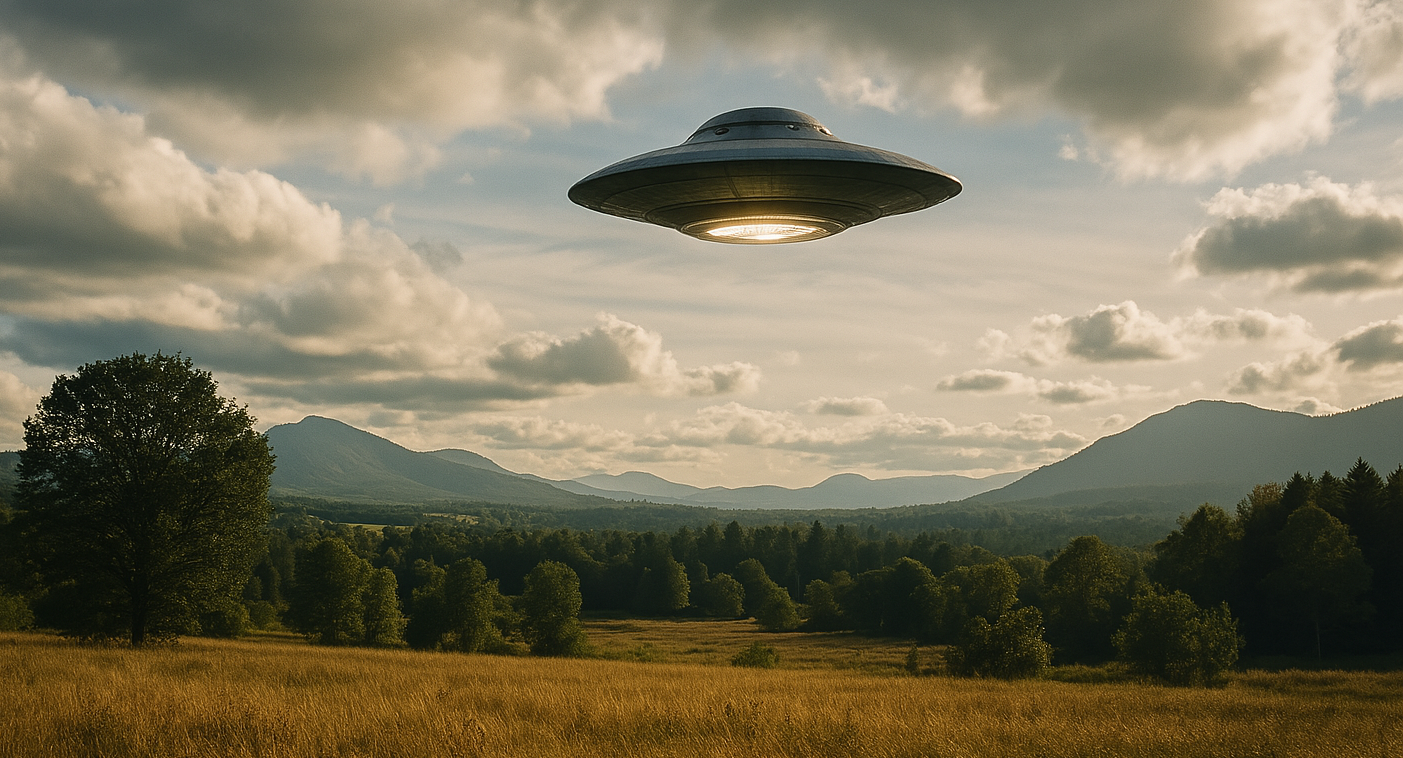
Introduction
Welcome to the ultimate timeline of verified UFO sightings – a comprehensive journey through the most credible and influential encounters with the unknown. From mid-20th century “flying saucers” that sparked global UFO fever to 21st century military-confirmed UAP videos and congressional hearings, these are the top 50 verified UFO sightings that changed history. Each incident is chosen for its witness credibility, official documentation or media coverage, and the lasting impact it had on UFO research, government policy, or popular culture. Buckle up for a detailed tour of unexplained lights, mysterious craft, and close encounters that continue to fascinate and mystify.
Whether you’re a seasoned ufologist or a curious newcomer, this article will serve as the definitive UFO sightings timeline, complete with declassified reports, witness quotes, and even a look at how authorities responded. Read on to learn how these credible UFO encounters – from Roswell to the Phoenix Lights to the modern Pentagon UAP disclosures – have shaped the ongoing conversation about unidentified flying objects. We’ll also see how terminology shifted to “UAP” (unidentified anomalous phenomena) as the topic moved from fringe to mainstream.
Now, let’s dive into each of these historic sightings and events in detail, exploring why each is significant, what evidence supports it, and how it changed the course of UFO history.
1. Foo Fighters (1944) – Mysterious Aerial Phenomena in WWII
During the final years of World War II, Allied airmen reported encountering baffling “balls of light” while on night missions. These glowing orbs, nicknamed “Foo Fighters,” would pace Allied fighter planes and bombers, exhibiting extraordinary maneuverability. Pilots of the U.S. 415th Night Fighter Squadron over Europe described orange, red, or green spheres flying alongside their aircraft at high speeds, sometimes in formation. Crucially, these objects could outmaneuver Allied planes yet never appeared on radar – a fact that left crews and intelligence officers scratching their heads.

Initially, Allied commanders suspected these Foo Fighters might be some advanced German weapon or a form of psychological warfare. But no definitive explanation ever emerged from the Axis side. The phenomena were also reported in the Pacific theater by U.S. pilots, suggesting it wasn’t limited to one region or enemy.
Key Witness Report: In November 1944, pilot Lt. Edward Schlueter and his radar operator were flying over France when they saw “eight to ten bright orange lights” zooming around their night fighter. As Schlueter turned to pursue, the lights would vanish and reappear behind him, almost playing cat-and-mouse. The crew was astonished – they were seeing these objects visually, but their radar showed nothing solid. The lights seemed to react to the fighter’s maneuvers intelligently, keeping just out of reach. After several minutes, the fiery orbs streaked away and disappeared. The stunned airmen filed an official report. Similar incidents were logged by dozens of bomber crews across Europe, who gave the mysterious lights the nonsensical name “foo fighters” (inspired by a comic strip catchphrase) to describe what they could not explain.

The Foo Fighter phenomenon is significant as one of the earliest well-documented instances of unexplained aerial phenomena during combat. It had multiple trained witnesses (professional pilots and crew) and contemporary military documentation. While military brass never officially solved the foo fighters, these sightings set a precedent: credible observers were seeing something truly unusual. The events introduced the idea that not all lights in the sky could be dismissed as enemy aircraft or natural phenomena. Foo fighters remain unexplained to this day, and they represent the first known wave of verified UFO sightings in modern history – occurring even before the term “UFO” existed. They showed that unidentified flying objects were taken seriously by the military as a potential threat or mystery, even amid the world’s largest war.
2. Kenneth Arnold’s “Flying Saucers” (1947) – The Sighting That Started It All

On June 24, 1947, civilian pilot Kenneth Arnold was flying near Mt. Rainier in Washington State when he saw something that would change the world. Arnold reported seeing nine shiny objects in formation, skimming along “like a saucer would if you skipped it across water.” He estimated they were moving at an incredible speed (over 1,000 mph). Arnold’s sighting made headlines and is often cited as the first widely-reported UFO sighting of the post-WWII era – it even directly led to the popularization of the term “flying saucer.”
What made Arnold’s account so influential was his credibility and detailed description. Arnold was a respected businessman and an experienced private pilot. After landing, he told friends and later reporters about the encounter. Newspapers across the country picked up the story of the private pilot who saw mystery “aircraft” near Mt. Rainier. Importantly, Arnold never said the objects were saucer-shaped – he described their motion, saying they moved “like a saucer” skimming water. But a journalist’s misquote turned into the catchy phrase “flying saucers,” and thus a cultural phenomenon was born.
Arnold described the craft as flat, disc-like objects that flashed in the sun and flew in an undulating path. He initially thought they might be some secret military jets, but their speed and unconventional flight left him puzzled. The U.S. Army Air Forces (precursor to the Air Force) interviewed Arnold and checked for any missing aircraft or guided missiles; nothing matched. Skeptics later suggested Arnold might have seen mirages or reflections, but Arnold was adamant that the objects were solid and under intelligent control. He stuck to his story under intense media scrutiny.

Historical Impact: Arnold’s report was the first major sighting to get nationwide news coverage, and it truly ushered in the modern UFO era. After his story went public, hundreds of similar UFO sighting reports flooded in during the summer of 1947. The idea of “flying saucers” entered the public imagination directly because of Arnold’s experience. In fact, the term “flying saucer” became synonymous with UFOs in the following decades, all tracing back to this single interview. Arnold’s sighting remains officially unexplained. More importantly, it convinced the public (and some in the military) that UFOs were real enough to investigate. This set the stage for all the famous cases that followed in 1947 – including, just a few weeks later, the Roswell incident.
3. The Roswell Incident (1947) – Crashed UFO or Weather Balloon?
The Roswell incident is perhaps the most famous UFO case of all UFO Verified Sightings. In early July 1947, not long after the Arnold sighting, something mysterious crashed on a ranch outside Roswell, New Mexico. The Army Air Force initially stunned the press by announcing they had recovered a “flying disc” from the crash. This prompted sensational headlines around the country. However, within a day the Army Air Force changed its story, claiming the debris was merely a downed weather balloon. This abrupt reversal planted the seeds of decades of conspiracy theories – that the object was an extraterrestrial spacecraft and the military covered it up.

From a historical perspective, here’s what we know happened: a rancher named Mac Brazel found strange debris scattered across his sheep pasture – sticks, foil-like material, rubber strips, and tough paper. He reported it to the local sheriff, who alerted the nearby Roswell Army Air Field. Intelligence Officer Major Jesse Marcel went out to inspect the debris. Marcel later described some of it as unlike anything he’d ever seen, “not made of any material I’m familiar with”. On July 8, 1947, the Roswell base’s public information officer issued a press release saying the Army had recovered a “flying disc” on a ranch in the area. The Roswell Daily Record’s front-page headline famously proclaimed: “RAAF Captures Flying Saucer On Ranch in Roswell Region.”
The very next day, the Army Air Force high command in Fort Worth, TX, clarified the statement – the “flying disc” was actually just a weather balloon that had fallen to earth. They even showed reporters pieces of what looked like a regular balloon and tin foil radar target to prove it. The story quieted down for a while. However, starting in the late 1970s, Roswell resurfaced as eyewitnesses (including Major Marcel) began claiming the weather balloon explanation was a cover story. They suggested the material recovered was far more exotic, and that alien bodies were supposedly recovered from a second crash site. Roswell became the centerpiece of UFO lore and government cover-up allegations.

In 1994, the U.S. Air Force finally published a report admitting that the weather balloon story wasn’t entirely true either – the debris actually came from Project Mogul, a top-secret program using high-altitude balloons to detect Soviet nuclear tests. Those balloons carried unusual arrays of foil reflectors, which likely accounts for the strange materials Brazel found. The Air Force also later explained claims of “alien bodies” as misidentified crash test dummies dropped in the desert in the 1950s. Despite these official reports, Roswell’s legend had already taken on a life of its own.

Impact on Culture: Few incidents have inspired as much fascination – and skepticism – as Roswell. The military’s mixed messaging (first announcing a flying disc, then retracting it) left an aura of mystery that has never fully dissipated. For over 70 years, Roswell has been synonymous with UFO cover-ups. It spawned countless books, documentaries, movies, and even an annual UFO festival in Roswell. Importantly, Roswell forced the U.S. military and public to grapple with the UFO phenomenon’s reality. It prompted the Air Force to launch Project Blue Book (and earlier projects Sign and Grudge) to systematically investigate UFO reports in the coming years. While the physical evidence in this case is officially explained as balloon debris, Roswell’s real significance lies in its legacy: it firmly embedded UFOs into the public consciousness and raised the possibility that authorities might hide the “truth” from the people. Roswell changed the discussion around UFOs forever.
4. Mantell Incident (1948) – Fighter Pilot’s Fatal UFO Chase

On January 7, 1948, Captain Thomas F. Mantell, a 25-year-old Kentucky Air National Guard pilot, lost his life in pursuit of a UFO. Mantell was piloting an F-51 Mustang fighter when reports came in of a large, round object hovering over Godman Army Airfield at Fort Knox, Kentucky. Witnesses on the ground, including the base commander, described a gleaming object “about one-fourth the size of the full moon” that moved slowly across the sky. Determined to identify it, Mantell and three other pilots were redirected from a training mission to chase the unknown object.
Mantell climbed steeply to high altitude chasing the UFO. He reported by radio that he had the object in sight – describing it as “metallic and tremendous in size”. As he ascended past 20,000 feet without an oxygen mask, Mantell likely blacked out from lack of oxygen. His Mustang later crashed on a farm outside Franklin, Kentucky, killing him. The UFO was no longer seen after the crash. Captain Mantell’s tragic death made national news and was the first time someone died during an alleged UFO encounter. This incident shook the military and public alike, marking the first known fatality linked to a UFO pursuit.

The Air Force’s Project Sign (the precursor to Project Blue Book) investigated Mantell’s crash. Initially, some speculated he might have been chasing a flying saucer or even a spaceship. However, the official conclusion was that Mantell likely was chasing the planet Venus or perhaps a secret Skyhook weather balloon, and that he died from oxygen deprivation. Many found the Venus explanation dubious – Venus was visible that day, but it wouldn’t appear “tremendous in size” or move as described. The Skyhook balloon theory (which was revealed decades later once Skyhook was declassified) is more plausible, since those balloons were large, reflective, and could have been in the area.
Regardless of the true identity of the UFO, the Mantell case had a lasting impact on UFO policy. The incident caused the Air Force to take UFO reports more seriously, realizing that military personnel might risk their lives in these encounters. It led to caution in scrambling fighter pilots after unknown aerial objects unless clearly warranted. Mantell became a sort of martyr in UFO lore – a symbol that the phenomenon could have real, even deadly consequences. In UFO history, the Mantell Incident is remembered for its credibility (multiple military witnesses and a competent pilot) and for highlighting the potential dangers of chasing the unknown.
5. The Gorman Dogfight (1948) – Pilot Engages a UFO in Combat
In the autumn of 1948, not long after Mantell’s tragedy, another dramatic military UFO encounter occurred – this time with a happier outcome. On the night of October 1, 1948, 2nd Lt. George Gorman, a World War II veteran pilot, engaged in an extended “dogfight” with a UFO over Fargo, North Dakota. Gorman was flying a P-51 Mustang in the evening, participating in a local air show. After other planes had landed, he remained aloft to get in some extra flight time. That’s when he noticed a single round light in the sky, about 6–8 inches in diameter from his perspective, moving fast.

Lt. Gorman contacted the control tower, which confirmed they also saw an unidentified light moving on radar. For the next 27 minutes, Gorman gave chase to the mysterious object through the night skies above Fargo. He reported that the light would speed away whenever he got close, then reverse course and zoom straight at him in a game of aerial chicken. At one point, the UFO streaked directly toward Gorman’s plane. He later said, “The object came so close that I ducked my head, thinking we were going to collide.” The object swerved at the last instant and passed over his canopy. Gorman tried every maneuver he knew to get behind the object, but it outturned and outsped his P-51 easily – at times reaching speeds over 600 mph (far faster than any propeller plane). He noted the object was a white, completely circular light, blinking out when it accelerated, then reappearing. It showed no exhaust plume and no sound.
Two air traffic controllers on the ground and another pilot in the vicinity also witnessed portions of this chase, confirming Gorman’s account. Finally, Gorman’s Mustang couldn’t keep up (he had pushed it to its limits at full throttle), and he broke off the pursuit. He was shaken but safe. Project Sign investigators arrived and, after analysis, officially labeled the Gorman Dogfight as “unexplained.” They ruled out other aircraft or balloons. Gorman himself was an experienced flyer known for level-headedness, adding to the case’s credibility.
This encounter is noteworthy for the extended interaction between a military pilot and a UFO. It wasn’t just a fleeting glimpse – it was nearly a half-hour of aerial maneuvers, essentially an attempted combat engagement with an unknown object. The case suggested the UFO demonstrated intelligent control and performance beyond known technology (e.g., extreme speed and maneuverability). The Gorman Dogfight became one of the early classic cases in Air Force UFO files. It highlighted the need for better procedures when pilots encounter UAP, and it further convinced investigators that some UFOs were not hallucinations or misidentified stars – something solid was up there testing a pilot’s skills. To this day, no conventional explanation (such as another aircraft or weather balloon) adequately fits Gorman’s detailed report, making it one of the most credible UFO dogfights on record.
6. Chiles-Whitted Encounter (1948) – Airliners vs. Cigar-Shaped Craft
In the early hours of July 24, 1948, two commercial airline pilots – Captain Clarence Chiles and co-pilot John Whitted – had a harrowing mid-air encounter with an unidentified craft that nearly hit their plane. They were flying an Eastern Air Lines DC-3 passenger plane at about 5,000 feet near Montgomery, Alabama, when around 2:45 a.m. they suddenly saw a brilliant object approaching them head-on. The UFO resembled a huge cigar-shaped rocket with two rows of bright windows and a glowing blue-white exhaust trail. It streaked directly at the DC-3, forcing Chiles to yank the controls to avoid a collision.

According to the pilots, the object shot past them on the right, so close that their airliner was rocked by its wake turbulence. Several passengers on the DC-3 also saw a “bright streak” flash by the window at that moment. Chiles and Whitted watched as the mysterious craft then ascended sharply and disappeared into the clouds. They estimated it was 100 feet long, torpedo-shaped, with no visible wings. Both pilots were convinced they had nearly been struck by some kind of airborne vehicle well beyond current technology (remember, this is 1948 – long before supersonic jets or rockets were common).
Project Sign investigators took this case very seriously, since it involved highly experienced aviators and a near mid-air collision. Initially, Sign’s staff thought this might have indeed been an extraterrestrial spacecraft – this case contributed to the famous (but short-lived) “Estimate of the Situation” where Sign’s team hypothesized UFOs were interplanetary. However, higher-ups rejected that conclusion. The Air Force later suggested Chiles and Whitted perhaps saw a bolide meteor (an extremely bright fireball meteor breaking up in the atmosphere). Indeed, a spectacular meteor was reported in the Southeast that night. But the pilots strongly doubted that explanation – they insisted what they saw had a structured form (like a fuselage with windows) and traveled on a level trajectory before climbing, unlike a meteor arching down.
The Chiles-Whitted encounter stands out because it occurred at close range to a crew of a passenger airliner. It underscored a potential air safety issue: whatever that object was, it came dangerously close to causing an air disaster. The detailed description of an apparent craft with windows influenced many later UFO reports (this was one of the first mentions of a “cigar” or cylindrical UFO in the modern era). It also influenced the military’s approach – after this, Project Sign increased efforts to explain sightings to avoid public panic about air travel. In Blue Book’s files, this case remained “unidentified.” For UFO historians, the Chiles-Whitted encounter is a compelling early case of multiple expert eyewitnesses encountering a seemingly technological craft at close quarters.
7. Lubbock Lights (1951) – Mass Sightings Over Texas Skies
In late August 1951, a series of remarkable UFO sightings occurred in the town of Lubbock, Texas, making national news and puzzling investigators. Dozens of residents (eventually hundreds) reported seeing formations of blue-green lights flying swiftly and silently over the city on several nights. The most famous sighting was on the night of August 25, 1951, when three science professors from Texas Technological College were sitting in a backyard. Around 9 PM, they witnessed an arc-shaped formation of about 20–30 lights zip across the sky. The lights were roughly as bright as stars but much larger, and they moved faster than a jet, without any sound. The professors were astonished – as trained observers, they knew these lights were not meteors, aircraft, or birds.

Over the next few days, more sightings of the “Lubbock Lights” poured in. Remarkably, a teenage hobby photographer named Carl Hart Jr. managed to capture five photographs on the night of August 30th that appear to show a cluster of bright lights in a V-shaped formation over Lubbock. These grainy black-and-white photos became some of the first purported UFO photographs widely published in the press. They seemed to corroborate what many were seeing with their own eyes.
Project Blue Book (which started in 1952, but Air Force investigators did look into these 1951 reports retrospectively) considered various explanations. One theory was that the lights were caused by birds (like plovers) whose white undersides were reflecting the newly installed streetlights of Lubbock – but the professors and other witnesses dismissed that, given the speed and precise formation of the lights. Another theory: secret military jets – but no known aircraft of the time could fly in such tight formation without sound.
Ultimately, the Air Force couldn’t definitively explain the Lubbock Lights and listed them as “unidentified.” The case is significant for a few reasons: it was a mass sighting observed by credible witnesses (including scientists) over multiple nights, it produced photographic evidence, and it received widespread media coverage. For many Americans, this was the first time they saw actual photos of possible UFOs in Life magazine and newspapers, lending the mystery a new level of reality.
The Lubbock Lights case also hinted at how UFO waves can occur – one sighting triggers people to look up, then more sightings follow. Whether it was advanced technology or an unusual natural phenomenon, the Lubbock Lights entered the UFO lore as one of the earliest well-documented UFO flaps in the United States. It demonstrated that UFOs weren’t just isolated incidents in remote areas; they could appear over populated towns and be seen by many, raising the question: what could possibly explain such an event?
8. Washington, D.C. UFO Flap (1952) – Flying Saucers Over the Capitol
One of the most dramatic and influential UFO incidents occurred in July 1952 in the skies above the nation’s capital. Over several nights in mid-July, mysterious objects were detected streaking across radar scopes in the Washington, D.C. area – including at Andrews Air Force Base and Washington National Airport. These unknown targets were observed by multiple radar operators and were seen to maneuver over restricted airspace, even appearing over the White House and U.S. Capitol. To make matters even more intense, numerous visual sightings of blue-white or orange lights moving at high speed were reported by pilots and ground observers in the city.

The wave peaked on the night of July 19–20, 1952, and again on July 26–27, 1952. Air Traffic controllers watched as their radar screens showed a half-dozen unidentified blips zipping around D.C. airspace. National Airport’s senior radar controller, Harry Barnes, later said the movements were “completely radical compared to ordinary aircraft” – the targets would zoom at speeds calculated at 100–130 mph, then make abrupt turns and reversals beyond the capability of known planes. Controllers were so alarmed that they called in Air Force interceptors. Jets were scrambled to chase the unknown intruders. Oddly, whenever the F-94 fighter jets approached, the radar blips would disappear; as soon as the jets left to refuel, the UFOs returned – almost as if playing hide-and-seek.
At one point, a pilot of an F-94 did briefly see a white light speeding away which he couldn’t catch. Another crew reported being “surrounded” by brilliant lights that then vanished. Newspapers got wind of these bizarre events and splashed headlines about “Flying Saucers Over Washington”. Public excitement – and anxiety – mounted. The fact that something unexplained could penetrate the heart of U.S. air defense so blatantly was a major embarrassment to the Air Force and the government.
In response, the Air Force held its largest press conference since WWII on July 29, 1952. Major General John Samford tried to calm the public, famously downplaying the sightings as possibly a “temperature inversion” causing radar mirages. Temperature inversions (a weather condition) can indeed create radar false targets under some circumstances. However, many experts (even within Project Blue Book) privately noted that the inversion theory didn’t match all the facts – especially the simultaneous visual confirmations from experienced pilots. Nonetheless, publicly the Air Force stuck to the inversion/weather explanation, as acknowledging unknown craft over the Capitol was something they weren’t ready to do.
The Washington, D.C. UFO flap of 1952 had huge consequences. It directly led to the formation of the CIA’s Robertson Panel in 1953, which recommended downgrading the attention on UFOs and actively debunking sightings to avoid public panic. In other words, the D.C. incidents forced the government’s hand in taking a stance on UFOs. For the public, those eerie images of “saucers” over Washington at night – reported on front pages – made UFOs a national security concern. This case remains one of the most significant UFO incursions into restricted airspace ever reported, and to this day, no definitive conventional explanation exists for the “big D.C. invasion” of 1952. It stands as a key historical flashpoint when UFOs briefly went from fringe curiosity to urgent defense priority.
9. Kelly–Hopkinsville Encounter (1955) – The Birth of “Little Green Men”
Not all UFO encounters involve strange lights or distant craft – sometimes they get very personal. On the evening of August 21, 1955, two families living on a rural farmhouse near Kelly and Hopkinsville, Kentucky experienced one of the most famous alleged alien encounters in history. The Sutton family and their friends (a total of 11 people, including several children) burst into the Hopkinsville police station in a panic, claiming that small alien creatures had besieged their farmhouse for hours. This bizarre tale introduced the world to the trope of “little green men.”

According to the witnesses, it all started around sunset when Billy Ray Taylor went out to fetch water from the well. He saw a bright silvery object streak across the sky and land in a gully nearby. Soon after, the farmhouse was approached by several eerie creatures. The family described them as short (about 3 feet tall), with oversized heads, large glowing eyes, long arms, and claw-like hands. They had thin limbs and floated or swayed as they walked, as if in low gravity. Frightened, the family grabbed a shotgun and a rifle and opened fire when one creature peered into a doorway. They claimed the gunshots had no effect – the beings flipped away and disappeared into the darkness, almost as if unharmed.
For the next few hours, these goblin-like entities toyed with the family. They would scratch at the roof, pop up at windows, and approach the door, while the humans shot at them repeatedly. One even floated down from a tree when shot at. Every time they were hit, the creatures would either retreat momentarily or flip over, but no blood or bodies were found. Terrified, the families eventually managed to dash to their cars and flee to town to get help.
Police and state troopers drove out to the Sutton farm expecting perhaps a hoax or drunken misunderstanding. They found bullet holes and shotgun shell casings everywhere. Several officers themselves noted strange lights in the woods and one reported a glowing streak in the sky. However, no little creatures were found. The ground was searched; apart from the evidence of gunfire, nothing unusual turned up. The authorities left, puzzled. The family did not return home that night, still shaken.
The Kelly–Hopkinsville encounter became a media sensation. While skeptics dismissed the affair as perhaps the family being spooked by owls (great horned owls have big yellow eyes and can be aggressive) or hallucinating, the witnesses never recanted their story. They genuinely seemed terrified and not to be seeking fortune or fame (in fact, they later avoided publicity). This case is significant because it injected the idea of physical alien beings (the so-called “little green men” – though the witnesses described them as silver or gray) into popular culture. Prior to this, UFO sightings mostly involved mysterious craft; after Hopkinsville, the public imagination included alien visitors on the ground.
UFO researchers often cite the consistency of the family’s account and the multiple witnesses as lending some credibility, though no definitive evidence was gathered. Psychologists have studied it as a prime example of folktale or group hallucination. Regardless, the Hopkinsville goblins became legend. In UFO lore, this incident remains one of the weirdest and most iconic close encounters of the third kind (entities present). It also showed how local authorities had no protocol for such an event – they were just as baffled as the family. And of course, it gifted the English language a lasting phrase: “little green men from outer space.”
10. Levelland Lights (1957) – Vehicles Stalled by a UFO
On the night of November 2, 1957, multiple motorists around the small town of Levelland, Texas had dramatic encounters with a glowing UFO – and astonishingly, their vehicle engines and electronics died each time the object drew near. This series of incidents is one of the classic cases suggesting electromagnetic effects from a UFO.

It began around 11 PM when two farm workers frantically drove into Levelland to report a bright egg-shaped object that had approached their truck on a country road. They described a flash of blue-green light, after which their truck’s engine stalled and headlights went out. The object then reportedly rose straight up and disappeared, at which point their engine could be restarted. Police were skeptical at first, but then the calls kept coming. Over the next few hours, at least eight separate witnesses (including a sheriff’s deputy) around the area phoned in similar encounters. They all saw a bright object (some said like a large glowing red light or oval) either on the road or just above it, and as it approached, car engines sputtered out, headlights blacked out, and radios went dead. Once the UFO left, the cars mysteriously worked again.
One witness described the object as about 200 feet long, shaped like a rocket or torpedo, emitting a blinding light and great heat as it passed over. Another driver found the object sitting on the pavement and actually had to slam brakes; his engine died, and after the UFO zoomed off, his car easily restarted. By the time a local sheriff’s patrol went searching, the object was gone. However, the sheer number of consistent reports in a short span made Levelland a national news story and caught the attention of Project Blue Book.
The Air Force investigators arrived and ultimately officially explained the event as likely an electrical storm or ball lightning – despite the fact that witnesses reported no storm at the time (just a few clouds) and ball lightning doesn’t usually appear in repeated locations or stall car engines. Many researchers consider the Blue Book explanation inadequate, feeling this was a clear case of a physical UFO affecting mechanical systems. In fact, Levelland remains one of the best examples of alleged electromagnetic interference by a UFO on vehicles, a feature that would recur in later cases.
The Levelland sightings had an impact on how UFO reports were evaluated. The case’s high credibility (multiple independent witnesses, including law enforcement) forced the Air Force to pay more attention to the electromagnetic aspect. Later, in the 1960s, the Condon Committee (a scientific review of UFOs) specifically studied Levelland as a significant case. It’s often cited in arguments that UFOs might have physical effects on the environment.
For the town of Levelland, the 1957 incident has become a proud local legend. And for UFO history, the Levelland lights reinforce that some UFO encounters go beyond lights in the sky – they can interact with human technology in baffling ways. To this day, there is no mundane explanation that accounts for all the testimonies from that November night in Texas.
11. Socorro Landing (1964) – Police Officer Witnesses Physical Evidence
One of the most compelling close encounters on record took place on April 24, 1964, in Socorro, New Mexico. Police Officer Lonnie Zamora was pursuing a speeding car on the outskirts of Socorro that evening when he was distracted by a roaring sound and a flame in the sky descending about a mile away. Breaking off the chase, Zamora went to investigate what he thought might be an exploded dynamite shack. Instead, he came upon a strange oval craft in a gully – and what happened next became one of the best-documented UFO landings in history.

According to Zamora, as he approached the area he saw a shiny whitish, egg-shaped object about 15 feet long standing on slender legs. He also glimpsed two small humanoid figures (or occupants) in white coveralls near it, but they quickly disappeared – possibly into the object – when he arrived. Zamora noted an unusual red insignia or symbol on the side of the craft: a sort of arrow or crescent shape with a vertical line (he later drew it for investigators but it was initially kept secret to vet other witnesses). Suddenly, the object emitted a loud roar and a bluish flame from underneath, causing Zamora to dive behind his patrol car fearing an explosion. Instead, the craft lifted off with a high-pitched whine, then silently flew away over a hill.
Within minutes, other officers and eventual Air Force investigators were on the scene. They found physical evidence: landing marks impressed into the sandy soil and several areas of scorched, smoldering vegetation directly beneath where the craft had sat. The shrubs were still burning when help arrived. No footprints were found other than Zamora’s. Officer Zamora was badly shaken but insisted on what he saw. Importantly, additional witnesses later came forward: a family driving nearby reported a blue flame in the sky around the same time, and a local tourist also saw an object ascending.
Project Blue Book’s lead investigator for Socorro was Captain Hector Quintanilla. After extensive investigation, Blue Book could not identify any hoax or conventional explanation – Socorro was officially listed as “Unidentified.” They secretly even consulted with military projects to see if this was some test craft, but nothing matched. The FBI also looked into it. Socorro happened at a time of many UFO sightings across the Southwest (the spring of 1964 had multiple reports), but Zamora’s case stood out because of the physical trace evidence and his unquestioned credibility as a law officer.
Over the years, skeptics have tried to suggest it was a prank engineered by local students or perhaps an experimental lunar lander device being tested – but no solid evidence for those theories has emerged. Officer Zamora never wavered in his account until his death, and he never sought publicity or profit (in fact he was annoyed by the attention it brought).
The Socorro incident greatly influenced the attitudes of some investigators – it was one of the cases that even the Condon Committee (late-1960s UFO study) admitted was puzzling. For ufologists, Socorro remains one of the strongest cases of a landed UFO with occupants. It left behind more than just a story; it left a patch of charred desert ground and indentations that silently attest something truly unexplained happened in Socorro that afternoon.
12. The Kecksburg Incident (1965) – Pennsylvania’s “Acorn” UFO Crash
On the evening of December 9, 1965, thousands of people across at least six U.S. states (and Ontario, Canada) witnessed a brilliant fireball streaking through the twilight sky. It was widely assumed to be a meteor entering Earth’s atmosphere. However, in the small village of Kecksburg, Pennsylvania, events took a strange turn. Local residents reported that something apparently crash-landed in the nearby woods – and that the U.S. military arrived quickly to retrieve an object, leading to Kecksburg’s reputation as “Pennsylvania’s Roswell.”

Witnesses in Kecksburg described a metallic acorn-shaped object, about the size of a small car (10–12 feet long), partly buried in the soil of a wooded ravine. It had strange markings or symbols around its base that some likened to “Egyptian hieroglyphics.” One man who came upon it right after it fell said it was warm to the touch and made a humming noise. The object certainly got the attention of authorities – within hours, Army personnel (reportedly from the nearby Greensburg National Guard and possibly Wright-Patterson AFB later) cordoned off the area. The state police and military ordered civilians out, and later that night a flatbed truck was seen carrying a large tarp-covered object out of the woods.
The official government line was that nothing was found, and that people probably saw a meteor. And indeed, something did flame across the sky that evening – even being picked up on meteor tracking systems. But a meteor would not come to a gentle rest; it would either burn up or impact explosively scattering debris, which didn’t happen here. No meteor fragments were found along the fireball’s trajectory. This fueled speculation about what the Kecksburg object could have been: perhaps a Soviet space probe (one theory is the Russian satellite Kosmos 96, which malfunctioned that day – though NASA later said Kosmos crashed elsewhere earlier). The military presence and secrecy suggested maybe an advanced man-made craft or capsule. Others of course believed it was an extraterrestrial spacecraft retrieved in secrecy.
Importantly, multiple independent witnesses (including volunteer firefighters) attested to seeing the acorn-like object in the woods before being forced away. In 2005, NASA actually released documents acknowledging it had studied metallic debris from Kecksburg and that it was “of Soviet origin” – yet they could not definitively identify it, which only adds to the mystery. Those documents came out only after NASA lost a lawsuit that forced some disclosure; even then many files were reported missing.
The Kecksburg incident remains unexplained and controversial. For the town, it’s become a point of pride and curiosity – an annual UFO festival is held there. For UFO history, Kecksburg stands as one of the few cases with an alleged UFO crash retrieval on U.S. soil outside of Roswell. It underscores how, during the Cold War, the military would race to recover any fallen object (for intelligence purposes), but in doing so they sometimes created lasting legends. Whether it was a secret satellite, a space probe, or something not of this Earth, the Kecksburg object’s true nature is still officially unsolved decades later.
13. Westall School Sighting (1966) – Mass UFO Encounter in Australia
One of the largest mass school UFO sightings ever recorded occurred on April 6, 1966, in the Melbourne suburb of Clayton South in Australia. Around 11:00 a.m., during recess, approximately 200 students and teachers at Westall High School (and an adjacent primary school) witnessed a flying saucer-like object hovering and maneuvering in the sky just beyond the school grounds. The Westall UFO sighting is remarkable for the number of young witnesses and how it was seemingly hushed up afterward.

According to numerous student accounts, a silver-gray disc-shaped craft about the size of a car appeared in the sky and then descended into a grassy field (known as The Grange) behind the school. It either landed or hovered very close to the ground for a few minutes. Some children jumped the fence and ran toward it, but the object then ascended again and rapidly flew away to the southwest. Moments later, some said five smaller aircraft (light airplanes, possibly a local aero club) appeared and seemed to chase the object as it departed. The saucer easily outran them and vanished.
Many of the students were extremely excited and ran into classrooms yelling that a “flying saucer” had landed. A science teacher, Andrew Greenwood, later recounted seeing a grey disc zip off at incredible speed. The school staff, however, quickly tried to calm things down. Soon after, unknown men (allegedly from the military or government) came to the area. Witnesses recall these men instructing everyone to keep quiet. One student who had gotten close said she saw a purple-like hue on the craft’s surface and was found dazed in the field; she was taken away in an ambulance and never returned to the school. Many students recall being told firmly to never talk about it, and some claimed the headmaster and possible Air Force representatives held an assembly to dismiss the event as nothing important.
No official report was made public in 1966, and newspapers at the time carried only brief stories (one headlined “Object Perhaps a Weather Balloon”). But decades later, investigators tracked down dozens of the Westall witnesses, by then adults, who consistently told the story of a real UFO encounter that left an indelible impression on them. The event is now well-documented through these firsthand testimonials.
The Westall incident is significant for illustrating how a sighting involving children was handled – apparently with suppression and ridicule by authorities. Yet the sheer number of witnesses and their detailed recollections make Westall hard to dismiss. No conventional explanation (balloon, blimp, aircraft) fits well, especially given the flight characteristics reported. For Australia, this remains one of their most famous UFO cases. For the global UFO history, Westall provides a compelling case of a daylight landing near an urban area, thoroughly witnessed and yet shrouded in mystery due to the lack of official acknowledgment. It raises questions about whether local authorities were instructed to cover up UFO incidents even abroad, consistent with the Cold War era secrecy surrounding the phenomenon.
14. “Swamp Gas” Michigan Sightings (1966) – UFO Wave Spurs Debate
In March 1966, a wave of UFO sightings in Michigan made headlines and led to one of the most infamous explanations in Blue Book history – the dismissive term “swamp gas.” Over the nights of March 14–20, 1966, numerous residents (including police officers) in the Ann Arbor and Hillsdale areas reported strange lights and hovering objects in the sky and over marshy swampland. The sightings culminated in an event on March 20 at Hillsdale College, where about 87 female students and the college dean of women watched a bizarre glowing object bob and weave over a swampy area behind their dorm for several hours.

Under public pressure, the Air Force sent its scientific consultant, Dr. J. Allen Hynek, to investigate these Michigan sightings. After interviewing some witnesses and considering conditions, Hynek offered the hypothesis in a press conference that the college girls and others “may have seen swamp gas” – an illumination caused by methane from decaying vegetation spontaneously igniting in the swamp. This explanation was widely ridiculed and angered many witnesses (who knew they hadn’t mistaken flickering marsh gas for a structured flying object). The “swamp gas” tag became a media punchline, and it highlighted the growing disconnect between official explanations and public belief regarding UFOs.
What actually happened during those nights? For example, in one sighting, sheriff’s deputies near Dexter, MI, saw lights ascending and descending over a farm and swamp. At Hillsdale College, witnesses described a round, glowing object that changed colors (red, yellow, blue) and moved in a controlled way, not just flickering. It would swoop low and then rise up again. Police also reported chasing a triangular formation of lights on another night. There was a genuine UFO flap in Michigan, and it garnered national attention – even then-Congressman Gerald Ford (future President) demanded a congressional hearing on UFOs, annoyed by the swamp gas fiasco. Indeed, Ford’s request led to a House Armed Services Committee hearing in April 1966, one of the few official hearings on UFOs in that era.
The Michigan “swamp gas” case is significant for a few reasons. It showed that by the mid-1960s, the public and even politicians were growing dissatisfied with the Air Force’s handling of UFO reports. Hynek himself later admitted that the swamp gas explanation was hastily given and regrettable – at the time he felt pressured to say something plausible. Ironically, the backlash from this case helped lead to the Air Force establishing the Condon Committee at the University of Colorado to formally study UFOs (which ultimately led to Blue Book’s termination in 1969).
Culturally, “swamp gas” became shorthand for any absurd cover story. While it’s true marsh gas can cause ghostly lights, it hardly satisfied those who saw structured craft up close in Michigan. In UFO history, the 1966 Michigan wave stands as a turning point: it forced more serious scientific and governmental attention (albeit briefly) on UFOs, even as it underscored the tendency to explain away the unexplainable. As one Michigan witness said later, “After that, no one in the area ever called the authorities about UFOs – we knew we’d just be told it was swamp gas.” The phrase may have been meant to quell curiosity, but it instead fueled the debate over what was really going on in our skies.
15. Malmstrom AFB UFO Incident (1967) – Missiles Mysteriously Shut Down
In the predawn hours of March 24, 1967, something extraordinary (and deeply concerning to the Air Force) occurred at Malmstrom Air Force Base in Montana – home to a cluster of Minuteman nuclear missiles. According to now-declassified documents and the testimony of retired Air Force officers, a UFO sighting coincided with the sudden shutdown of multiple nuclear missile silos, rendering them inoperable for a brief period. This incident, once hushed up, suggests a UFO might have demonstrated an unsettling ability to tamper with humanity’s most powerful weapons.

It began when security guards and personnel around Malmstrom’s Oscar Flight Launch Control Center reported seeing a bright, glowing red-orange object hovering in the sky near the front gates and above the missile field. One guard was so frightened he was injured trying to hide. At the same time, in the underground control bunker, Deputy Missile Combat Crew Commander Lt. Robert Salas received panicked calls from topside guards about a “round object” with pulsating light. As Salas woke his commander, alarms went off: one by one, up to ten Minuteman I ICBMs in their silos showed “No-Go” status – essentially, they had become nonfunctional. These missiles were in separate silos, each with independent power systems. To have them all disabled almost simultaneously was an unprecedented malfunction.
Technicians later examined the silos and found no obvious cause for the shutdown. It took most of the day to get the missiles back online. The Air Force officially chalked it up to an internal equipment failure, but could not explain how it happened to so many at once. Meanwhile, it’s reported that a similar incident had happened just days earlier at another flight (Echo Flight) of missiles at Malmstrom – again following UFO sightings. Those details were kept under wraps at the time.
The Malmstrom case only fully came to light decades later, when Salas and others went public and some documents were released under FOIA. The incident is powerful evidence that UFOs (or whatever intelligence is behind them) showed interest in nuclear weapons systems during the Cold War – a pattern that has been echoed at other bases and even in Soviet records. It’s important historically because it transformed many involved from skeptics to believers. As Salas said, “After that, I knew UFOs were real because I lived it. Something caused those missiles to shut down.”
For UFO researchers, Malmstrom 1967 is often cited to push for serious inquiry: if unknown objects can penetrate military airspace and affect strategic weapons, that’s a matter of national security. Indeed, it alarmed the Air Force enough that after these incidents, they quietly included sections about UFOs in nuclear launch officer training (according to Salas). While skeptics might argue for coincidental electrical glitches, the accompanying sighting reports and the redundancy of missile systems make that hard to swallow.
In short, the Malmstrom AFB UFO incident underscores how UFO phenomena intersected with humanity’s most sensitive facilities. It remains officially unexplained. The U.S. government did not publicly acknowledge any link between UFOs and nuclear site intrusions for decades, only hinting recently that they’re aware of such cases. For the men who witnessed it, however, no amount of cover story could erase the fact that “something” hovered out there and momentarily snuffed out ten nuclear missiles without harming a soul – a chilling and intriguing display of technology and intent.
16. Shag Harbour Crash (1967) – Canada’s Underwater UFO Mystery
On the night of October 4, 1967, residents of the tiny fishing village of Shag Harbour, Nova Scotia, witnessed a sequence of baffling events that has since been dubbed Canada’s Roswell. A large unidentified flying object was seen flashing lights and then appeared to crash into the waters of Shag Harbour. What followed was a government-sanctioned search and rescue operation for a presumed downed aircraft – yet nothing was ever found, and official reports labeled it a “UFO” incident. The Shag Harbour crash remains one of the best-documented and officially acknowledged (though unexplained) UFO cases in Canadian history.

It began around 11:20 PM, when multiple witnesses along the harbor saw a low-flying object with four orange lights making a whistling or roaring sound. The lights suddenly tilted and the object descended rapidly, impacting the water about 300 meters offshore. Many thought an airplane or perhaps a small aircraft had crashed. An orange glow lingered on the surface, and a yellow foam began to spread. Local fishermen and RCMP (Royal Canadian Mounted Police) officers rushed to the shore and launched boats, expecting to find survivors or debris. They found only foamy, sulfur-smelling yellow bubbles on the black water – and no wreckage.
The Canadian Coast Guard and Navy were alerted. A formal search ensued through the night and into the next day. If it was a plane, none was reported missing. Divers were sent down to scour the ocean floor where the “unknown object” supposedly sank. According to later testimony from some involved (and declassified documents), the Navy divers also had unspoken orders to look for any unusual object, given the UFO reports. They came up empty-handed; no aircraft remains, no physical object.
The case took an intriguing twist when rumors emerged years later from military insiders that something did submerge and later move underwater to another location. Allegedly, sonar tracked an underwater object heading up the coast, and a second UFO may have joined it before both sped off into the depths. These claims, while tantalizing, are harder to verify. What is solid is that the Canadian government’s official “Crashes in the water” report marked the status as “UFO” – unusual in itself for an official document to use that term.
Shag Harbour’s importance lies in multiple factors: It had numerous eyewitnesses, immediate official response (police and navy), physical traces (the yellow foam), and documentation. Unlike many UFO events, this one was taken very seriously as a potential accident. The fact that nothing was found and no conventional explanation ever given (no meteor, no flares, no secret re-entry debris accounted for it) means “unsolved” in the record. In 1967, the same year, Canada’s defense minister famously stated that they had no evidence of extraterrestrials – but cases like Shag Harbour showed even officials were sometimes left scratching their heads.
For the people of Shag Harbour, the incident is a source of pride and mystery. They even erected a UFO-shaped museum. Internationally, Shag Harbour stands as one of the few UFO cases where a government openly acknowledged searching for a UFO. It underscores the possibility that UFOs can be submersible (blurring the line between flying object and USO – Unidentified Submarine Object). To this day, Shag Harbour’s mystery remains: a bright craft fell into the ocean in front of dozens of people – but whatever it was seemingly vanished without a trace.
17. Pascagoula Abduction (1973) – Two Fishermen’s Night of Terror
On the evening of October 11, 1973, two coworkers – Charles Hickson (42) and Calvin Parker (19) – were fishing on the banks of the Pascagoula River in Mississippi when they experienced one of the most harrowing alleged abduction events on record. Their story of being taken aboard a strange craft by bizarre robotic creatures made headlines and remains one of the best-known alien abduction cases due to the credibility of the witnesses and evidence of their trauma.

According to Hickson and Parker, around dusk they heard a whirring or zipping sound and saw a bright flash of blue light. To their astonishment, a football-shaped craft roughly 30–40 feet across was hovering just above the ground nearby. An opening appeared in the craft and three strange entities floated out toward them. The beings were unlike traditional depictions of aliens: they were about 5 feet tall with wrinkled, grayish skin and no visible eyes, just slits for mouths. They had carrot-like growths or protrusions where a nose and ears might be, and their arms ended in claw-like hands. The creatures moved in a mechanical, jerky way and even levitated above the ground.
Both men were terrified – Parker even fainted – as two of the creatures grabbed Hickson and one grabbed Parker. The beings floated the men into the craft. Inside, Hickson described being subjected to an examination by a “eye-like” device that hovered around him, as if scanning. After perhaps 20 minutes, the pair were floated back out and deposited on the riverbank. The craft then departed, zipping away into the sky. Shocked and confused, the men eventually decided to report the incident to the local sheriff.
At the sheriff’s office, Hickson and Parker were interrogated. Unknown to them, deputies left a hidden recorder running when the men were alone, expecting to catch them in a hoax or inconsistent story. Instead, on the tape (released decades later), the officers heard the two men in a panicked state, discussing in hushed, frightened tones what just happened, worrying about whether it would come back, and clearly not sounding like it was a made-up tale. The sheriff believed they were sincere – Hickson was even administered a polygraph (lie detector) later, which he passed.
The incident drew massive media attention and was investigated by the Navy and phenomenological organizations. Parker was so traumatized he ended up hospitalized briefly for anxiety. Over the years, both men stuck to their account with remarkable consistency, even when avoiding publicity. Only much later did Parker share more details (he claimed he had actually passed out and later had hazy memories of a telepathic message during the encounter).
The Pascagoula abduction is significant as one of the early abduction cases to gain credibility (coming just after the famous Betty and Barney Hill case of 1961), and it’s unusual for involving multiple victims and strange robot-like aliens. Skeptics have tried to find holes, but many are struck by the genuine fear displayed and lack of clear motive for a hoax (the men did not profit and actually found the spotlight unwanted). In 2019, eyewitnesses even came forward corroborating that they saw an odd craft with blue lights on that same night, lending further support.
For UFO lore, Pascagoula reinforced the idea that if these abduction stories are true, the beings involved might come in many forms and that average people could be suddenly swept up into an inexplicable nightmare. No definitive physical evidence was left – except the psychological scars on two honest men who simply went fishing one evening and returned with a story that still defies belief.
18. Coyne Helicopter Incident (1973) – UFO Lifts Army Helicopter
In October 1973, during the height of a major U.S. UFO flap, a stunning encounter occurred involving an Army Reserve helicopter crew and a UFO over Ohio. The so-called Coyne Incident (after the pilot, Lt. Lawrence Coyne) stands out as one of the most credible and well-documented military-UFO close encounters, notable for the dramatic mid-air maneuvering and electromagnetic effects experienced.

On the night of October 18, 1973, a U.S. Army UH-1H Huey helicopter was flying near Mansfield, Ohio, with four crewmen on board: pilot Capt. Lawrence Coyne, co-pilot Lt. Arrigo Jezzi, and two sergeants (one a medic, one a crew chief). Around 11:00 PM, as they cruised at 2,500 feet, the crew noticed a bright red light approaching them rapidly from the west. At first, Coyne thought it might be an aircraft on a collision course. He began descending and contacted the regional control tower, which had no traffic in their area. The red light kept coming, now at the same altitude, headed straight for the helicopter.
Coyne took emergency action, aggressively diving the chopper and preparing for impact. To the crew’s astonishment, just when it looked like a collision was imminent, the red object halted above and in front of them. The helicopter suddenly was bathed in a greenish light. Sergeant John Healey, in the back, saw a metallic gray, cigar-shaped object with a dome on top, just hovering. A bright white light emanated from its front and a green beam from its underside swiveled through their cockpit. The UFO was bigger than the Huey and had an obvious structured form.
During this encounter, the helicopter’s compass spun erratically and the radio went dead. Most alarming, despite Coyne’s continued descent inputs, the altimeter showed the helicopter was ascending – they shot up from 1,700 feet to about 3,500 feet, seemingly pulled by the green beam. For a moment, they were practically weightless as the chopper was drawn upward. Then the UFO accelerated off to the west at incredible speed, and the control’s normal function returned. Coyne managed to regain control and descended back to 2,500 feet.
All four crew members were unanimous and detailed in their account. They later reported the incident to officials. Nearby civilian witnesses on the ground also corroborated seeing a low-flying helicopter and a bright green UFO in close proximity at that time. The case received significant media coverage; the Army publicly stated no known aircraft or weather could explain it. Coyne himself gave a sober press conference, insisting what they encountered was under intelligent control and far beyond known technology.
The Coyne helicopter UFO incident had a strong impact: it suggested UFOs could physically interact with and even influence our aircraft. The case was investigated by both Project Blue Book (closing in 1973, they surprisingly did not label it swamp gas or the like – it remained unexplained) and later by the ultimate 1970s UFO study (the Stanford Research Institute even mentioned it in a report about electromagnetic interference cases). Notably, years later in the 1980s, some skeptics tried to rationalize it as an optical illusion with a fireball meteor – but that utterly fails to account for the helicopter’s instrument anomalies and the crew’s clear observation of a structured craft at close range.
For UFO historians, Coyne’s encounter is among the “top ten” in credibility. You had multiple military witnesses, ground witnesses, and lasting effects on the aircraft’s navigation instruments. It’s also a rare example where it seems a UFO might have intentionally intervened – perhaps scanning or even saving the helicopter from a potential crash (some posit the green beam actually prevented a collision by lifting the Huey). Lieutenant Coyne, a respected officer, later said the experience changed his outlook: he became convinced there are objects of unknown origin in our skies, stating, “We had a mid-air with a UFO – and we survived.” The Coyne incident remains officially unexplained and is often cited in government reports as one of the most compelling aviation-UFO encounters on record.
19. Travis Walton (1975) – Logger’s Abduction Stuns Investigators

On November 5, 1975, a 22-year-old logger named Travis Walton went missing for five days in Arizona under highly unusual circumstances. His disappearance – and reappearance – remain one of the most famous alleged abduction cases, bolstered by multiple eyewitnesses who saw a UFO and by intense law enforcement scrutiny (at one point the crew he was with were suspected of murder). Walton’s story inspired the book and film Fire in the Sky and continues to spark debate about what really happened in the woods that night.
Walton was part of a seven-man crew clearing trees in the Apache-Sitgreaves National Forest, near Snowflake, Arizona. As the men were wrapping up work around sunset, they noticed a bright silvery disc hovering above a clearing ahead. Curious (and perhaps impulsive), Travis jumped out of the crew’s pickup truck to get a closer look, despite his coworkers yelling for him to come back. The others watched in both awe and terror as Travis stood below the hovering object, which was about 15 feet high and maybe 20 feet in diameter. Suddenly, the UFO emitted a brilliant bluish-green beam that struck Walton, lifting him a foot or two into the air and flinging him backward violently. Thinking Travis might have been killed, the crew boss panicked and drove off in fear. Moments later, guilt and concern made them turn back – but the UFO and Travis were gone.

For five days, Walton’s whereabouts were unknown. The remaining six crewmen reported the incident to local authorities. Initially, police were highly skeptical – some thought Walton’s coworkers might have harmed him and concocted the UFO story as a cover. All the crewmen, however, passed polygraph tests (one was inconclusive, but none showed deception) when grilled about their account. This perplexed investigators; their story remained consistent under intense interrogation.
Then, late on the night of November 10, Walton reappeared. He was found disoriented and frightened at a gas station near town, believing only a few hours had passed. Under hypnosis and later conscious recollection, Travis described waking up inside what he initially thought was a hospital – only to find strange humanoid beings around him with large eyes and hairless heads. He panicked and tried to fight them off. After they left the room, he encountered taller, human-like figures in blue uniforms who escorted him onto what he perceived as a larger craft or hangar. They placed a mask over his face, and he blacked out again. Next thing he knew, he awoke dazed on the roadside, seeing a disc-shaped ship departing overhead.
Throughout, Travis had physical evidence supporting something odd happened: he had lost weight, had a full five-day beard growth, and medical tests showed he was dehydrated but not harmed. There were also analyses indicating an unusual radiation reading on site (though this is disputed).
The Travis Walton case drew huge media and scientific attention. The National Enquirer even paid for further polygraphs – which Walton and the crew all passed – awarding them a prize for “best UFO case.” Skeptics have offered various theories: that it was an elaborate hoax or hallucination, or Travis suffered a real trauma and concocted an abduction narrative under hypnosis. But no clear evidence of a hoax has ever been found, and Walton and the crew maintained their story for decades without contradictions.
The Walton incident is significant for being a group sighting abduction (several witnesses saw the craft take him). It also happened during the 1970s, when abduction reports were less known, reducing the chance he drew from some script. The case influenced pop culture deeply and is often cited in UFO research as one of the best abduction cases with corroborative testimony. While it remains controversial, Travis Walton’s experience in the Arizona woods continues to be a central piece of the UFO puzzle – raising profound questions about human encounters with the unknown and how our society reacts when confronted with the seemingly impossible.
20. Tehran UFO Dogfight (1976) – Jet Fighters vs. a High-Tech UFO
In the early morning hours of September 19, 1976, over the city of Tehran, Iran, one of the most extraordinary radar-visual UFO encounters in military history took place. Multiple Imperial Iranian Air Force jet fighters engaged a brilliant UFO that demonstrated extreme capabilities – including disabling the jets’ instruments and weapons systems. The event is documented in a U.S. Defense Intelligence Agency report and stands out as a prime example of a UFO displaying technological dominance over modern military aircraft.

It began with numerous calls from residents of Tehran reporting a bright light or “sun-like” object hovering in the sky after midnight. The Iranian Air Force, thinking it might be a foreign helicopter or aircraft violating their airspace, scrambled an F-4 Phantom II jet from Shahrokhi Air Base. As the pilot approached the object, which was shining with intense multi-colored lights, his plane experienced sudden radio and instrument failure. The UFO easily outpaced him, and when he turned away, his jet’s equipment returned to normal. A second F-4, piloted by Lt. Jafari, was launched to intercept.
Lt. Jafari closed to within 25 miles of the brilliant object. He described it as rectangular with flashing strobe lights of blue, green, red, and orange so bright he couldn’t discern a solid form. The UFO began moving and Jafari pursued at Mach 2 (about 1,500 mph). Suddenly, a smaller luminous object detached from the main UFO and sped directly toward his F-4. Feeling threatened, Jafari tried to lock on with an AIM-9 Sidewinder missile – at that instant, his weapons console went dead and his communications jammed. He lost all control of the weapons systems as the small object rapidly closed. Unable to defend or evade due to the lockout, Jafari believed he was seconds from being shot down. But instead of colliding, the small object stopped and circled the F-4 then returned to the big UFO.
Shaken, Jafari broke off engagement. As he did, another secondary object came out of the UFO and descended toward the ground, emitting a bright light. Expecting a possible crash or explosion, the pilots watched but heard no sound. The main UFO then zoomed off to the south at tremendous speed. Jafari’s F-4 again regained function once the UFO left. The crew noted a strange beeping on their radio as if jamming was being lifted.
The Iranians investigated the ground location where one object descended but found only a circular patch of scorched desert. Meanwhile, Tehran’s control tower and another nearby air base had tracked the UFO on radar during the encounter, confirming the pilots’ reports. The next day, U.S. intelligence officers met with the Iranian air crews and took detailed notes, as Iran was an American ally at that time. The DIA report later sent to U.S. commands stated this incident “defied known analysis” – the UFO displayed extreme speed, maneuverability, and jammed sensitive military electronics at will. The report also highlighted that the Iranian pilots were experienced and not prone to exaggeration.
The 1976 Tehran UFO dogfight is significant for its rich, corroborated data: multiple pilots, ground radar, electromagnetic interference, and attempted weapons fire – all documented in an official intelligence memo. This case is often cited to illustrate that UFOs can pose serious flight safety and defense concerns. Decades later, it’s still discussed in military circles as one of the most compelling “UFOs vs. fighter jets” encounters on record. Whatever engaged those Phantoms over Iran had capabilities far beyond any known aircraft then (or now), and it left a permanent impression on those who witnessed it. Lt. Jafari later said publicly that he believed the object was “not from Earth” given what he experienced. To date, no conventional explanation has explained the Tehran UFO encounter of 1976, making it a landmark case in UFO history.
21. Colares “Operation Saucer” (1977) – Brazilian Amazon Encounters
In 1977, a remote region of the Brazilian Amazon experienced a bizarre and intense UFO flap that locals dubbed “Chupa-chupa” (meaning “sucker-sucker”) because people reported being struck by beams of light that seemed to drain their energy or blood. The events centered on Colares Island, a small fishing community, and became so frequent and concerning that the Brazilian Air Force launched an investigation codenamed Operação Prato (“Operation Saucer”). This is one of the few instances where a military openly studied ongoing UFO incidents in real-time, and the case remains a haunting one in Brazilian UFO lore.

Throughout the second half of 1977, villagers around Colares and the town of Vigia claimed that small luminous UFOs—often described as the size of basketballs or as large as a car—were flying at low altitude and firing thin, focused beams of light down at people. Those struck by the light reported symptoms like puncture marks or burns on their skin, dizziness, headaches, and significant weakness or anemia afterwards. Two deaths were even loosely attributed to these encounters (officially heart failure), which panicked the community.
By October, dozens of witnesses had spoken up, and local doctors and authorities were alarmed by the strange injuries (they even termed it “plasmavampirism” informally, as if the lights were consuming blood plasma). In response, the Brazilian Air Force sent a task force of intelligence officers into the jungle to observe and document. Over several months, the team, led by Captain Uyrangê Hollanda, logged numerous UFO sightings themselves. They took photographs, made sketches, and even allegedly captured some films. One sketch from their files depicts a typical scene: a glowing disc shooting a thin beam at a person on a beach.
Captain Hollanda later (in a 1997 interview) confirmed that Operation Saucer collected over 300 hours of surveillance and that he personally witnessed flying disc-shaped objects and cigar-shaped craft performing incredible maneuvers. The Air Force quietly closed the mission by early 1978 and publicly chalked the reports up to mass hysteria or natural phenomena. But the locals, many of whom had no prior concept of “flying saucers,” vehemently disagreed.
The Colares flap is significant for its physicality—beams causing harm—and for the official investigative effort that ensued. Brazilian ufologists eventually obtained some of the military’s reports and photographs (declassified in the 1990s), which lend credibility to the accounts. One photo shows a luminous object with a shape and structure (not just a point of light) above the treetops.
Why would UFOs “attack” villagers? Theories range from misinterpreted natural plasma to actual extraterrestrial study with disregard for human safety (or even some malicious intent). It remains unsolved. Tragically, Captain Hollanda, who publicly affirmed the reality of the phenomena and the Air Force (continued)
21. Colares “Operation Saucer” (1977) – Brazilian Amazon Encounters
In 1977, a remote region of the Brazilian Amazon experienced a bizarre and terrifying UFO wave that locals called “Chupa-chupa” (Portuguese for “sucker-sucker”). In the small fishing communities around Colares Island, people reported frequent encounters with small luminous objects that would fly at low altitude and shoot thin beams of light down at them. Frighteningly, these beams allegedly caused injury – local doctors noted burn marks or punctures on witnesses, along with symptoms of weakness, dizziness, and anemia. Some villagers even claimed the lights sucked blood or energy from them, fueling the vampire-like “Chupa-chupa” legend. The situation got so dire that in late 1977 the Brazilian Air Force dispatched a team to investigate under the code name Operação Prato (“Operation Saucer”).

For several months, military investigators camped in the jungle around Colares. They interviewed residents and, remarkably, experienced many UFO sightings themselves. Captain Uyrangê Hollanda, the team leader, later revealed that they witnessed “disc-shaped and spherical objects, some as large as 100 feet across, with intense colors.” The team took numerous photographs and filed detailed reports. One declassified report describes a typical incident: a fisherman was hit by a reddish beam from a hovering orb, leaving him unconscious and with two small burn marks on his chest. Over 30 villagers were reportedly treated for similar injuries during that period, and at least two deaths were loosely attributed to these encounters (officially, heart attacks).
The Brazilian investigators were baffled. In some cases, when they tried to approach, the UFOs would speed away into the sky or dive into the water. After gathering information (and reportedly over a hundred photos), the Air Force quietly closed Operation Saucer in early 1978 without a public explanation. For decades the files remained secret. It wasn’t until the 1990s that some documents and photographs were released, confirming that something very unusual had happened around Colares. Captain Hollanda himself gave an interview in 1997 confirming the events’ reality – an extraordinary admission from a military officer. (Tragically, Hollanda died by suicide not long after, which has added to the mystery and speculation.)
The Colares flap is significant not only for the sheer strangeness of the “attack” reports, but because it’s one of the few instances where a government conducted an on-site UFO investigation in real time. It left behind official logs, drawings of objects, and dozens of terrified eyewitnesses. The case remains unsolved. Some have speculated the villagers were seeing unusual natural phenomena like ball lightning, but that doesn’t account for the concentrated injuries. Others believe it was indeed a series of UFO encounters demonstrating hostility or perhaps unintended harm.
In the lore of UFO history, Colares stands as a chilling reminder that UFO encounters can, at least in rare cases, be physically dangerous. The term “Chupa-chupa” is still well-known in Brazil, and the events of 1977 have been the subject of books and documentaries. Whatever was prowling the skies of the Amazon that year left a legacy of fear – and an unprecedented paper trail thanks to Operation Saucer.
22. Frederick Valentich Disappearance (1978) – Pilot Vanishes After UFO Report
On October 21, 1978, a young Australian pilot named Frederick Valentich took off in a single-engine Cessna 182 from Melbourne, heading toward King Island across the Bass Strait. He was 20 years old with a couple hundred hours of flying experience. The weather was clear and dusk was approaching. At 7:06 PM, Valentich radioed Melbourne Air Traffic Control to report something strange: an unidentified craft was flying about 1,000 feet above him, and moving at high speed. Over the next six minutes, Valentich had an extraordinary exchange with the controller as he described the object’s behavior – and then he and his plane vanished without a trace.
According to the transcript of Valentich’s radio calls, he first asked if there were any known traffic in his area. When told no, Valentich said he could see a large aircraft with four bright landing lights coming toward him from above. It passed over him at high speed. He described it as long, shaped like a cigar or cylinder. The object then seemed to circle around and approach him again. Valentich noted that it wasn’t an aircraft like he’d ever seen – “It’s got a green light and sort of metallic shine,” he said. At one point he reported, somewhat unnerved, that “[the UFO] is orbiting above me. It’s not an aircraft.” The controller could hear his voice growing more agitated.
Suddenly, Valentich exclaimed, “It’s hovering and it’s not an aircraft!” – followed by a metallic scraping or grinding noise over the radio. Then silence. Repeated attempts to raise him failed. Despite an extensive sea and air search in the days following, no wreckage or sign of Valentich or his Cessna was ever found. It was as if he had simply been snatched out of the sky.
The Valentich disappearance made headlines worldwide. The Royal Australian Air Force and Transport Department investigated. Some skeptics theorized he became disoriented and perhaps was flying upside-down, misidentifying his own lights reflected in the water – but radar confirmed his last known position in the air, and such illusions are considered unlikely for the conditions. Others thought maybe he faked his death or got lost. However, Valentich was an ardent believer in UFOs prior to this flight (which might bias his interpretation of an unknown light). Still, multiple witnesses on the ground that evening – independent of each other – reported seeing a green light or erratic moving light in the sky in the same area and time Valentich went missing.
Decades later, the case is still unsolved. No definitive evidence of a crash has surfaced (despite some debris washes ashore years later, nothing conclusively linked). The audio of his final transmission has been studied by UFO researchers, who view it as one of the most haunting pieces of evidence for a UFO encounter. If Valentich’s account was accurate, it suggests the unsettling possibility that his plane might have been “interfered with” or even abducted by the unknown object.
For UFO history, the Valentich case stands out as a rare instance where a UFO sighting coincided with an aircraft disappearance. It’s often compared to the classic “Bermuda Triangle” type incidents, except here the pilot explicitly described a UFO. The tragic event has been memorialized in documentaries and analyses, but Australia’s authorities ultimately labeled it “Cause unknown – presumed fatal.” Valentich’s final words – and that strange open microphone noise – continue to fuel speculation that something beyond the ordinary happened in the Bass Strait twilight that night.
23. Kaikoura Lights (1978) – News Crew Captures UFO on Film
In late December 1978, a series of UFO sightings off the coast of New Zealand gained international attention – not least because one encounter was caught on film by a professional news crew from Australia. The events are known as the Kaikoura Lights, named after the Kaikoura mountain range near the sightings. What makes this case remarkable is the convergence of multiple forms of evidence: visual sightings by pilots and reporters, an actual color film of strange lights, and simultaneous radar tracking of unidentified targets by air traffic control.

On the night of December 30, 1978, a cargo plane (Safe Air Ltd.) was flying from Wellington to Christchurch. On board were pilots Captain Bill Startup and First Officer Bob Guard, along with a crew from Channel 0 TV in Melbourne who were investigating the recent UFO reports in the area. The previous week, other pilots had reported bright lights following their planes over the ocean, so this team was prepared. Around midnight, as the Argosy freight aircraft cruised along the east coast of New Zealand’s South Island, the UFO activity began. The pilots and news crew saw a cluster of strange lights appearing and disappearing around the plane. One very bright light seemed to pace them for many miles.
Wary but determined, the crew filmed out the cockpit windows using a cine-camera. Meanwhile, Wellington radar controllers confirmed they had unidentified blips on their scopes corresponding to the location and movement of the lighted objects. At one point, a large bright object with flashing lights reportedly swooped toward the plane, and the pilots requested an immediate course change to distance themselves. The objects eventually disappeared near Christchurch.
The color footage captured shows a bright, orb-like object doing abrupt movements against the dark sky. When analyzed, the film revealed an object that appeared to pulsate and change shape – at times a luminous orb, at times a “half-rounded” shape – as it maneuvered. This footage aired on television and caused a sensation. The New Zealand Air Force and Royal New Zealand Navy both investigated. Skeptics proposed that the lights were likely the planet Venus or stars distorted by atmospheric conditions, or perhaps squid fishing boats’ lights reflecting off clouds (there were boats with powerful lamps in the area). However, the radar evidence – showing targets moving at high speed where no conventional aircraft should be – is not explained by planets or boats.
The film and all witness testimonies were ultimately turned over to the Royal New Zealand Air Force, which consulted with the U.S. CIA and scientists. The official conclusion leaned toward “natural phenomena” or possibly the squid boat lights creating an illusion. But the pilots and reporters involved steadfastly rejected those mundane explanations, insisting the objects moved in ways and positions no known light source could.
The Kaikoura Lights case remains one of the best documented because of the film and radar. It demonstrates how multiple data points (eyewitness, instrument, photographic) can coincide in a UFO encounter. While debate continues over the true identity of the lights, the incident certainly showed how even seasoned professionals can be left scratching their heads. For New Zealand, it’s the most famous UFO case on record. The events of that summer night in 1978 continue to be revisited as an example of a credible, multi-witness UFO encounter that flirted with the boundaries of scientific explanation.
24. Manises UFO Incident (1979) – Spanish Airliner Diverts to Avoid UFO
On November 11, 1979, a commercial flight in Spain was forced to make an emergency diversion due to an apparent UFO intrusion – an event that led to one of Spain’s first official government acknowledgments of a UFO incident. That evening, TAE Flight 297, a Caravelle jet airliner with 109 passengers, was en route from Salzburg, Austria to Las Palmas in the Canary Islands, with a stopover in Valencia, Spain. As the jet passed near the city of Manises on Spain’s east coast, the crew noticed red lights closing in on their aircraft. What unfolded is known as the Manises Incident.

Captain Francisco-Javier Lerdo de Tejada observed an unidentified set of brilliant red lights directly in the flight path. Concerned about a mid-air collision, he attempted radio contact and received no response from the object. The lights seemed to move erratically and did not correspond to any known aircraft transponder signals. As the unknown object drew nearer and attempts to evade it failed, the captain declared an emergency and diverted the flight to Manises Airport in Valencia – marking the first time a commercial plane in Spain had made an emergency landing due to a UFO.
On the ground, multiple witnesses around the airport saw the strange red light hovering in the distance. Spanish military radar also picked up an unknown target in the area around that time. The Spanish Air Force scrambled a Mirage F-1 fighter from Los Llanos Air Base to intercept. The fighter pilot, Fernando Cámara, later recounted that he locked onto a target visually – describing it as a “truncated cone” of intense red – but each time he got close, the object accelerated away, easily outpacing the Mirage. At one point, something appeared behind his jet, causing him to take evasive action. The chase lasted over an hour, taking him as far as the coastline near the island of Ibiza, until he eventually returned to base low on fuel.
The Manises case was subsequently investigated by the Spanish Air Force. Initially, officials speculated the airliner might have encountered “shooting stars” (meteors) or perhaps lights from distant industrial plants. Pilots strongly rejected those explanations. Later, an explanation was floated that the red lights could have been from an American F-104 jet flying without clearance or some atmospheric mirage of star Antares – none of which convinced those involved. Notably, in 1980 Captain Lerdo de Tejada and others testified about the incident in front of a Spanish parliamentary commission, making it part of the public record.
This incident had a big impact in Spain, leading to increased openness in discussing UFO sightings. The government eventually declassified its UFO archives in the 1990s, including documents on the Manises case. Those records indicated the investigators could not find a conventional explanation and labeled it an “Unidentified Flying Object” encounter.
For UFO historians, the Manises UFO incident is a prime example of a flight safety hazard posed by an unexplained aerial phenomenon. It’s often compared to other cases where pilots had to take drastic action due to UFOs (like the Tehran 1976 case). The combination of a diverted passenger plane, radar returns, and a subsequent fighter scramble makes Manises one of the most compelling European UFO incidents on file. To this day, Captain Tejada stands by his decision, asserting that whatever the red-light object was that night, it had endangered his aircraft – and thus he had a duty to land as soon as possible. The mystery of what danced around the skies of eastern Spain in 1979, however, remains unsolved.
25. Rendlesham Forest (1980) – “Britain’s Roswell” at a U.S. Air Base
In late December 1980, a series of extraordinary events unfolded in Rendlesham Forest in Suffolk, England, involving U.S. Air Force personnel stationed at twin NATO bases (RAF Bentwaters and RAF Woodbridge). Over two nights, dozens of military members witnessed unexplained lights and a craft in the woods just outside the perimeter of the bases. The incident has become known as “Britain’s Roswell”, not because a saucer crashed, but due to its high-profile nature and subsequent official cover-up allegations. What makes the Rendlesham case especially compelling is the existence of official memos, audio recordings, and multiple firsthand witnesses.

Just after Christmas, on December 26, 1980, around 3:00 AM, security personnel at Woodbridge saw strange lights descending into the adjacent Rendlesham Forest. Thinking perhaps an aircraft might have crashed, a small team went to investigate. Among them were Sgt. Jim Penniston and Airman John Burroughs. As they ventured among the trees, they encountered a triangular metallic craft about 2–3 meters across with a pulsating glow. Penniston later reported coming right up to it, even touching its warm, smooth surface. He noted symbols or glyphs etched on its hull (which he copied in a notebook). After several minutes, the craft silently lifted through the trees and zipped away at incredible speed. Shaken, the men returned and filed reports making this one of the most famous verified UFO sightings.
The base leadership was skeptical until the next night, when on December 28 the UFO returned. This time Lt. Col. Charles Halt, the deputy base commander, personally led a larger group into the woods to see what was going on. Equipped with radios and a Geiger counter, Halt’s team observed multiple bright lights maneuvering in the sky. One of the lights descended and emitted a beam downwards – directly into the base’s nuclear weapons storage area, as Halt later recounted. Throughout the encounter, Halt kept a micro-cassette recorder running, narrating what he saw. On the recording (which has since been made public), one can hear the tense astonishment in his voice as he describes a red light that “looks like an eye winking” and the moment a beam of light shines near them: “It’s coming this way… There’s no doubt about it, this is weird!” Halt’s team also found higher-than-normal radiation readings in the clearing where the object was reported the first night.
In the aftermath, Col. Halt wrote an official memorandum to the UK Ministry of Defence summarizing the incident as “Unexplained Lights” – a memo that was later released under the U.S. Freedom of Information Act, lending firm documentation to the case. The MoD eventually stated they judged the events posed “no defense threat,” and thus did not investigate further. Skeptics have since attempted to explain the sightings as misidentified stars or a nearby lighthouse beacon (Orford Ness lighthouse) combined with stress. However, those directly involved scoff at that idea – they know what the lighthouse looks like, and it doesn’t chase airmen through the forest or float through the trees.
The Rendlesham Forest incident remains one of the best-attested UFO events on record: multiple trained military observers over multiple nights, physical trace readings, audio evidence, and an official paper trail. It’s particularly intriguing because it occurred near nuclear weapons (echoing other cases where UFOs seem drawn to nuclear sites). In the years since, Rendlesham has been extensively analyzed in books and TV programs, with some witnesses (like Penniston and Halt) becoming public figures advocating that what they encountered was extraterrestrial. While we still lack absolute proof of what landed in those woods, Rendlesham has undeniably earned its place as Britain’s most famous UFO mystery – a case where the unknown quite literally “touched down” at the front doorstep of a strategic Air Force base during the Cold War.
26. Cash-Landrum Incident (1980) – Mysterious Craft Leaves Witnesses Burned

Not all UFO sightings are fleeting or far away – the Cash-Landrum incident in Texas involved a close encounter so intense that it allegedly left witnesses with physical injuries. On the night of December 29, 1980, Betty Cash (51), Vickie Landrum (57), and Vickie’s young grandson Colby (7) were driving home to Dayton, Texas, on a rural road.
Around 9 PM, they observed a very bright light above the trees ahead. As they got closer, they saw it was a huge, diamond-shaped object hovering low over the road, emitting flames or a fiery exhaust from its bottom. The heat was so fierce that it made the car’s metal body painfully hot to the touch.
Stunned, Betty stopped the car in the middle of the road. Vickie and Colby, frightened, wanted to flee, but before they could, the object began to ascend slowly. At that moment, a squadron of about 20 helicopters – later identified by the witnesses as military CH-47 Chinooks – surrounded the object, seemingly escorting or chasing it. The UFO and helicopters moved off over the trees, and the road was clear again. Dazed and now very anxious, the trio continued their journey.
In the hours and days that followed, all three experienced troubling health symptoms. By the time Betty Cash got home that night, she felt nauseated, developed blisters on her skin, and suffered diarrhea. The next day she had a raging headache, swelling of the eyes, and patches of what looked like sunburn across her face and neck. Vickie and little Colby had milder symptoms (they had exited the car for less time than Betty did), but also reported red skin, irritated eyes, and vomiting. Over the next few days, Betty’s condition worsened to where she was hospitalized with what doctors initially thought might be radiation sickness. She lost large patches of hair, had painful skin lesions, and an extremely low white blood cell count (indicating a depressed immune system). Vickie’s eyes became so damaged she needed surgery to remove a cataract, and she too had lingering skin and hair loss issues.
Desperate for answers, the women reported the incident to local authorities and eventually contacted civil UFO investigators. The case drew the attention of both ufologists and lawyers – it was so concrete (with medical records and an alleged military presence) that in 1982, Cash and Landrum filed a legal claim against the U.S. government, seeking compensation for their injuries. The case was investigated by the Army and NASA, but officially the government denied any knowledge of an unusual aircraft or operation that night. The lawsuit was ultimately dismissed in 1986 due to lack of evidence identifying the origin of the UFO.
To this day, the Cash-Landrum encounter remains unexplained. Was it some secret nuclear-powered experimental craft that accidentally blasted these witnesses with radiation? Or a genuine otherworldly vehicle emitting intense energy? The presence of the helicopters suggests a military involvement, but no branch admitted to being on a mission at that location and time (the Air Force said none of their Chinooks flew then). Regardless of the UFO’s origin, the suffering of the witnesses was real and prolonged – Betty Cash’s health was severely damaged for the rest of her life, and she passed away in 1998, believing firmly that night’s encounter was responsible.
This incident is one of the scariest UFO-related human injury cases on record. It highlights the potential physical dangers of close encounters and also the frustrating limits of seeking official accountability. In UFO history, the Cash-Landrum case stands as powerful evidence that something tangible (and hazardous) was operating in Texas skies that winter night – leaving behind burned road asphalt, radiation-like sickness, and a mystery that blurs the line between advanced human technology and the unknown.
27. Trans-en-Provence Case (1981) – Physical Trace Evidence in France
The Trans-en-Provence case is often cited as one of the most well-documented instances of a UFO landing with physical trace evidence. It took place on January 8, 1981, on a farm near the village of Trans-en-Provence in southern France. What makes this case notable is that French government investigators from GEPAN (the official UFO study unit under the national space agency CNES) conducted a thorough scientific analysis of the site, lending it a rare level of credibility among UFO reports.

Around 5 PM that day, 55-year-old farmer Renato Nicolai was out working on his property when he heard a strange high-frequency whistling sound. Glancing up, he saw a disk-shaped object, about 8 feet in diameter and 6 feet high, descending rapidly and then landing on a patch of his yard about 50 meters away. The object was the color of lead or dull metal. It stayed on the ground for only half a minute or so, then rose straight up with the same whistling noise and took off to the north. Nicolai later described it as having a structured form with a bulging central ring and maybe extensions or legs (though he observed it from some distance).
Initially, Nicolai was reluctant to report it, but later he mentioned it to local police, who in turn informed GEPAN. Within weeks, GEPAN investigators arrived. They found a circular imprint on the ground – an area of crushed and depressed soil with two concentric ring patterns, corresponding to where the craft had sat. They took soil samples and also collected samples of the wild alfalfa plants from both the landing spot and control areas a distance away.
Laboratory analysis yielded intriguing results. The soil where the UFO landed showed evidence of heating – investigators estimated temperatures of 300-600 °C (572-1112 °F) might have been involved, based on changes in mineral structure. The alfalfa plants from the landing site exhibited anomalies: biochemistry tests showed they were aged or dried compared to normal plants, as if they had been suddenly heated and dehydrated. Their chlorophyll content and growth enzymes were measurably altered. Additionally, mechanical pressure had clearly been applied to the ground from a heavy weight.
GEPAN’s final report concluded that something physical had landed and taken off from that spot, causing both thermal and mechanical effects. They could not find any prosaic explanation (no sign of a hoax, no military craft exercises, etc.). While they refrained from claiming it was extraterrestrial, they noted the evidence was consistent with Nicolai’s story of a UFO landing.
For UFO enthusiasts, the Trans-en-Provence case is one of the strongest physical trace cases on record. It wasn’t just a sighting – it left behind a “smoking gun” in terms of affected soil and plant tissue. French authorities treated it seriously, which stands in contrast to many other countries. Over the years, skeptics have tried to poke holes (suggesting perhaps a helicopter or experimental drone), but none of those alternatives matched the ground marks or silent, extremely quick departure described.
Today, Trans-en-Provence remains a touchstone in UFO literature – a reminder that while many sightings leave nothing tangible, occasionally a mysterious craft might just scorch a patch of earth on a quiet farm, allowing science a brief chance to examine the evidence. As of yet, however, science still doesn’t have a definitive answer for what landed on Monsieur Nicolai’s farm that winter afternoon.
28. Hudson Valley UFO Wave (1982–1986) – A Flying Triangle Over New York
Throughout the mid-1980s, thousands of residents in New York’s Hudson River Valley (and surrounding areas of Connecticut and New Jersey) witnessed a startling phenomenon: a gigantic V-shaped or triangular array of lights moving silently in the night sky. The Hudson Valley UFO wave is one of the largest mass-sighting episodes in U.S. history, with estimates of over 5,000 witnesses across several years. What they reported challenged conventional explanations and remains a landmark case, particularly because the object often flew low and slowly enough that people got prolonged looks at it.

The wave kicked off on the night of December 31, 1982, when motorists on the I-84 highway saw a huge boomerang of brilliant white lights passing overhead. The lights were arranged in a triangular pattern, attached to what seemed to be a single enormous object blocking out the stars. Some described it as “larger than a football field.” It moved slowly (perhaps 30 mph) and made no engine noise, just a faint humming. Over the next few years, such reports would recur frequently, especially around the towns of Yorktown, Kent, Brewster, and others north of New York City. People would pull off the road to watch the silent mega-craft glide by. It could hover at times, then cruise off and occasionally perform a rapid acceleration.
The authorities were inundated with calls on nights of heavy sightings (for instance, March 24, 1983 was a major event with over 300 calls). Initially, some law enforcement speculated these could be formations of small planes (from a local aviation club) flying in tight pattern as a prank. Indeed, a group of stunt pilots did occasionally do formation flying with planes in a wedge – and a few hoax attempts were noted (like ultralight aircraft flying with lights). However, investigators found that many key sightings, including those at very low altitude, could not be convincingly attributed to known aircraft. The sheer scale reported – one object with a wingspan the size of multiple jets – and its ability to hover absolutely still were not feats a squadron of Cessnas could achieve in perfect unison.
One famous witness was Dr. Bruce Cornet, a scientist who ended up studying the wave extensively. He and many others described the object up close, seeing a structured underside connecting the lights, sometimes with a red beam or spotlight scanning the ground. In some instances, entire neighborhoods came out to watch it pass over silently at treetop level – a communal experience that left a deep impression.
The Hudson Valley UFO seemed to come and go through 1986, after which the wave subsided. This flap influenced popular culture and ufology significantly. It spurred one of the first large-scale civilian investigations (a group called Citizens Against UFO Secrecy documented many accounts). Ultimately, no definitive explanation was confirmed. The FAA and Air Force didn’t report unusual radar tracks correlating to the big craft, and the formation-plane theory, while it explained a few false alarms, didn’t satisfy the core sightings.
To this day, the Hudson Valley wave is considered one of the best examples of a black triangle UFO – a type of mysterious craft reported worldwide. Whether it was some ultra-secret military project being tested or something not of this Earth, the residents of the Hudson Valley will never forget the years when a giant, silent triangle cruised their skies and proved that UFOs aren’t just quick dots of light – sometimes they can be massive, eerie flying structures that hundreds of ordinary people can see with their own eyes.
29. Japan Airlines Flight 1628 (1986) – Giant UFO Tracked Over Alaska
On November 17, 1986, the crew of a Japanese cargo jumbo jet encountered an enormous unidentified flying object during a flight over Alaska – an incident that became one of the most detailed pilot-UFO encounters on record and involved confirmation by FAA radar. Japan Airlines Flight 1628, a Boeing 747 freighter, was en route from Paris to Tokyo, flying through Arctic airspace on the leg from Reykjavik to Anchorage. As the late afternoon sun set over the vast Alaskan wilderness, Captain Kenju Terauchi and his two co-pilots noticed something unusual in the sky.

First, they saw two small amber-colored lights to their left. These lights moved with the plane for several minutes, and at one point they seemed to rapidly accelerate and position themselves directly in front of the 747, at close range. Terauchi later described them as circular in outline with what looked like glowing thrusters. They suddenly emitted a burst of intense heat – the captain could feel the warmth on his face through the cockpit glass, and the cockpit itself lit up from the brilliance. The objects then darted erratically around the jet before rejoining a much larger craft that Terauchi now observed: a gigantic dark silhouette somewhat shaped like a walnut or disc, with a ring of lights along its edge.
This larger UFO was enormous – Captain Terauchi, a former fighter pilot with 10,000 hours experience, estimated it was at least “two times bigger than an aircraft carrier.” It maintained a distance of several miles but was clearly visible as a massive object intermittently showing on his weather radar. Concerned, Terauchi contacted Anchorage Air Traffic Control to report the traffic. To his relief, the Anchorage controller replied that they were picking up an unknown “primary return” (radar echo not associated with a transponder) in the vicinity of JAL 1628 as well. The object was behind them and to the left.
At one point, the jumbo jet requested and received permission to deviate from its course and descend in altitude to try to avoid the object. The UFO shadowed them through these maneuvers for nearly 40 minutes. Finally, as the plane neared Anchorage, the object disappeared – but not before a United Airlines passenger plane and a military C-130 coming into the area also reported seeing something unidentifiable (though not as clearly as Terauchi’s crew had).
The FAA carried out an investigation, interviewing the crew and reviewing radar data. Captain Terauchi even drew sketches of the object and was very vocal about what he saw. Initially, the FAA’s division chief in Anchorage, John Callahan, took the incident seriously and later testified that the radar tapes indeed corroborated a UFO presence. However, higher authorities in the FAA and possibly CIA later downplayed the event. The official explanation hinted that perhaps radar anomalies and stars or planets misidentified by the crew were at work – an explanation that doesn’t fit well with the multiple sensor confirmations and the experienced crew’s detailed sighting.
For UFO history, JAL Flight 1628 is a landmark case of a UFO encounter involving a major airline, with extensive documentation. It illustrates the reluctance of authorities to fully acknowledge such encounters (Terauchi was temporarily grounded by JAL for speaking out, allegedly because the airline felt it made them look bad). Only years later did data and transcripts become public, largely through the efforts of FAA’s John Callahan who disagreed with suppressing the information.
The case remains unexplained. Skeptics have tried to attribute the lights to military aircraft or Venus and the large object to oddly arranged radar echoes, but Captain Terauchi’s clear visual of a huge craft and simultaneous radar tracking make it difficult to dismiss. To this day, he stands by his account. The JAL 1628 incident thus stands as one of the strongest cases where a UFO of extraordinary size was witnessed by professional aviators and validated by instrument data – a reminder that even the skyways of commercial air travel are not immune to the UFO phenomenon.
30. Brazil’s “Night of the UFOs” (1986) – Fighter Jets Chase 21 UFOs
In the late hours of May 19, 1986, the skies over southeastern Brazil erupted in a frenzy of UFO activity that led the Brazilian Air Force to scramble fighter jets. What came to be called the “Noite Oficial dos OVNIs” (Official Night of the UFOs) in Brazil saw radar centers detect, and pilots visually confirm, up to 21 unknown objects performing extraordinary maneuvers. This dramatic series of events stands out not only for the number of UFOs involved, but also for the unprecedented openness with which Brazilian military authorities later acknowledged their puzzlement.

It began around 8:00 PM when air traffic controllers in São Paulo and Brasilia started picking up multiple targets on radar that did not correspond to any known flights. These objects moved at times extremely slowly and then at astonishing speeds (estimated at up to Mach 15, or 10,000+ mph) – far beyond any conventional aircraft. Soon, calls came in from civilian airliners and ground observers seeing intense lights zipping across the sky. With confirmation of unknown traffic, the Air Force command ordered fighter jets up: first a pair of Mirage III interceptors, followed by F-5E Tiger IIs from other bases.
Over the next several hours, six different military pilots engaged in cat-and-mouse pursuits with luminous objects. One Mirage pilot, Captain Armindo Sousa Viriato, got a radar lock on a target but suddenly the object accelerated and positioned itself behind his jet – a highly unnerving scenario. Another pilot attempted to close on a UFO that looked like a bright star and found it pacing him effortlessly; when he tried to match its speed, it bolted off and vanished from his instruments. In some cases, the pilots saw the objects with their own eyes as intense white or bluish lights. At least one F-5 pilot described an object as “tens of meters wide, bright, with defined edges” that flew alongside him briefly before speeding away.
All told, Air Force radar recorded UFOs in multiple clusters, at altitudes from a few thousand feet up to 40,000 feet. The phenomena finally subsided after midnight. No harm came to the jets, but the pilots returned to base with fuel nearly exhausted and minds blown by what they had encountered.
In an extraordinary press conference the very next morning, Brazilian Air Force Brigadier General Otávio Moreira Lima went public about the events. He frankly stated, “It’s not any resource of our armed forces. It’s not any resource of American armed forces. If they are intelligent [controlled], we do not know.” In essence, Brazil admitted that something unknown and unexplained had dominated their airspace that night. This level of admission is virtually unheard-of elsewhere.
The government later conducted an investigation and released an official report in 1987. The conclusion: yes, dozens of military and civilian witnesses saw something real, and no conventional explanation (planes, weather, balloons) could account for the coordinated radar/visual confirmations. The term “UFO” was explicitly used and they were classified as “unidentified.”
The 1986 Brazilian UFO Night remains a hallmark case for ufology. It’s a powerful example of multiple UFOs swarming over a sensitive region and actively engaging with defense forces. It also exemplifies transparency – Brazil’s candor in acknowledging the unknown (even calling the UFOs “solid” on radar and beyond known technology) was remarkable. In the years since, this event has been frequently cited in discussions of UFOs’ potential to outclass our best aircraft. For one intense night, it seemed like a UFO armada gave Brazil a dramatic, unscheduled air show – and to the nation’s credit, they bravely told the world about it, admitting “we have no explanation.”
31. The Belgian Wave (1989–1990) – Triangular UFOs Stun Europe
In the late 1980s, a wave of UFO sightings over Belgium captivated the country and drew global interest. During 1989-1990, thousands of Belgians – including police officers, military personnel, and ordinary citizens – reported seeing large, silent triangular craft with bright lights flying at low altitude. The Belgian UFO Wave is often cited as one of the most significant mass-sighting events in Europe, notable for the triangular UFO’s consistency in descriptions and the unprecedented level of official attention it received from the Belgian Air Force.

It began on November 29, 1989, when over 30 different groups of witnesses (including several police officers) across eastern Belgium reported a large black triangular object with bright white lights at each corner and a flashing red light underneath. The craft could hover silently and then move off with astonishing acceleration. Throughout the winter of 1989-90, sightings continued to pour in from various parts of Belgium. But the peak occurred on the night of March 30-31, 1990.
On that night, hundreds of people – some counts say up to 13,500 across Belgium – observed one or more triangular UFOs. In the town of Petit-Rechain, a young man took a now-famous photograph showing a triangle of lights (though years later skeptics raised doubts about that particular photo’s authenticity). Importantly, Belgian Air Force radar stations picked up unknown targets, and eventually two F-16 fighters were scrambled to intercept. The jets acquired the target on radar and pursued, but each time they locked on, the object would perform mind-boggling maneuvers – like instantaneous acceleration from 150 mph to over 1,100 mph and steep altitude changes that would produce G-forces impossible for human pilots to withstand. Both F-16s experienced these frustrations: lock-ons that lasted only moments before the UFO evaded.
Multiple ground radar sites also tracked the object. And to top it off, a gendarmerie (police) patrol on the ground confirmed visual contact of a large silent triangle at the same time the radars saw it. The combination of radar and visual was considered highly reliable.
The Belgian Air Force, rather than dismissing the reports, held a press conference in July 1990 to acknowledge the unexplained nature of the phenomena. Colonel Wilfried De Brouwer (who later became a general) presented radar printouts and declared that the sightings and data did not correspond to any known aircraft or technology. The Air Force worked with a civilian UFO research group (SOBEPS) in a rare show of transparency. They ruled out hypotheses like mirages, weather balloons, or stealth bombers (the U.S. formally told Belgium it had no secret flights in the area). In essence, the Belgian government admitted they had encountered something truly unknown.
The Belgian triangle UFO wave gradually subsided after April 1990, but it left a lasting legacy. It introduced the image of the “black triangle” UFO into popular consciousness and showed that even a modern NATO country could find itself essentially “visited” by something beyond comprehension. To this day, Belgium’s wave stands as a model of how authorities can calmly investigate and involve the public and still openly conclude: we don’t know what it was.
While skeptics later mused that perhaps mass hysteria or misidentifications were at play, no sufficient conventional explanation has ever accounted for the simultaneous radar and visual feats (certainly no aircraft in 1990 could perform zero to Mach 1 in seconds vertically). For Belgium, it was a national mystery that remains unsolved. For the world, the Belgian UFO Wave underscored that the UFO phenomenon isn’t limited to remote deserts or isolated individuals – it can unfold right over our cities and involve entire populations and multiple branches of government, all baffled by what they are witnessing.
32. Ariel School Encounter (1994) – Dozens of Children See a UFO
One of the most striking close-encounter cases involved not pilots or soldiers, but schoolchildren. On September 16, 1994, at the Ariel Primary School in Ruwa, Zimbabwe, 62 students (ages 6–12) reported that a disc-shaped craft landed just beyond their playground during morning recess – and that they saw two strange beings come out of it. The Ariel School encounter stands out for the sincerity and consistency of so many young witnesses, who decades later still vividly recall what they experienced.

It was around 10:00 AM on a sunny Friday. The teachers were in a staff meeting, so the children were largely unsupervised outside. The area beyond the schoolyard was wild brush and trees. The students later explained that they saw a silver disc descend from the sky and hover or land in that brush about 100 meters from the playground. Curious (and some scared), many kids ran to the edge of the schoolyard to watch. They described small humanoid figures – about 3 feet tall – on top of or next to the craft. These creatures had large heads with large black eyes and were wearing tight-fitting black suits. One figure walked along the top of the disc; another moved on the ground, reportedly coming within arm’s length of some of the children at the boundary. The kids were mesmerized but some felt intense fear, particularly as they locked eyes with the beings. After a couple of minutes, the humanoids re-entered the craft, which then rapidly took off and vanished.

When the teachers came out, they found many pupils in an excited, distressed state, all talking about what happened. The school authorities, initially skeptical, soon realized something serious had occurred given the level of group agitation. Cynthia Hind, a well-known African UFO researcher, and Harvard professor Dr. John Mack (a psychiatrist who studied alleged alien abductions) both traveled to Ruwa to interview the children within days of the event. They conducted these interviews individually, and remarkably, the students’ drawings and descriptions of the craft and beings were highly consistent. The children also reported that they had a feeling or message communicated to them: some said they had images in their mind about environmental destruction – as if the visitors were telepathically warning them that humans must take better care of Earth.

The Ariel School case is powerful for several reasons. The sheer number of witnesses with no pre-existing UFO knowledge rules out a simple hoax or fantasy. The children’s drawings are strikingly similar – most show a classic flying saucer and a small figure with big eyes. None of the kids deviated into wild sci-fi tales; they stuck to describing exactly what they saw. Dr. Mack, after interviewing them, was convinced their accounts were genuine and not a product of mass hysteria or imagination. (Unfortunately, Mack’s involvement was controversial and he passed away in 2004, but his taped interviews remain compelling evidence.)
To this day, researchers have followed up with the Ariel School witnesses, now adults, and found that they still stand by their story and remember it vividly. The school itself still bears a legacy of that day – it’s arguably the most extraordinary thing to ever happen in that community.
The Ariel encounter underscores the global nature of the UFO phenomenon – that even in a rural area of Africa, an event could occur that mirrors other encounters worldwide (small grey-type beings and a disc). It also highlights how children, who are typically honest observers, might be the best witnesses in some cases – they observed without preconceptions. No conventional explanation (like a prank or local event) has ever surfaced to explain away what happened. Thus, the Ariel School encounter remains one of the clearest instances of a close encounter of the third kind (entities seen) in modern times, leaving us with profound questions about why these beings showed themselves to a group of schoolkids in Zimbabwe and what their true purpose was.
33. The Phoenix Lights (1997) – Enormous Craft Over Arizona
On the evening of March 13, 1997, one of the most widely witnessed UFO events in history unfolded across the state of Arizona (and parts of Nevada and Mexico). Known as The Phoenix Lights, this incident actually comprised two distinct phenomena that night: a massive V-shaped or triangular craft that slowly traversed the state, and later a formation of bright orbs hovering over the Phoenix area. Thousands of people saw one or both events, making it an iconic case often referenced in media and ufology as a modern mass sighting on par with 1950s UFO waves.

The first event began between 8:00 and 8:30 PM. Starting near Paulden, AZ, calls came in describing a huge carpenter’s-square-shaped object outlined by seven or so lights. This object proceeded southward over the towns of Prescott, Dewey, Phoenix, and further beyond. Witnesses along the path consistently reported a silent, extremely large craft, often described as “solid enough to block out stars”. Some saw it at low altitude, estimating it could be a mile wide. It had five to seven lights (some say they were recessed canister-like lights) along its leading edge, and moved slowly, perhaps 30 mph. One family in Prescott Valley recounted it gliding right over their house, so huge they all felt awe and fear. It made no noise at all. That giant V-shaped craft gradually headed toward Tucson and apparently vanished from view.
Then, around 10 PM, a second sighting occurred that became the focus of TV news later: a formation of five intense amber lights appeared stationary in the sky southwest of Phoenix, visible to the entire metropolitan area. These lights hung in a line or gentle arc for about 5-10 minutes. Many people caught these on camcorders. The lights then began to disappear one by one. The U.S. Air Force later explained the 10 PM lights as flares dropped by aircraft during a training exercise at the Barry Goldwater Range (indeed, some analysis indicates they could have been slow-falling flares seen from 80 miles away). While that explanation likely covers the 10 PM hovering lights, it does not address the earlier enormous craft that traveled the length of Arizona. The military never officially commented on that aspect.
In the aftermath, the media picked up on the story big-time, partly due to the dramatic video of the hovering orbs. The governor of Arizona at the time, Fife Symington, held a famous press conference where he lightheartedly trotted out a staffer in an alien costume, joking that “we found who’s responsible.” Many felt this was dismissive. Curiously, years later Symington reversed his stance, admitting in 2007 that he himself saw the massive craft that night and that it was “otherworldly” in his opinion – a stunning admission from a former governor and Air Force veteran.
The Phoenix Lights case shows the complexity of UFO sightings: sometimes genuine unknowns get conflated with explainable events. The later flare drop likely muddied the waters and provided skeptics an out, while the truly bizarre occurrence – the giant silent V – remains unexplained. No aircraft of that size has ever existed, and certainly none can fly so quietly and slowly without stalling. It was witnessed by hundreds (if not thousands), including pilots, police, and families across different cities.
To this day, many Arizonans remember the night the stars were blotted out by a mysterious craft. The Phoenix Lights remain a staple example in UFO discussions precisely because of the multitude of witnesses and evidence. It’s often the first case people learn about, and it undeniably moved UFOs into the mainstream conversation in the late 90s. Whether one believes the big craft was an alien mothership, a secret government project, or a unique atmospheric phenomenon, the people under its flight path know one thing – they saw something truly extraordinary that March night, and it has never been satisfactorily explained.
34. Illinois Triangle Sighting (2000) – Police Officers Confirm Giant UFO
In the early morning of January 5, 2000, multiple police officers across several communities in southwestern Illinois found themselves chasing a huge triangular UFO. The incident (sometimes called the St. Clair County UFO sighting) is notable for the credibility of the witnesses – police on duty – and the detailed coordination of their reports in real time via dispatch. It’s a classic example of the so-called “black triangle” UFO that was widely reported in the late 90s/early 2000s (similar to the Belgian wave, for instance).

It began around 4:00 AM when a man driving near Highland, Illinois spotted an array of bright lights in the sky, which appeared to be attached to a large dark object. Concerned, he pulled into the local police station to report what he saw. Moments later, a Highland police officer, hearing the radio call, looked up and indeed saw a very bright white light passing overhead, with colored lights on its perimeter. The object moved slowly and silently. He alerted dispatch that something strange was headed south-southwest toward the neighboring town of Lebanon.
In Lebanon, Officer Ed Barton responded by driving out to a dark road. To his amazement, he soon spotted a massive triangular craft with bright white lights at each corner and a pulsating red light underneath. He estimated the object to be “as big as a football field” and only a few thousand feet up. He tried to get closer, speeding along rural highways, but the object was moving about 40-50 mph and he couldn’t catch up before it passed out of town. Barton’s radio description was relayed to other police departments down the line.
Next in Shiloh, then Millstadt, and finally Dupo (small towns lining up southward), officers picked up the pursuit. One officer, Craig Stevens in Millstadt, actually got out of his squad car and drew a quick sketch of the object as it cruised overhead. His drawing (later released) clearly shows a triangular outline with panel-like lights on each side and a red light underneath. In Dupo, on the edge of St. Louis’s suburbs, Officer David Martin saw it disappearing toward the horizon as a bright array of lights. Throughout, dispatch tapes show the officers communicating sightings consistently describing the same slow-moving huge triangular or diamond-shaped craft.
Scott Air Force Base was nearby, so later inquiries were made to see if maybe a military blimp or experimental craft was flying. The base denied any operations at that time (and in fact had closed its airfield for the night). No radar data of note was made public. Investigators like NUFORC (National UFO Reporting Center) and MUFON documented the case extensively, interviewing all the officers. All of them stuck to their story and are considered reliable witnesses with no reason to fabricate.
The Illinois police UFO chase stands out because the chain of sightings was so well documented minute by minute. It’s essentially a “police report” of a UFO in progress. The fact that law enforcement officers in separate locations all saw the same enormous, silent craft adds weight. As Stevens memorably said, “If I hadn’t seen it myself, I’d never believe this story.”
No conventional explanation ever surfaced – some thought of the ill-fated Airship Industries commercial blimp (which was nowhere near, and that blimp isn’t silent or fast), or a large stealth aircraft (but none matches the size and hover ability). Thus, the case remains unexplained and stands as one of the best 21st-century US sightings. It underscores the triangle UFO phenomenon that has been reported worldwide, fueling theories about secret government craft like the rumored “TR-3B” or, alternatively, extraterrestrial surveillance platforms.
For the officers involved, it was a shift on duty they’ll never forget. The Millstadt police log even humorously noted “UFO” in the officer’s report that morning. The Illinois Triangle of 2000 proved again that when credible people see something truly out of the ordinary, they are willing to come forward – and their words can be some of the most convincing evidence that we are dealing with something profoundly mysterious in our skies.
35. New Jersey Turnpike Lights (2001) – Traffic Stops for a UFO Formation
On July 14, 2001, just past midnight, motorists along the New Jersey Turnpike (near Carteret, NJ) found themselves gazing upward at a strange formation of lights that hovered over the roadway. For about 15 minutes, drivers literally pulled over on the shoulder – unusual on the busy Turnpike – to watch six to eight golden-orange lights in a V-shape nearly stationary in the sky. This mass sighting is significant for the number of independent witnesses (estimated at over 100) and because it was later claimed that radar data confirmed the presence of an unknown object.

One of the primary witnesses was Lieutenant Daniel Tarrant of the Carteret Police Department. He saw the lights while on patrol and radioed in a report. He described 16 orange-yellow lights in a wide, roughly triangular formation. Others, including residents in nearby suburbs and people as far as the Goethals Bridge, saw the same lights. The objects (or lights) were in a clear night sky, ruling out reflections or weather. They did not blink like airplane lights, and they made no sound. After a while, the lights slowly faded one by one, almost as if ascending into the distance.
Newark International Airport lies not far north, so initial speculation was that perhaps planes were stacked in a holding pattern – but the formation and behavior didn’t match that, and air traffic control reported nothing unusual. In fact, a group known as the New York Strange Phenomena Investigators (NY-SPI) later obtained FAA radar logs via FOIA. According to those ufologists, the data showed an uncorrelated target near the Turnpike at that time – suggesting something was there that air controllers couldn’t identify.
The story received moderate media coverage at the time, including on local New York news outlets. While it didn’t reach the fame of the Phoenix Lights, in the NY/NJ area it sparked talk of “did you see those Turnpike UFOs?” The event is important also because it occurred in a heavily populated corridor – reminding us that UFO sightings aren’t limited to deserts and rural skies.
Despite the radar claim, the exact nature of the Turnpike lights remains unresolved. The FAA officially chalked it up to unknown, with spokesmen noting there were no military exercises or known flights to account for the reports. One theory floated by skeptics was that perhaps it was a flight of military flare illumination drop – but that would have been heard and seen differently. The longevity and stable formation of the lights make flares unlikely.
Thus, the NJ Turnpike UFO stands as another well-corroborated modern sighting. It carries weight because police, truck drivers, and numerous everyday folks all witnessed it from multiple vantage points. It’s often cited by believers as evidence that even in the congested Northeast Corridor, something unexplained can appear in the sky and cause a sensation.
After about a quarter-hour, the lights simply disappeared and traffic resumed moving (one can imagine confused drivers merging back onto the Turnpike after their surreal pit stop). Today, the Carteret incident, as it’s sometimes called, is a staple example in UFO discussions – notable for the image of so many people stopping along a major highway just to look up in collective wonder at something undeniably there, but not at all understood.
36. USS Nimitz “Tic Tac” Encounter (2004) – Carrier Strike Group Meets a UFO
In November 2004, off the coast of San Diego, one of the most famous modern military-UFO encounters took place, now widely known through released Pentagon videos and pilot testimony. The USS Nimitz Carrier Strike Group was conducting training exercises when fighter pilots and advanced radar systems detected a “Tic Tac” shaped object performing extraordinary maneuvers in their vicinity. This incident remained relatively unknown to the public until 2017, when it was revealed in mainstream media along with actual FLIR camera footage of the UFO, triggering a wave of official acknowledgment about UAP (Unidentified Aerial Phenomena).

Over several days in November 2004, the SPY-1 radar on the USS Princeton (a guided missile cruiser in the Nimitz group) observed multiple unidentified targets at altitudes of 80,000 feet dropping in an instant to sea level. These targets moved in ways defying known aerodynamics. On November 14, 2004, Commander David Fravor and Lt. Cmdr. Alex Dietrich, flying F/A-18F Super Hornets, were vectored to intercept one of the objects. Arriving at the coordinates, they first noticed a roiling disturbance on the ocean surface – as if something massive was just below, churning water – and above it, a white oblong object about 40 feet long, hovering erratically. Fravor described it as looking like a giant Tic Tac candy – smooth, white, with no visible wings or engines.
As Fravor descended for a closer look, the object reacted: it mirroring his turn, then suddenly it accelerated and vanished in the blink of an eye. The Princeton’s radar team startledly reported moments later that the UFO popped up on their scopes 60 miles away in less than a minute – an incredible feat. Another F-18 flight, dispatched later, managed to capture an infrared video (the now-famous “FLIR1” video released by the Pentagon) which shows an ovoid object center-screen as the pilots marvel, “Look at that thing, dude! … It’s rotating.” The IR imagery shows no exhaust plume.
This event has become legendary in UFO circles because it involves multiple credible sources: senior Navy pilots (Cmdr. Fravor is highly respected and later gave many interviews confirming the story), advanced Aegis radar tracking, and sensor footage. The case was studied under a shadowy Pentagon program called AATIP (Advanced Aerospace Threat Identification Program). When that program’s existence was leaked to the press in 2017, the Nimitz “Tic Tac” encounter became the poster case for legitimizing current UFO research. The Navy went so far as to officially classify the object as “Unidentified” and has since updated protocols for pilots to report such encounters.
So what was it? Some speculate it could have been a secret U.S. craft (though typically, test vehicles wouldn’t brazenly interfere with active military drills). Others point to evidence of extraordinary propulsion – instantaneous acceleration, hypersonic velocity without sonic booms, and the ability to operate in air and water (the disturbed sea suggests it might have come from or entered the ocean). These characteristics have led to theories of exotic technology, possibly not human.
The USS Nimitz encounter is hugely significant because it helped break the taboo in official circles about taking UFOs (now termed UAP) seriously. It showed that even America’s best-trained observers and sensors can document something truly beyond current science. This incident, along with two others from 2015 (the “Gimbal” and “GoFast” videos), have been openly discussed by Navy leadership and even prompted Congressional briefings.
In UFO lore, the Tic Tac is now near the top of the verified UFO sightings list: a modern day, high-tech corroboration of phenomena that had been reported anecdotally for decades. It underscores that whatever UFOs are, they have capabilities that outmatch our top gunfighters – leaving experienced pilots like Dave Fravor simply saying, “I want to fly one.” Until we know what “it” was, the 2004 Nimitz encounter remains a tantalizing and hard-to-dismiss mystery on record.
37. O’Hare Airport Saucer (2006) – Daytime Disc Leaves a Hole in the Clouds
On November 7, 2006, something highly unusual happened in the busy airspace of Chicago’s O’Hare International Airport – a classic flying saucer was observed hovering over the airport terminal area in broad daylight by a dozen or more United Airlines employees (and possibly passengers). The object then shot straight upward at high velocity, punching a circular hole through the cloud layer. Despite multiple credible witnesses and news coverage, the FAA famously chalked it up as a “weather phenomenon” and chose not to investigate further, making the O’Hare UFO one of the more contentious recent cases between UFO witnesses and authorities.

It was late afternoon (about 4:30 PM) on a cloudy day. Employees at United Airlines Gate C17 first noticed a dark gray, disc-shaped object hovering silently above Concourse C, at an altitude of roughly 1,500 feet just below the cloud ceiling. They described it as a smooth metallic-looking disc, about 20-30 feet in diameter. Word spread among the ground crew and pilots; many stepped out onto the tarmac or looked out windows to get a glimpse. They observed it for several minutes. One United manager, who later spoke anonymously, said the object “wasn’t hovering, it was solid, it was like a cookie cutter cut out of the sky.” Some witnesses humorously noted it looked exactly like the stereotypical “flying saucer” in movies – and they were stunned to be seeing it over a major airport.
After around 5 minutes, the UFO abruptly shot straight up at an incredible speed. In doing so, it went through the low cloud deck – seemingly punching a crisp hole through the clouds. Witnesses could see a blue patch of sky through this almost perfect circle in the overcast, which gradually closed up over a few minutes. That hole in the clouds was also reported by pilots taxiing and even passengers in planes.
Many United employees were abuzz and wanted to file official reports. However, United Airlines at a corporate level told the staff to defer to the FAA. The story leaked to the Chicago Tribune two months later, in January 2007, and caused a media sensation. The Tribune’s transportation reporter Jon Hilkevitch broke the news after obtaining some FAA audio logs via FOIA. Those recordings showed the United supervisor contacting the airport tower about “something hovering over gate C17,” and tower controllers discussing it among themselves. The FAA, however, did not formally log it as a UFO sighting; they explained their radar saw nothing out of the ordinary.
The FAA’s official stance was that it was likely a weird weather occurrence and they were not pursuing it. This frustrated witnesses, who knew what they had seen was very solid and not weather. The case thus highlights the gap between witness testimony and official response. No definitive photos or videos turned up (this was 2006, just before smartphone cameras became ubiquitous; one or two second-hand photos were claimed but never verified). But the credibility of pilots and airport personnel gave the account heft.
For UFO enthusiasts, the O’Hare saucer is one of the best examples of a daytime UFO over a highly controlled area, demonstrating how even then it could go relatively under-investigated officially. The event also left physical evidence of sorts – the hole in the cloud – but by its nature that was short-lived.
The sighting has since been profiled in TV shows and books as a major modern UFO incident. It begs the question: if a flying disc can appear over the nation’s second-busiest airport and essentially be shrugged off by authorities, how many other truly remarkable events are similarly brushed aside? The O’Hare case remains officially unexplained and continues to be a point of contention between the FAA (which maintains nothing of safety significance occurred) and the witnesses (who know they saw something truly extraordinary that day above Concourse C). It stands as a reminder that UFOs can and do appear in even the most “unlikely” of places – like the controlled, congested skies of a major international airport.
38. Alderney Lights (2007) – Pilot and Passengers Observe UFOs Over the Channel
On April 23, 2007, a small commercial plane was flying near the Channel Islands (between England and France) when the pilot and many passengers observed two mysterious bright craft in the distance. The case of the Alderney UFOs (named after one of the islands) received attention in the UK press because of the credibility of the main witness: Captain Ray Bowyer, a veteran pilot with Aurigny Air Services. His detailed account, backed by passenger sightings and radar hits, adds to the list of notable pilot- verified UFO sightings.

Captain Bowyer was flying a routine 16-seater Trislander aircraft from Southampton to Alderney. As he was approaching the islands at about 4,000 feet altitude, he noticed an intense yellowish light ahead, at his 1 o’clock position, partially obscured by haze. Using binoculars, he discerned a sharp-edged, disc-like object emitting a brilliant yellow light, with a dark gray band around it. It appeared stationary, perhaps hovering. Bowyer at first thought it might be an experimental laser or something reflecting the sun, but the glow was too steady and the object too well-defined.
As the plane continued, he then spotted a second, identical object further beyond the first one. They were about 10 miles apart, both very large (he estimated up to 100 feet in diameter or more) and either low over the ocean or just above the haze layer. Bowyer informed Jersey air traffic control of the objects. The controller replied that they had received a report from another aircraft (a Britten-Norman Trislander flying a different route) of a bright object in roughly the same area. Furthermore, the Jersey radar did pick up something faint at the location Bowyer indicated, though it wasn’t a strong return.
Several passengers on Bowyer’s flight also saw the glowing craft and were a bit alarmed at the sight. Bowyer had to eventually descend through the haze to land, losing sight of the objects as he went below the cloud layer.
This incident is significant for a few reasons: daylight sightings of structured UFOs are relatively rare, multiple aircraft reported it around the same time, and both pilot and radar confirmation were present. Bowyer gave measured testimony to UK UFO investigators and later to the media, stating the objects were “a brilliant yellow light, very flat, very elongated.” The UK Civil Aviation Authority and Ministry of Defence were made aware, but they concluded there was no threat or obvious explanation (the MoD did not formally investigate, consistent with their policy at the time unless a defense threat is apparent).
Skeptics have suggested perhaps the pilots saw lenticular clouds (lens-shaped stationary clouds that can glow in sunlight). However, Bowyer was adamant (continued)
38. Alderney Lights (2007) – Pilot and Passengers Observe UFOs Over the Channel
On April 23, 2007, a small commercial airliner near the Channel Islands (between England and France) encountered not one but two mysterious aerial objects. The encounter, known as the Alderney Lights, gained attention largely because of the credibility of the main witness: Captain Ray Bowyer, a veteran pilot with Aurigny Air Services. His detailed account—corroborated by some passengers and another pilot—adds to the body of pilot verified UFO sightings where multiple witnesses and even radar data support the report.
Captain Bowyer was flying a routine Aurigny Air Service flight from Southampton, England to Alderney, one of the Channel Islands. Near 3:00 PM, as his 18-seater Trislander aircraft cruised at 4,000 feet, Bowyer noticed an intense, bright yellow light ahead in the hazy sky. Using binoculars, he was astonished to make out a solid, elongated object emitting a brilliant light. It appeared disc-shaped or like a “flattened oval” and had a dark band around its middle. Bowyer at first thought it might be some sort of reflection or an experimental craft, but its brightness and clarity were striking. The object was stationary, hovering above the haze layer about 10 miles west of Alderney.
As he continued toward Alderney, Bowyer then spotted a second identical object further beyond the first one. Both had the same size, shape, and intense yellow glow. They were separated by roughly 30 miles of distance and both were estimated to be huge (maybe 100 feet or more in length). At this point Bowyer informed air traffic control in Jersey about the objects. To his surprise, the controller replied that the pilot of another plane (a Blue Islands airline flight) had just radioed in a similar sighting. Additionally, Jersey radar had picked up a primary return (unidentified radar echo) in the direction of Bowyer’s sighting, though it was intermittent.
Several passengers on Bowyer’s plane also saw the glowing objects and were awed (some later described being anxious at the sight of something so unusual). Bowyer kept the two UFOs in view for about 10-15 minutes as he began his descent into Alderney. Finally, he lost sight when the plane went below the haze and prepared to land.
This incident is significant for multiple reasons: It was daytime (so the objects’ shape and color were clearly observed), it involved multiple aircraft and witnesses, and there was some radar collaboration. Captain Bowyer gave a formal report and later spoke openly to the media and investigators. The UK Civil Aviation Authority and Ministry of Defence were informed. The MoD, consistent with its stance at the time, did not launch an in-depth investigation since the UFOs didn’t pose an obvious threat, but they did not dismiss the report either.
Some skeptics suggested Bowyer and others might have seen lenticular clouds (lens-shaped clouds that can form a bright halo in sunlight) or perhaps mirages of the islands. However, Bowyer—an experienced pilot who knew the local weather—was adamant that what he saw had definite shape, edges, and moved independently (one of the objects eventually drifted into a cloudbank). Lenticular clouds also don’t show up on radar or appear in twos with identical form.
Thus, the Alderney UFOs remain unexplained. This case adds to a pattern where trained pilots report large, structured aerial craft that somehow elude easy identification. Captain Bowyer’s professionalism and the multiple viewpoints (cockpit, passenger, and radar) make it one of the stronger European UFO sightings of the 2000s. As Bowyer himself summed up: “I do not know what it was, but I know I saw something that I have never seen before—and it was under intelligent control.”
39. Stephenville Lights (2008) – Radar and Witnesses Confirm Huge UFO
In the rural town of Stephenville, Texas—better known for cowboys and dairy farms—a wave of UFO sightings in January 2008 made international news. Dozens of residents, including respected pillar-of-the-community types, reported a massive object with bright lights maneuvering in the evening sky on January 8, 2008. The Stephenville Lights case is often compared to the Phoenix Lights, not just for the similar V-shaped array of lights, but for its widespread witness pool and later revelation of supporting radar evidence indicating something truly unknown was flying over Texas that night.

It was just after sunset when citizens around Stephenville noticed something unusual in the sky to the southwest. Some initially thought it was an airline or military plane—until it moved silently and much faster than an aircraft should. Many described a large arch of brilliantly bright white lights (anywhere from 5 to 7 lights) flying low and appearing to span a huge size, maybe 300 meters (1000 feet) across. One witness, a pilot and businessman named Steve Allen, estimated the object’s speed at one point to be about 3,000 mph as it departed—other times it crept slowly. The lights eventually reconfigured into two vertical lines and then shot off toward the horizon.
What really made Stephenville’s sightings compelling was the credibility of those who came forward: a local constable (police officer), a county freight company owner, several ranchers, and a teacher, among others. These were solid citizens not prone to tall tales. They all, independently, described essentially the same object. The local media and then national media picked up the story, especially after initial Air Force denials that any exercises were in the area.
About two weeks later, the nearby Carswell Field Joint Reserve Base did a 180-degree turn and stated that yes, actually F-16 fighter jets had been training in the area that night. Skeptics latched onto that to say “see, it was just jets.” But witnesses scoffed, noting that F-16s are loud, not enormous in size, and don’t hover—or streak silently across the entire sky in a few seconds. The Air Force’s reversal actually fueled suspicion of a cover-up.
Significantly, an independent research group led by MUFON investigators submitted FOIA requests and obtained radar data from multiple FAA radar sites covering the area that night. When analysts went through the logs, they confirmed that an unidentified flying object was tracked on radar doing exactly what witnesses described: It appeared south of Stephenville, flew towards the town, circled around, and then sped off to the southwest—directly towards the restricted airspace of President Bush’s ranch in Crawford, Texas. The radar team observed speeds computed at about 2,000–3,000 mph with no sonic booms reported. They also noted that the object did not have a transponder signal like normal aircraft, and on radar it sometimes presented as a “group of returns” (perhaps indicating the large size or multiple craft flying extremely close in formation).
The Stephenville case demonstrated how cooperative effort between witness testimony and instrumental data can bolster a UFO case. It’s rare to get radar confirmation that matches what so many people see visually. The fact that whatever it was went near the President’s no-fly zone raised eyebrows too (nothing official came of that, but one imagines military radar saw it as well).
To this day, those in Stephenville stick to their story. The Air Force’s late admission of jets in the area doesn’t begin to explain the gigantic, silent phenomenon that hovered and zoomed around that evening. As one local reporter put it, “Either a whole lot of sane, sober people saw something truly extraordinary, or something truly extraordinary made a whole lot of sane, sober people see things.” With eyewitness and radar in agreement, the Stephenville Lights remain a standout case indicating that indeed something extraordinary visited the Lone Star State that night in 2008.
40. USS Roosevelt Encounters (2014–2015) – Navy Pilots Capture UAP on Video
In 2015, Navy fighter pilots flying off the aircraft carrier USS Theodore Roosevelt on the U.S. East Coast began reporting regular encounters with unidentified aerial phenomena (UAP) during training missions. These incidents—occurring off Jacksonville, Florida and later off Virginia—gained widespread attention because they resulted in two famous cockpit videos (“Gimbal” and “GoFast”) that were officially released by the Pentagon in 2017–2018. The Roosevelt encounters were a driving force behind the Navy’s recent policy changes encouraging pilots to formally report UAP, and they’ve become a cornerstone in the argument that UFOs are real and a present-day issue.
Lieutenant Ryan Graves, an F/A-18 Super Hornet pilot with VFA-11 squadron, was among those who spoke out. He and his fellow aviators first noticed that their radar systems were picking up strange objects on an almost daily basis in 2014–2015. They’d see groups of small unknown craft that could hover at 30,000 feet, drop to sea level in seconds, or streak out of sight at hypersonic speeds. Initially, some thought it might be glitches in the new radar upgrades—until one day a pilot visually nearly collided with one of these things. He described it as a grayish or black cube inside a clear sphere, stationary in mid-air. After that harrowing near-miss, it was clear these objects were very much real and a potential hazard.
The “Gimbal” video (taken in early 2015 by a Roosevelt squadron jet’s infrared camera) shows a fleet of airborne objects at distance, one of which rotates on its axis – the aircrew on the recording excitedly exclaiming, “There’s a whole fleet of them… My gosh! They’re all going against the wind, the wind’s 120 knots west!” These objects had no wings or exhaust plume. The “GoFast” video (another 2015 incident) captured a small UAP zipping low over the ocean at high speed as the pilots marvel “Woohoo! Got it!” when they lock the sensor on it. The Pentagon later confirmed these videos as authentic footage of UAP taken by Navy pilots.
During this period, the Roosevelt was preparing for deployment, and pilots were training constantly. They reported UAP ranging from sphere-like or Tic Tac-like objects to flying “drones” that far outperformed any known UAV. Significantly, some of these encounters occurred in controlled military airspace. It got to the point that the squadron safety report logs began including UAP sightings. One pilot joked they might hit one eventually if nothing was done.
What makes the Roosevelt encounters so important is the level of official validation: the Navy not only acknowledged the videos but later stated the phenomena remain “unidentified”. These encounters directly led to changes in how the Navy handles UFO reports (destigmatizing them) and influenced the intelligence community’s interest, ultimately contributing to the formation of the Pentagon’s UAP Task Force.
So what were they? Some suggested advanced drones—perhaps foreign adversary spy drones—operating off the U.S. coast. But if so, their capabilities (extreme altitude changes, hypersonic motion without sonic boom) are beyond any known drone tech. The objects also lingered for hours, outlasting typical drone flight endurance. The UAP Task Force in a 2021 report noted that if these were foreign, it represents a major technological leap.
To the pilots like Lt. Graves, the experiences were enough to convince them something truly unexplained is in our skies. Graves has since briefed Congress and spoken on major news outlets, warning that whatever these UAP are, they demonstrate capabilities that “we can’t match.” The USS Roosevelt UAP encounters have thus become a cornerstone case in bringing the UFO discussion into the modern military and intelligence arena, with an urgent focus on identifying these incursions.
41. UFOs Swarm Navy Warships (2019) – Unidentified “Drones” or Otherworldly Craft?
In July 2019, multiple U.S. Navy warships off the coast of southern California were buzzed by what were initially assumed to be drones – but these “drones” performed such extraordinary maneuvers and lingered so long that, when details leaked to the public in 2021, speculation arose that they weren’t ordinary drones at all. The incidents – often referred to as the 2019 Drone Swarms – involved as many as 6 unknown objects at a time swarming Navy destroyers like USS Kidd, USS Rafael Peralta, and USS Russell over several nights. These objects were observed visually and tracked on sophisticated radar and thermal imaging cameras, yet their origin remains unknown, prompting ongoing intrigue and concern within the Pentagon.
Logs from the USS Kidd’s deck officers first noted red flashing lights tracking the ship on the night of July 14, 2019. The “drones” – as they initially called them – could hover and dart around, even matching the destroyers’ speed at 16 knots. The destroyers activated anti-drone protocols and tried to intercept or identify the objects with onboard sensors. Despite these efforts, the UAV-like objects (some described as tic-tac shaped objects with lights) outmaneuvered Navy personnel. At one point, the USS Rafael Peralta’s crew recorded a thermal video showing a spherical object flying around the ship (this video was later released and widely viewed).
Over several nights, similar encounters occurred. The unknown craft often appeared after 10 PM and sometimes stayed for over 90 minutes – far longer than commercially available drones could fly. They performed zig-zag maneuvers and rapid ascents/descents. They also flew in controlled airspace near San Clemente Island (where sensitive Navy installations are located). The level of coordination and persistence was baffling.
The Navy and Coast Guard conducted investigations at the time. At least one nearby civilian cargo ship was contacted to see if they launched drones (they hadn’t). The sightings occurred well beyond the visual line-of-sight of any land – ruling out hobbyist drones launched from shore. And if they were from a foreign spy vessel, none was detected in the area. To this day, the Navy has not publicly identified who (if anyone) was operating these craft.
These events became public when investigative journalists obtained the warship deck logs and briefing documents in 2021. The Chief of Naval Operations was briefed, and it contributed to the broader Navy acknowledgment of UAP issues. Internally, officials now avoid the term “drones” for these 2019 incidents and lean toward calling them UAP, acknowledging they exhibited advanced capabilities beyond off-the-shelf devices.
Why this case matters: It shows objects engaging Navy warships in a strategic defense area —similar to the 2004 Nimitz case but on an even more sustained scale— and still remaining unidentified. If they were foreign drones, it would represent a serious security breach and tech leap. If they weren’t drones at all, then we’re looking at something potentially not man-made directly surveilling front-line military assets.
One particularly eerie report from the USS Russell described one object as “a small airborne vehicle” that suddenly “jumped upward” and disappeared into the night sky. This and other details have made many wonder if the drone label was just a placeholder for something not yet understood.
The 2019 Navy swarm cases are still under active analysis by the Pentagon’s current UAP investigative office. They underscore a key point that emerged in the recent UAP reports to Congress: incursions by unidentified craft near sensitive military operations continue to happen, and they demand serious attention for reasons of national security and aviation safety. Whether these turn out to be exotic drones or truly unexplainable craft, the Navy’s experience in 2019 adds yet another chapter in the unfolding story that UFOs/UAP have not gone away – they are, if anything, becoming more bold.
42. Pentagon’s AATIP & The 2017 Revelations – UFOs Enter the Mainstream
For decades, UFO enthusiasts suspected the U.S. government knew more about UFOs than it let on. In December 2017, a bombshell report in The New York Times confirmed those suspicions by revealing the existence of a secret Pentagon program called AATIP (Advanced Aerospace Threat Identification Program) that had been quietly investigating UFO reports for years. This disclosure – coupled with official Navy UFO videos – marked the first time the Pentagon openly acknowledged taking UFOs (now rebranded as UAP) seriously since the closure of Project Blue Book in 1969. It was a watershed moment that thrust the topic into the mainstream spotlight and led directly to new government efforts to study the phenomena.
AATIP was a small Defense Department program begun in 2007 at the urging of Senator Harry Reid of Nevada, who had a long interest in UFOs. With $22 million in funding, AATIP gathered data on military UFO encounters – including the 2004 Nimitz incident and others. It was headed by intelligence official Luis Elizondo. Though much of AATIP’s work remains classified, what we learned in 2017 is that they had determined UFOs were real, physical objects exhibiting extraordinary flight capabilities. They studied military pilot reports, collected videos (like the “Tic Tac” footage), and even contracted analyses of things like “mystery alloys” (as per the NYT story, though details on that remain murky).
When the news broke, the Pentagon confirmed AATIP’s existence, though downplayed its significance. Luis Elizondo resigned and became a public whistleblower of sorts, pushing for transparency. The 2017 revelations essentially blew open the lid: suddenly UFOs were being discussed on CNN, 60 Minutes, and by senators and former CIA directors – without ridicule. The narrative shifted from “UFOs are fanciful” to “UAP are a potential security concern.”
Why is this listed among sightings? Because AATIP and the 2017 disclosure serve as the connecting tissue between all the historic incidents and the new era of official recognition. It brought forth the acknowledgment that there are “things in our skies we can’t identify.” It validated cases like the Nimitz and Roosevelt encounters, by revealing that those events were studied at the highest levels. In essence, the 2017 AATIP revelation was a pivotal event that changed the trajectory of UFO history: it triggered Congress to demand reports and ushered in a wave of government activity on UAP.
After 2017, the Pentagon launched a successor effort (the UAP Task Force in 2020), and the Navy implemented formal UAP reporting guidelines. It also emboldened more witnesses to come forward, knowing the stigma was easing. Military personnel from various eras (some going back to the 1960s) have since spoken up about their experiences, feeling vindicated that even the Pentagon admits there’s something worth investigating.
In UFO historical context, the acknowledgment of AATIP is akin to the “Pentagon Papers” moment – an admission that behind the scenes, the government took UFOs very seriously even while publicly downplaying them. It’s often said this was the biggest UFO story in decades. Importantly, no one in the Defense Department or elsewhere has since tried to say “these videos were misidentified planes” or offer any conventional explanation. Instead, the language is careful: “unidentified” but real.
Thus, the 2017 Pentagon UFO revelations are part of this timeline as the moment UFOs truly re-entered official discourse. They essentially set the stage for everything that followed (the Navy encounters going public, the Congressional hearings, etc.). It’s a reminder that behind every dramatic UFO sighting over the years, there were people in power quietly studying and worrying about them – and now that knowledge is finally being shared with the world.
43. Official UAP Videos Released (2020) – Government Confirms “Unidentified” Footage
In April 2020, amid global pandemic headlines, the U.S. Department of Defense made a striking and unprecedented move: it officially released three UAP videos taken by Navy fighter jet cameras, confirming that the footage circulating online for years was authentic and still categorized as “unidentified.” This was significant not because the content of the videos was new (they had leaked in 2017), but because it was the first time the Pentagon formally put its stamp on evidence of UFOs. The act of release lent huge credibility to the subject and signaled a shift toward transparency on UAP matters.
The three videos – nicknamed “FLIR1”, “Gimbal”, and “GoFast” – were recorded by F/A-18 Super Hornets’ Advanced Targeting Forward-Looking Infrared (ATFLIR) pods during encounters in 2004 and 2015 (the Nimitz and Roosevelt incidents described earlier). They show, respectively: a Tic Tac-shaped object in 2004 hovering and then darting off screen; a rotating saucer-like craft with a hot aura, surrounded by a fleet of similar objects in 2015 (the aircrew’s audio marveling “it’s a whole fleet”); and a small fast-moving UAP skimming above the ocean in 2015, which elicits pilot comments about its speed.
When the Pentagon posted these on their website on April 27, 2020, they accompanied them with a brief statement: after review, they determined the release “does not reveal any sensitive capabilities or systems” and that the UAP depicted remain “unidentified.” The Department of Defense wanted to clear up misconceptions on whether the videos were real or contained anything else. In doing so, they essentially admitted: yes, our pilots filmed these UFOs, and we don’t know what they are.
This was a monumental departure from the past, where such footage might be classified for decades. By releasing the videos, the Pentagon implicitly told other military personnel: it’s okay to share these and to talk about them, we take it seriously. And it told the public: these incidents happened, here’s the evidence.
The impact was immediate. The story dominated news cycles and the term “UAP” entered common usage. Skeptics and debunkers, of course, tried to explain the videos: distant jet aircraft, camera artifacts, birds, etc. However, the weight of official acknowledgment and the testimony of the actual pilots (like Cmdr. Fravor and Lt. Graves) undercut simplistic debunkings. Notably, the Navy had already updated its UFO reporting procedures in 2019, tacitly due to these very encounters.
So, what exactly did the videos confirm? While not high-definition, they confirmed that trained military observers and sensors are detecting solid objects with no visible means of propulsion that outperform our best planes. They confirmed that UFOs are real enough for the Department of Defense to address openly. For UFO historiography, the release of these videos was another step in removing stigma—one could point to an official DoD link and say: “See, the Pentagon wants us to see this and know it’s unexplained.”
The 2020 official release of UAP videos will likely be remembered as a key milestone in the disclosure timeline. It bridged the gap between sensational sightings and formal recognition. Politically, it opened the door for Congressional action, like mandatory UAP reports. Culturally, it made UFO discussion water-cooler chat again, but this time rooted in government-verified evidence rather than just anecdote.
In sum, by releasing the Navy UAP videos, the U.S. government effectively said: “Yes, UFOs exist – here’s proof caught on camera. We’re not saying they’re alien, but they’re real and we don’t know what they are.” After 2020, the conversation permanently shifted from “Do you believe in UFOs?” to “What are these UFOs that we now all agree are there?”
44. US Intelligence UAP Report (2021) – 144 Cases and Only One Explanation
On June 25, 2021, the U.S. Office of the Director of National Intelligence (ODNI) published a highly anticipated document titled “Preliminary Assessment: Unidentified Aerial Phenomena.” This slim nine-page unclassified report to Congress was groundbreaking: it marked the first formal intelligence community analysis of UFOs (UAP) in the modern era. While it didn’t reveal evidence of aliens, it did provide some stunning admissions, summarizing that between 2004 and 2021 there were 144 military UAP cases, of which 143 remained unexplained. The report treated UAP as a genuine phenomenon affecting flight safety and possibly national security.
Key findings of the 2021 ODNI report included:
- UAP are real: It stated that multiple sensors have observed UAP, and most reports involved physical objects (registered on radar, infrared, electro-optical devices, or seen by pilots). In other words, it’s not imagination or glitches.
- Out of 144 analyzed incidents, only one could be identified – that one was put down to a deflating balloon. The rest had no conclusive explanation.
- 18 of the incidents described in reports showed unusual movement patterns or flight characteristics: like hovering without discernible means of lift, extreme acceleration, or the ability to transition between altitudes rapidly. Some UAP appeared to maneuver in ways that suggested advanced technology beyond current known capabilities.
- 11 of the incidents involved near-misses where UAP came dangerously close to military aircraft, highlighting a safety issue.
- The report also noted that if some UAP are foreign adversary technology, they represent serious intelligence breakthroughs. However, none of the cases had clear evidence linking them to Russia, China, or any other nation.
Importantly, the unclassified report appended that a classified annex existed with more details. It also recommended developing a better reporting and analysis system.
Though short and sparing in detail, the tone of the report was sober and straightforward: essentially, “We have all these reports, they are not crazy, we really can’t figure most of them out.” Coming from ODNI (which oversees agencies like CIA, NSA, etc.), this sent a signal that the highest levels of the U.S. intelligence apparatus were now treating UFOs as a legitimate mystery to be solved, not a fringe topic.
Media around the world covered the 144 cases statistic with astonishment. If 143 are unidentified, that’s 99%! The report even explicitly said “UAP probably lack a single explanation”, suggesting different events might fall into different categories (like airborne clutter, natural atmospheric phenomena, U.S. secret programs, foreign systems, “and Other”). Significantly, the report did not rule out the “other” category possibly being something novel (which could include extraterrestrial or unknown origin). It stated that further analysis was needed for any “scientific conclusions”.
For UFO history, the June 2021 report was a validation moment, much like the 2017 revelations. It echoed, in official language, what UFO researchers had long claimed: that a large percentage of well-documented sightings remain unresolved and display extraordinary traits. It effectively ended the government’s decades of silence (or outright debunking) since Blue Book.
This Preliminary Assessment was mandated by Congress in a COVID relief bill – an unexpected place for UFO transparency to emerge, but it showed elected officials’ increasing interest. And indeed, follow-up actions came quickly (new task force, hearings, etc., detailed in the next entries).
To sum up, the 2021 ODNI UAP report was historic: It was the moment the U.S. government publicly said, “Yes, there are things in our skies we consistently can’t identify. No, we don’t know what they are, and yes, we care.” With 143 mysteries on their plate, the intelligence community essentially admitted UFOs are not just in the past—they’re here now, and they demand serious scrutiny.
45. Congressional UAP Hearing (2022) – Lawmakers Demand Answers
On May 17, 2022, the United States Congress held its first open hearing on UFOs in over 50 years. The House Intelligence Counterterrorism, Counterintelligence, and Counterproliferation Subcommittee convened to hear testimony from Pentagon officials on the issue of Unidentified Aerial Phenomena. This marked a watershed in government engagement on the topic, symbolizing how UFOs had gone from taboo to a matter of official inquiry at the highest levels. Lawmakers openly demanded answers about what UAP are, who’s behind them, and whether they pose threats.
At the hearing, Ronald Moultrie (Undersecretary of Defense for Intelligence) and Scott Bray (Deputy Director of Naval Intelligence) represented the Department of Defense’s new UAP Task Force. They provided updates about their efforts since the 2021 ODNI report. Notably, they displayed two UAP video clips for the committee – one showing a fast-moving spherical object seen through a cockpit window (Bray said analysts couldn’t resolve it clearly), and another clip where a triangular shape was recorded in night vision (Bray explained that effect was likely the camera focusing on a distant drone, not an actual triangle craft).
Members of Congress, both Democrats and Republicans, took turns asking pointed questions. They wanted to know:
- Why were so many incidents still unsolved?
- Could UAP be advanced drones or aircraft from an adversary like Russia or China?
- What about the cases involving nuclear facilities or missile shutdowns (like the famed 1967 Malmstrom AFB incident)? Are those being examined?
- Are recovered materials or crashed UAP debris being studied?
In a break from past attitudes, these Representatives expressed concern that UAP might endanger military pilots or indicate intelligence gaps. Some brought up the stigma problem – that many service members didn’t report sightings historically. Bray acknowledged that and said reporting has increased now that processes are in place.
One striking moment was when Congressman Mike Gallagher asked Bray about the historical incident at Malmstrom AFB and about a project called “Blue Book” – effectively referencing UFO lore in a serious forum. Bray responded cautiously that they had not looked at Malmstrom as part of the current task force scope, which suggests that their focus was mainly on cases from 2004 onward (the modern military era). Gallagher also introduced for the record the term “transmedium” (for objects that operate in air and water) and even name-dropped the infamous theoretical US craft “GLENNIKIN” as a jab, showing that Congress had done some homework.
The officials stuck to a line: no evidence of extraterrestrial origin has been found, but neither have they ruled anything out. In essence, they refrained from speculating and emphasized the need for systematic analysis. They did admit the database of UAP reports had grown to about 400 cases now (from the 144 earlier) – showing how many more sightings were coming in with new awareness.
This hearing was historically significant even though no bombshell discovery was announced. It signaled that UFOs/UAP are being taken seriously as an oversight issue. It allowed important questions to be asked in a legitimate setting – and importantly, it let the American public know that their representatives consider this a real topic worthy of discussion rather than X-Files fodder. It also paved the way for future hearings.
After the open session, the committee went into a closed classified session, presumably to discuss details that couldn’t be shared publicly (specific sensor capabilities, etc.). While we don’t know what was said there, the mere existence of a classified portion underscored that some aspects of UAP analysis involve sensitive information.
Overall, the May 2022 Congressional UAP hearing was a landmark in bringing UFOs into the realm of public policy. It underscored that times have changed since the dismissive tone of the 1960s. The questions posed by the subcommittee mirror those the UFO community has asked for years – and now they were being asked by Congress to the Pentagon, on camera. The hearing ended with committee members expressing that this was just a first step and that they expected more openness and progress. Indeed, it likely won’t take another 50 years for the next UFO hearing – by all indications, Congress intends to keep pushing for explanations to the enduring mystery of UAP.
46. Whistleblower & Pilot Testimony (2023) – Non-Human Tech and Secrecy Claims
The year 2023 saw an extraordinary escalation in UFO discourse: sworn testimony from former U.S. intelligence official David Grusch and two veteran fighter pilots before a Congressional subcommittee, asserting that the government possesses non-human technology and has been secretive about UAP encounters. On July 26, 2023, the House Oversight Committee’s National Security Subcommittee held a hearing on UAP at which Grusch, along with Navy pilot Ryan Graves and retired Commander David Fravor, gave compelling and sometimes shocking testimony. This hearing sent shockwaves through media and the public, as it was the first time claims of UFO crash retrievals and alien materials were spoken aloud in Congress.
David Grusch had served in the Air Force and National Geospatial-Intelligence Agency, and was the co-lead for UAP analysis at the Pentagon’s UAP Task Force until 2023. In whistleblower interviews (first published in June 2023), he claimed he had been briefed on a longstanding secret UFO crash retrieval and reverse-engineering program. Under oath in the July hearing, Grusch stated that he had been told by multiple high-level officials about “a multi-decade program” to collect “intact and partially intact craft of non-human origin.” He also asserted the U.S. had recovered “biologics” (bodies) of the craft’s occupants. When pressed by Representatives, he affirmed that these were non-human biologics. Grusch refrained from spilling all details, citing classified information that he could only provide in a SCIF (secure classified setting). But the gist was clear: an insider was telling Congress that not only are UFOs real, but the government has them stored away and has kept even UAP task force officials in the dark.
Alongside Grusch, two highly credible eyewitnesses recounted their experiences. Commander Fravor (famous for the 2004 Tic Tac encounter) retold the Nimitz incident and reaffirmed that the technology he saw was far beyond anything we have. Lt. Ryan Graves (who had encountered UAP off the USS Roosevelt in 2015 and later founded an aviation safety organization) testified that UAP are a routine presence and that many pilots have either seen them or know colleagues who have, but they often don’t report due to stigma. Graves emphasized the safety issue, noting his squadron had detected unknown objects daily for years.
The hearing had bipartisan support. Congress members appeared genuinely concerned that if Grusch’s claims are true, there’s a major illegal secret being kept from them. Representatives asked Grusch if he faced retaliation for speaking out (he said yes). They asked if the recovered craft were being exploited by defense contractors (Grusch hinted possibly). One congresswoman, Representative Anna Paulina Luna, asked directly “Do you believe our government has made contact with intelligent extraterrestrials?” Grusch replied, “That’s something I can discuss in a SCIF,” implying the answer might be classified.
This hearing was extraordinary in UFO history. Never before had the notions of “crash retrievals” or “alien bodies” been discussed so openly at a government level. It essentially confirmed that some in Congress now take seriously what would have been dismissed as wild conspiracy not long ago. It also underscored the sharp divide between official Pentagon statements (which have never admitted any crash retrieval programs) and what this whistleblower was claiming under oath. Who to believe? The issue remains unresolved, but Congress seems intent on digging deeper.
The 2023 whistleblower & pilot hearing is likely to be remembered as a potential turning point. It signaled growing impatience from lawmakers with the slow drip of information from the Defense Department. After the hearing, calls increased for establishing a select committee or new legislation to compel disclosure of historical UFO programs. Grusch’s bold claims will either be validated or disproven with time, but either outcome is hugely consequential: validation means humanity has known we aren’t alone and kept it secret; disproving would raise serious issues about how multiple officials could feed false info to someone like Grusch.
In the immediate aftermath, the hearing galvanized public interest again—conversations about “what if the whistleblower is right” became water-cooler talk. And significantly, more whistleblowers are reportedly ready to come forward under new protections. As such, 2023’s testimony might be just the beginning of a cascade of revelations (or at least clarifications). For UFOlogy, hearing terms like “non-human intelligence” and “craft retrieval” spoken in Congress has been nothing short of surreal – and perhaps the dawn of long-sought transparency.
47. NASA’s UAP Study (2023) – Science Tackles the UFO Mystery
In 2023, even NASA – the world’s leading space exploration agency – entered the UAP fray. The fact that NASA felt compelled to formally examine UFO sightings is itself historic, given the agency had long avoided the topic. NASA convened a panel of 16 experts in various scientific fields to study unclassified UAP data and recommend how to better investigate going forward. In September 2023, this NASA UAP independent study team released a public report, and NASA held a press briefing where leadership declared UAP a legitimate scientific problem. While the panel did not uncover any evidence of alien origins, it represented a major step in involving the scientific community in a subject that had often been deemed unscientific.
The NASA study team’s report noted that most UAP cases still lack sufficient data for identification. They looked at some well-known incidents (including videos like Gimbal and GoFast) and largely echoed previous findings: these events are unexplained but not necessarily evidence of exotic technology without more information. The panel stressed that stigma and poor data collection hinder progress. Importantly, they urged NASA to leverage its technological capabilities (satellites, Earth-observing sensors, AI) to gather better evidence on future UAP sightings. They also recommended creating a standardized database for civilian and military UAP reports.
One highlight was the emphasis on crowdsourcing and open science. For instance, the report suggested engaging citizen observers and using algorithms to comb through existing sensor data for anomalies. The panel’s chair, astrophysicist Dr. David Spergel, noted that none of the UAP evidence so far violates known physics – but that doesn’t mean it isn’t worth investigating. They called for reducing noise (hoaxes, misidentifications) and focusing on cases that offer something measurable.
NASA Administrator Bill Nelson spoke enthusiastically about the search for life in the universe and linked that grand question to why NASA is looking at UAP: if there’s something unexplained in our skies, as a scientific agency they should help figure it out. He even mentioned his personal belief (not confirmed evidence) that life might be out there given the vastness of space, which was a surprisingly candid comment for a NASA chief in context of UFOs.
One immediate outcome: NASA appointed a Director of UAP Research to coordinate the agency’s efforts moving forward. Although initially the name of this director was kept under wraps due to feared harassment (an indication of lingering stigma), NASA soon revealed the position, signifying their commitment to sustained UAP inquiry.
The significance of NASA’s involvement cannot be overstated: it brings UFOs firmly into the realm of mainstream science. While UFO enthusiasts might have hoped NASA would announce confirmation of alien craft, that was never likely – and the panel didn’t have access to classified military data. Instead, NASA brings credibility and rigorous methodology. Even just by saying “we don’t know what UAP are, but we should study them,” NASA validated the topic for many academics who previously steered clear of the “giggle factor.”
Another impact is NASA’s potential to apply its assets to the problem. For example, could UAP events be corroborated by looking back at satellite recordings? The panel encouraged that sort of innovative use of existing tools. They also highlighted the promise of machine learning to detect patterns in UAP reports that humans might miss.
The NASA UAP 2023 report aligns with the broader momentum: government agencies can admit unidentified things are flying around without immediately concluding they’re aliens, and that’s okay – it’s actually desirable to then investigate scientifically. The effort also fosters collaboration between civilian scientists and defense or intelligence entities, which historically hasn’t been the case with UFOs.
In sum, NASA’s engagement in 2023 marks the moment the scientific establishment took ownership of a piece of the UFO puzzle. It’s reminiscent of the brief period of the Condon Committee in the 60s, but with far less dismissiveness. The door is now open for more researchers to contribute. And if one day there is extraordinary evidence to be found, NASA’s involvement ensures the scientific method will be front and center in evaluating it.
48. AARO and Global Reporting (2023) – 500+ New UAP Reports Logged
By late 2023, the U.S. government’s efforts to investigate UFOs had gained full momentum, and the numbers were eye-opening. The new All-domain Anomaly Resolution Office (AARO) – established by Congress to replace previous task forces – reported that the number of UAP reports on file had surged to over 500 cases. This final entry highlights how, at long last, structured reporting channels are catching a true sense of how frequent and widespread modern UFO encounters are. It also reflects a more global reach: AARO isn’t just getting U.S. military reports, but has begun to liaise with allies and collect international accounts, meaning UFO reporting has become a multinational affair, not just a local curiosity.
In an August 2023 brief, AARO director Dr. Sean Kirkpatrick told a defense conference that they had collected “between 500 to 800” UAP reports. This was a jump up from 510 cases listed in the January 2023 ODNI annual report. Many of the newer reports are from pilots and military personnel who, because of reduced stigma and new mandates, are coming forward with sightings that might previously have gone unreported. Kirkpatrick noted that a majority still end up being explainable – often drones, balloons, or sensor quirks – but around 20-30% remain unsolved and exhibit unusual characteristics.
Importantly, AARO has expanded its scope to all domains: meaning they are examining not just aerial phenomena, but also anomalous objects in space (satellite detections) and underwater (sonar or ocean sensor detections). This nods to the “transmedium” aspect of some UFOs that witnesses like naval personnel have noted (objects going from air to sea, for instance).
On the global front, 2023 saw more international cooperation on UAP. The Five Eyes intelligence alliance (U.S., Canada, UK, Australia, New Zealand) began quietly sharing more info. Japan created a liaison with the U.S. to pass UFO reports from Japanese Self-Defense Forces to AARO. NASA’s panel even recommended using Europe’s astronomical resources to help track UAP. In short, UFOs are no longer an American monopoly – countries are comparing notes more freely now, since many realize these things don’t respect borders.
What does “500+ new reports” ultimately tell us? For one, it means that once you actually ask pilots and service members to report odd sightings, they will – and it turns out such sightings aren’t exceedingly rare. It also underscores that whatever UAP are (whether foreign drones, unknown natural phenomena, or something truly exotic), they’re being witnessed right now, regularly. We’re not just looking at decades-old tales; the phenomenon is ongoing.
Another element of AARO’s current work: creating a secure system for personnel with knowledge of past UFO programs to come forward. Following the whistleblower Grusch’s allegations, Congress wrote into law protections for anyone who has been part of legacy UFO retrieval or research programs to speak to AARO without fear of retribution or violating security oaths. By late 2023, it’s reported that dozens of such individuals have given direct testimony to AARO’s staff. This influx of historical data could be game-changing, if even a fraction of it can be verified and shared with oversight channels.
We also see more public transparency: AARO launched an official website in 2023 where they plan to post declassified UAP findings for the public. This level of outreach would have been unthinkable during the era of Blue Book or even just ten years ago.
So, the picture by the end of 2023 is one of accelerating momentum: hundreds of new reports being analyzed, increased openness, and a bridging of military, scientific, and international perspectives on UAP. It feels as though the foundation is being laid for potentially significant discoveries. Even if the ultimate answers remain elusive, we’re at least quantifying and categorizing the mystery better than ever before.
The AARO era and global reporting developments mark a new chapter where UFOs/UAP have gone from fringe to formal. With each quarterly update or hearing, that count of “unidentified” incidents gets refined. Maybe one day soon, amid those 500+ reports, one case with indisputable evidence will emerge to tip the scale of understanding. Until then, the machinery to find that case is finally in motion, after languishing for decades. The UFO/UAP phenomenon, as of 2023, is no longer a backroom whisper – it’s on the agenda, with the whole world invited to pay attention.
49. International UFO Disclosures – UK, France, and Beyond
While the United States has dominated recent UFO headlines, other countries have quietly been grappling with the phenomenon too – and some have been more transparent early on. Over the years, a number of governments have conducted official UFO studies or released troves of UFO files to the public. Understanding these international UFO disclosures provides context and credibility: UFOs aren’t just an American mystery, but a global one, and several foreign officials have openly stated their belief that something unexplained is in our skies.
The United Kingdom, for example, had its own “Project Condign,” a secret study in the 1990s, but more importantly, from 2008 to 2013 the UK Ministry of Defence went about declassifying and releasing decades’ worth of UFO files to the National Archives. These files – tens of thousands of pages – included sighting reports, defense radar tracking logs, and internal memos showing how seriously some MoD staff took the issue. One famous case in those files is the 1980 Rendlesham Forest incident (Britain’s Roswell), which, as we covered, involved USAF personnel in Suffolk. The files confirmed the basics of that event and that the MoD was at a loss to explain it, even as they officially downplayed interest. The UK’s disclosures were part of a policy to be more transparent and let historians and the public see what had been collected. The result: we learned that through the Cold War and beyond, even in the UK, pilots and citizens were seeing unexplained craft and the government, while not publicizing it at the time, did catalog many incidents.
France, notably, has been one of the most forward-thinking nations on UFOs. As early as 1977, the French space agency CNES established a unit (GEPAN, now called GEIPAN) to scientifically investigate UFO reports. GEIPAN has published detailed analyses of cases and in 2007 made its case archives public online – causing their server to crash from traffic on launch day. Perhaps the most famous product of official French study was the 1999 COMETA Report – a paper by a group of French generals and scientists which concluded that after examining numerous high-quality UFO cases, the extraterrestrial hypothesis was a plausible explanation for some. The French government didn’t officially endorse all of COMETA’s conclusions, but the report was delivered to the French President and Prime Minister, showing the level at which it was considered.
Belgium’s open investigation of the 1989-90 triangle wave (the Belgian Air Force working with civilian investigators and holding press conferences) set an example of transparency. Likewise, some South American governments have been quite candid: Uruguay’s Air Force has had a UFO commission since 1979 that periodically updates the public; Chile’s civil aviation agency has CEFAA, a committee that studies and even released UFO videos (like a 2014 Navy helicopter infrared video of a mysterious object releasing unknown substances into the air).
In recent years, countries like Canada, Japan, and Brazil have also shown increased openness. In Canada, the Library and Archives posts declassified UFO reports including intriguing cases like the 1967 Shag Harbour crash (where an object fell into the ocean). Brazil, as we noted, admitted to the “Night of UFOs” 1986 incident and even its Air Force has periodically released files or acknowledged major cases (like a 1977 Amazon UFO wave called Operação Prato).
Why do these international disclosures matter? For one, they validate that the UFO phenomenon isn’t a quirk of American culture—people all over the world report seeing the same kinds of objects, and their governments have quietly taken note. Also, these releases often contain strikingly similar cases: pilots pursued by discs, airports with hovering craft (e.g., a 1994 UFO shutting down an airport in China, confirmed in Chinese media), astronauts or cosmonauts seeing peculiar lights in orbit, etc. This convergence of reports under different flags suggests a common mystery.
It’s also worth noting that in 2023, there’s unprecedented collaboration: the U.S. AARO has started information-sharing with counterparts in allied nations. NASA’s 2023 panel recommended tapping international data (like Europe’s meteoroid cameras) to help. We may be heading toward some kind of global UAP database, which decades ago was only a dream of civilian UFO groups.
In summary, the international UFO disclosures show that while each country once handled UFOs in its own silo—some secretive, some more open—the trend is towards recognizing it as a global puzzle requiring a global effort. The combined weight of these foreign studies and releases adds a lot of credibility. When one reads declassified UK or French files, for instance, you see military officers grappling with the same unknowns as the USAF did.
Today, if someone is skeptical that UFOs are “real” in the sense of unknown objects, one can point not only to U.S. Navy videos, but also to, say, the French GEIPAN statistics (which show a steady ~7% of cases defy explanation), or the official UK Air Defence memo noting a RAF Tornado was outmaneuvered by a UFO in 1990, etc. Thanks to international transparency, we have a mosaic of confirmation. Piece by piece, nation by nation, the reality of the UFO phenomenon has been acknowledged. While none of these governments has declared “they’re aliens,” most have implicitly conceded: something unexplained is up there, we’ve seen it, and we’re as curious as everyone else to find out what it is.
50. Conclusion: The Ongoing UFO Disclosure Journey
From strange “foo fighters” trailing WWII bombers, to mysterious saucers startling Cold War pilots, to tic-tac shaped craft teasing today’s Navy aviators, the UFO phenomenon has journeyed from fringe folklore to front-page news over the past 80 years. We’ve traveled through a timeline of 50 major sightings and events that have, in sum, changed history in how we view the unknown. Each incident added a piece to the puzzle, forcing the conversation further into the open.
Where do we stand now? In many ways, we’re in the midst of history unfolding. What was once taboo is now topic A in Congress and scientific circles. Governments that long denied interest are allocating resources to finally get answers. Public attitudes have shifted from smirks to sober curiosity. The decades of ridicule are giving way to an era of investigation.
One overarching theme of this tour has been credibility. We saw how trained observers – pilots, radar operators, astronauts, police officers – have consistently reported objects that seemingly defy physics and easy explanation. Their testimonies, often backed by sensor data, build a case that there really is a phenomenon here worthy of serious study. Indeed, the stigma that long impeded that study is eroding fast. As of 2023, there are official mechanisms for reporting and analyzing UAP within militaries and even plans for civilian scientists to contribute. That’s an incredible turnaround from just twenty years ago, when a pilot risked career damage by even mentioning a UFO.
Another recurring element is technology and evidence. In earlier decades, sightings relied on eyewitness memory and maybe a blurry photo. Now we have FLIR videos, multi-mode radar tracks, and advanced algorithms to scrutinize events. Modern smartphones and the ubiquity of cameras mean the next big UFO incident might be live-streamed by dozens of people from multiple angles (something that never happened in say 1965). The tools to verify and measure have improved immensely – and will only get better. If a truly extraordinary UFO event occurs (say, a landing in a public square or an extended appearance over a major city), we are far more likely now to capture hard proof of it. In short, the mystery feels ripe for solving, perhaps more than ever before.
It’s important to note that while no definitive proof of extraterrestrial visitation has been confirmed, the range of possibilities has narrowed in a way: Many formerly popular debunking theories (mass hysteria, misidentified planets in every case, etc.) no longer hold water for the most credible incidents. At the same time, the extraterrestrial hypothesis, while tantalizing, remains unproven. What the recent acknowledgment tells us is: we truly don’t know yet what these phenomena represent – but finally, we’re earnestly trying to find out.
This ongoing disclosure journey is not just about governments reluctantly yielding secrets. It’s also about humanity grappling with profound questions: Are we alone? What are the limits of technology and physics? If there is something or someone observing us with capabilities beyond ours, what does that imply for our future? These questions, once confined to science fiction, now sit at the intersection of science fact and public policy.
In the coming years, we can expect more reports, more hearings, and hopefully more answers. We might see breakthroughs via cooperation – e.g., private space companies like SpaceX or Blue Origin might accidentally catch a UFO on camera, or academic projects might detect unusual atmospheric phenomena that solve one piece of the puzzle. The conversation is global now: one country’s revelation will reverberate worldwide.
Looking back at our timeline, it’s remarkable how each incident – from Roswell to the Tic Tac – built upon the other, keeping the embers of mystery alive until the world was ready to confront them more openly. We’ve gone from official denial (“UFOs are not a thing”) to officials saying (“We have UFOs on camera and we don’t know what they are”). That shift is historic. The very term “UAP” and offices like AARO would have seemed far-fetched even to UFO researchers in the 1990s. Yet here we are.
In conclusion, the UFO/UAP saga is still being written. We stand at a crossroads of discovery. The Top 50 sightings and events we’ve chronicled have changed history by incrementally forcing the UFO issue from the shadows into the light of serious inquiry. They’ve changed personal histories too – many witnesses had their worldviews permanently altered by what they saw. And perhaps, in the near future, some definitive encounter or cumulative evidence will emerge that changes humanity’s history in a broader sense – answering the age-old question of whether we have neighbors in this universe.
As we await the next chapter, one thing is clear: those unidentified flying objects, whatever they may be, have challenged us to expand our horizons. They’ve ignited curiosity, driven technological development (in attempting to track them), and even fostered a bit of unity – after all, if the enigma is global, so must be the effort to solve it. The journey that began with “foo fighters” dancing around warplanes continues with advanced sensors tracking “Tic Tacs” over the oceans. It’s a journey from mystery toward knowledge, from secrecy toward transparency. History is still in the making, and for the first time, we’re all invited to watch it unfold together, eyes to the skies.
Verified UFO Sightings FAQ:
What makes a UFO sighting “verified” or credible?
Verified UFO sightings are supported by multiple trustworthy witnesses or by physical evidence (like radar data, videos, or photographs). Credible encounters often involve trained observers such as pilots, military personnel, or law enforcement, whose testimony carries weight due to their experience. For instance, the Phoenix Lights were seen by thousands and even the governor, which lends credibility. Credible sightings also tend to have consistency between independent reports (different people describing the same object or behavior). In short, the more corroboration a sighting has—and the more the description matches known aerodynamics violations (e.g., hovering with no sound, instantaneous acceleration)—the more “verified” or credible it is considered in the study of UFOs.
How are UFO/UAP sightings investigated and verified by authorities today?
Today, UFO (now termed UAP) sightings reported to authorities (like the military or aviation agencies) are investigated systematically. The Pentagon’s new All-domain Anomaly Resolution Office (AARO) serves as a central hub for UAP reports from military personnel. When a report comes in, investigators first try to rule out conventional explanations: they check flight radar for known aircraft, consult weather balloon launch records, track satellite passes, look for sensor malfunctions, etc. If no explanation fits, they label it an unidentified case and analyze any available data—radar tracks, infrared videos, etc. Verified UFO sightings often go through a process of elimination and then are categorized based on features (for example, “sphere observed visually and on radar, exhibiting extreme maneuverability”). Civilian agencies like NASA have also joined the effort, encouraging pilots and even the public to submit sightings with as much data (videos, photos) as possible. Essentially, verification comes from a combination of ruling out the ordinary and gathering multi-source evidence for the extraordinary. Citizen sciene also plays a key part in recording UAP and contributing to verified investigation.
Have governments officially acknowledged any Verified UFO sightings as extraterrestrial?
No government to date has officially declared any Verified UFO sightings as confirmed extraterrestrial technology or alien in origin. What has changed is that many governments (the U.S., UK, France, Brazil, etc.) openly acknowledge some sightings as unidentified and unexplained. For example, the 2021 U.S. Intelligence UAP report conceded 143 incidents remained unidentified, but it did not jump to calling them alien craft—just “uncharacterized phenomena.” Some retired officials and insiders (like those in France’s COMETA Report or recent U.S. whistleblower David Grusch) have gone further to suggest extraterrestrial involvement, but these are not official state positions. Essentially, while many governments now admit UFOs are real and puzzling, they stop short of saying “It’s aliens,” pending more proof. The term NHI (Non Human Intelligence) is being used rather than alien.
What about Project Blue Book – did it debunk all this?
Project Blue Book was the U.S. Air Force’s official UFO investigation program from 1952 to 1969. It collected 12,618 UFO reports and concluded that the vast majority were explainable (stars, aircraft, weather, etc.), and that UFOs posed no threat or evidence of aliens. However, even Blue Book had 701 cases (about 5%) that remained “Unknown” despite analysis. Blue Book often sought to calm public fears during the Cold War; critics say it rushed to label cases explained when they were not. Notably, in the years since Blue Book closed, some Blue Book personnel (like astronomer Dr. J. Allen Hynek, who was Blue Book’s consultant) argued that some UFOs were worthy of scientific study. So, while Blue Book debunked a lot, it did not explain everything – and modern investigators and newly released information (like radar/flight data Blue Book lacked) have given us reason to continue investigating. In short, Blue Book solved many cases, but it also left enough unsolved that the mystery persisted and has indeed resurged in official focus today.
Could these UFOs be secret military or experimental craft?
It’s possible that some Verified UFO sightings are misidentified secret military aircraft or drones – governments test new tech in the skies, and they don’t always advertise it. Some famous cases initially seen as UFOs turned out later to be stealth bombers or reconnaissance drones tested in secret. However, many UFO encounters involve performance far beyond current known technology (e.g., hypersonic speeds with no sonic boom, abrupt 90-degree turns, hovering without engines). Military insiders have testified that no human-made craft can do what some UAP do. So, while a portion of sightings might be advanced stealth aircraft or next-gen drones (especially the lower-flying, smaller objects could be), the most extreme cases – like the Tic Tac UFO or objects traveling from air to water effortlessly – are hard to pin on any known black project. In the 2021 UAP report, the U.S. said none of the unexplained sightings appeared to be U.S. technology. If they were foreign adversaries’ secret craft, that would represent a massive intelligence failure and leap in physics. So yes, secret craft explain some UFO reports, but the truly bizarre high-performance ones remain beyond what we (publicly) know any military has.
Why do many pilots and military personnel now come forward about UFOs?
In the past, pilots (military or commercial) and other personnel were very reluctant to report UFOs – due to stigma (fear of being ridiculed or thought unfit for duty) and sometimes due to instruction (some were told not to talk for security reasons). Now that high-profile, respected pilots (like Cmdr. Fravor and Lt. Graves) have shared their experiences and the Pentagon/Navy have officially validated those encounters, the stigma is lifting. The Navy and Air Force have also implemented formal reporting procedures for UAP sightings, encouraging members to report without fear of career harm. Legislation in the U.S. also provides whistleblower protection, so personnel involved in older secret programs can testify to Congress or AARO. All these changes mean pilots and military witnesses feel more comfortable coming forward; they see they’re not alone in seeing these things, and their leadership is finally taking it seriously. In short, it’s now seen as patriotic and professional to report a UFO if you encounter one, rather than foolish – the culture is shifting, leading to more reports being logged and shared.
Are UFOs and UAP the same thing? Why the new term?
Yes, in general “UFO” (Unidentified Flying Object) and “UAP” (Unidentified Anomalous Phenomena) refer to the same mystery. The U.S. military and scientific bodies have adopted “UAP” as a modern term for a few reasons: (1) Stigma – “UFO” carries decades of pop-culture baggage (aliens, little green men) that made officials and scientists uneasy. “UAP” offers a fresh, neutral label. (2) Accuracy – not all unexplained phenomena are solid objects or necessarily flying. “Anomalous phenomena” is broader, including objects that might go from air to water (transmedium) or events like strange lights that aren’t clearly craft. Initially the term used was “Unidentified Aerial Phenomena,” but some agencies now say “Unidentified Anomalous Phenomena” to include submerged and space anomalies as well. In practice, the terms can be used interchangeably when discussing the topic. The switch is mostly about reframing the issue in a serious way. If you see news about a “UAP report,” it’s talking about what the public would call a UFO sighting. Same mystery, new name – largely to shake off prejudice and expand the scope of study.
Have any UFO sightings been definitively proven to be alien spacecraft?
Despite many intriguing sightings, no UFO/UAP sighting has been definitively proven to be an alien craft in the public domain. We have credible witnesses describing craft that seem beyond human tech, and even physical evidence like radar tracks or videos of such craft – but proof is a very high bar. We lack, for instance, a piece of a UFO metal that’s been verified as non-terrestrial in origin by the scientific community, or publicly released data that includes unmistakable imagery of otherworldly beings. Some cases come close to “proof” for those involved (like the Rendlesham Forest witnesses who touched a craft, or the Zimbabwe Ariel School children who saw beings – their conviction is extremely strong). However, from a strictly scientific proof standpoint, we don’t yet have a smoking gun that convinces all scientists that aliens are here. It remains a possibility that some UFOs are extraterrestrial – and officialdom is increasingly open to that as one hypothesis – but until there is unambiguous evidence (e.g., a clear landing on the White House lawn scenario, or incontrovertible materials recovered), it isn’t considered proven. The lack of proof doesn’t mean lack of reality; it just means we haven’t pinned down the nature or origin of UAP to that degree of certainty yet. The hope among many is that continued investigation and transparency might eventually yield that level of evidence.
How have UFO sightings changed over time? Are they more common now?
UFO sightings have been reported for many decades (even earlier if including historical unexplained sky observations). In terms of raw numbers, sightings spiked during certain eras – notably the late 1940s and 1950s “flying saucer” wave, another surge in the 1960s, and waves in the late 1970s, etc. Some researchers believe we’re in another wave right now, partly because the environment to report them is more favorable and the subject is in the news. However, it’s hard to say if actual UFO occurrences are more frequent or if we’re just hearing about them more. The types of sightings have evolved a bit: e.g., in the ‘40s-‘60s, classic saucer and cigar shapes were common; in the ‘80s-‘90s, “black triangles” were frequently reported (like the Belgian Wave, the Phoenix Lights). Today, pilots often mention spherical “orb” UFOs or Tic Tac shapes. Technology might play a role – modern radar and infrared cameras might detect things we missed before. Also, drones and new aircraft can sometimes mimic UFO reports, which adds to total sighting reports (though those aren’t true unknowns once identified). In summary, sightings ebb and flow. Right now, because militaries and civilians have better tech and more willingness to talk, we are cataloguing more sightings than before. The fundamental mystery – objects that outperform known craft – persists through time. So while the awareness and reporting of UFOs has definitely increased recently (we have hundreds of military reports just in a few years), whether the phenomenon itself is more active or not is tough to measure. It’s possible UFOs were just as present 30 years ago, but many encounters went unreported or unnoticed. What’s clear is that the UFO subject has gone from a historical curiosity to a current events topic, and sightings new and old are now being examined with fresh eyes.
Why are governments interested in UFO sightings now after so long?
Several factors have pushed governments, especially the U.S., to take renewed interest now. One major reason is national security and air safety: with many military pilots encountering unknown objects in training areas (as highlighted by the Navy in 2014-2015), the Pentagon realized these could pose collision hazards or surveillance threats. It couldn’t be ignored when multiple credible personnel and advanced systems kept detecting something. Another reason is Congressional pressure – key lawmakers have heard enough compelling testimony (and perhaps seen classified evidence) to believe there’s a real issue that wasn’t being effectively addressed. They essentially forced the military’s hand by demanding reports and creating AARO in law. Also, public awareness and media coverage (sparked by the 2017 revelations and subsequent leaks) made it politically easier to tackle the subject – there was less fear of ridicule in government circles by the late 2010s. In short, the combination of frustrated pilots, engaged Congress members, and spotlight from reputable news organizations created a perfect storm where the old policy of quiet dismissal was no longer viable. Additionally, there’s the angle that some UFO sightings could represent foreign drone incursions or spying – with drones becoming more advanced, what was once “UFO” might now sometimes be an opponent’s technology. Governments have to sort out which is which. So they’re essentially compelled to investigate all UFO reports to sift the possible threats from the truly unexplained. Lastly, one can’t discount that internally there have always been officials fascinated by UFOs – now they have approval from the top to pursue the mystery openly. Governments are pragmatic: they’re interested now because it’s affecting military operations and because leaders and the public are demanding accountability. It’s a significant shift from the past, reflecting a convergence of security, curiosity, and transparency concerns.
What is being done to scientifically analyze UFO sightings?
A lot more today than in the recent past. Firstly, dedicated units like AARO in the U.S. are employing scientists and intelligence analysts to go through military sighting reports with a fine-tooth comb, using all available sensor data. They’re developing machine learning algorithms to help identify patterns or group similar cases (e.g., cluster all “sphere” cases together to see if those could be a specific phenomenon). The 2023 NASA independent study was another big step: it brought together experts in optics, physics, data science, and even former astronauts to consider how to apply the scientific method to UAP. They recommended leveraging existing scientific instruments (like radar networks, weather satellites, astronomical observatories) to collect better data on future UFO events. NASA also appointed a director to implement those ideas, meaning they might task, say, the International Space Station or Earth observation satellites to pay attention to UAP if possible. Academic interest is rising too – historically there were very few peer-reviewed UFO studies, but now reputable journals have published articles on UAP detection and characterization. Some scientists are designing Skywatch systems using clusters of cameras and sensors to continuously monitor the skies in hopes of capturing clear imagery of anomalous objects (one example is Harvard’s Galileo Project, aiming to hunt for extraterrestrial tech including here near Earth). In short, the scientific approach is to remove the stigma, gather high-quality data, and analyze it objectively. That means ensuring calibrated instruments capture whatever these things are – rather than just anecdotal human observations – so characteristics (like speed, acceleration, composition via spectroscopy) can be measured. The process might be slow, but it’s underway. We’ve gone from essentially no formal scientific attention (post-1969) to multiple concurrent efforts in less than five years. So while there isn’t an answer yet, the framework to get answers is being built in real time, which is exciting from a scientific perspective.
Given all these famous sightings, what do most investigators think UFOs are now?
There’s no single consensus even among investigators – UFOs/UAP could encompass several phenomena rather than one simple explanation. Most serious researchers and officials acknowledge a few categories:
Misidentifications – a chunk of sightings are just things like balloons, satellites, Venus, drones, etc. People can be sincerely mistaken, especially with unusual viewing conditions.
Advanced human technology – some UFOs might be secret military craft or drones (maybe ours, maybe a rival’s). For example, a stealth drone test could look very UFO-like to someone not in the know.
Natural phenomena or physics anomalies – perhaps some UAP are ball lightning, plasma formations, or sensor quirks we don’t fully understand yet. The 2023 NASA panel stressed exploring atmospheric plasma or electro-magnetic effects.
Extraterrestrial or Non-Human intelligence – this is the most sensational possibility: that some UFOs exhibit performance and behavior (continued)
(Continued) Given all these famous sightings, what do most investigators think UFOs are now?
Misidentifications: Many sightings do turn out to be ordinary objects or events (stars, planets like Venus, weather balloons, drones, etc.). These account for a large portion of reports once properly investigated, and modern tools help filter these out.
Advanced Human Technology: Some UFO reports could be secret military aircraft or drones being tested. For example, stealth bombers and high-altitude spy drones were UFOs to unwitting witnesses before they were declassified. However, this can’t explain incidents where objects vastly outperform known human technology (no known drone can drop 80,000 feet in seconds or hover soundlessly for hours).
Natural Phenomena or Sensor Glitches: Investigators consider that some UAP might be rare natural plasma events (like ball lightning) or atmospheric anomalies that science doesn’t fully understand yet. Additionally, sometimes radar or infrared systems can produce false targets or glare (as possibly in the case of the “pyramid” shaped UFO that turned out to be camera artifact). Ongoing studies are examining if any UFOs might be a new weather or atmospheric phenomenon.
Foreign Adversary Programs: Especially in the military context, analysts ask if some UAP might be surveillance drones or aircraft from another nation. If Russia, China, or others have leap-ahead aerospace technology, that’s a major concern. So far, the U.S. intelligence officials say they haven’t seen evidence that UAP are foreign — and the capabilities observed often exceed what any nation is known to possess (e.g., hypersonic speed with no sonic boom, or cloaking ability).
Non-Human Intelligence (Extraterrestrial or Other): This remains a hypothesis on the table for a subset of sightings that seem to defy all other explanations. When pilots like Cmdr. Fravor say the Tic Tac was “not from this world,” they mean it performed in ways not achievable by human engineering as we understand it. Some credible witnesses and whistleblowers (like David Grusch) believe some UFOs are craft of alien origin (or at least not made on Earth). Investigators haven’t proven this conclusively, but they also haven’t ruled it out given the truly bizarre data from the best cases. Essentially, it’s considered one possible explanation for the “core” unexplained cases if everything else is eliminated.
In summary, most investigators approach each UFO case with an open mind and a list of these possible categories. The current attitude (unlike in past decades) isn’t to debunk automatically, but rather to let the data speak. Most UFO reports do turn out to be mundane upon closer look. But importantly, a residual percentage — small but significant — remain genuinely unexplained and exhibit flight capabilities we can’t yet replicate. For those, investigators frankly admit, “We don’t know what these are.” Some lean toward the extraterrestrial theory for these cases, others lean toward some physics we haven’t discovered. What’s changed is that this admission of not knowing is no longer met with ridicule; it’s seen as an exciting scientific and defense problem to solve. In essence, after looking at the totality of evidence from these 50+ years of sightings, investigators now think some UFOs represent something real and extraordinary — whether that proves to be alien visitors, ultra-advanced drones, or a natural phenomenon, time and further research will (hopefully) tell. Until then, the honest answer from most experts is: there are several plausible explanations in play, and we’re actively investigating to find which applies.
Sources:
ABC News. (2001b, July 19). Flares or UFO? Jury still out.
Ashland Source – Libben, K. (2020, October 4). Coyne incident over Charles Mill Lake was most credible UFO sighting of 1973. Ashland Source.
Carey, L. (2021, October 22). Legend of “Little Green Men” invading Kelly, Kentucky, continues. The Daily Yonder. dailyyonder.com.
National Intelligence, Office of the Director of. (2021). Preliminary assessment: Unidentified Aerial Phenomena. Washington, DC: ODNI.
NASA. (2023, September). NASA UAP Independent Study Team Report. Washington, DC: National Aeronautics and Space Administration.
Roulette, J. (2023, September 14). NASA names chief of UFO research; panel sees no alien evidence. Reuters. From reuters.com.
U.S. House of Representatives. (2023, July 26). Unidentified Anomalous Phenomena: Implications on National Security, Public Safety, and Government Transparency. Hearing before the House Oversight Committee on National Security. Washington, DC (No. 118-PR-17).
United States Navy. (2015). FLIR1, Gimbal, and GoFast UAP videos [Infrared cockpit footage]. Department of Defense.