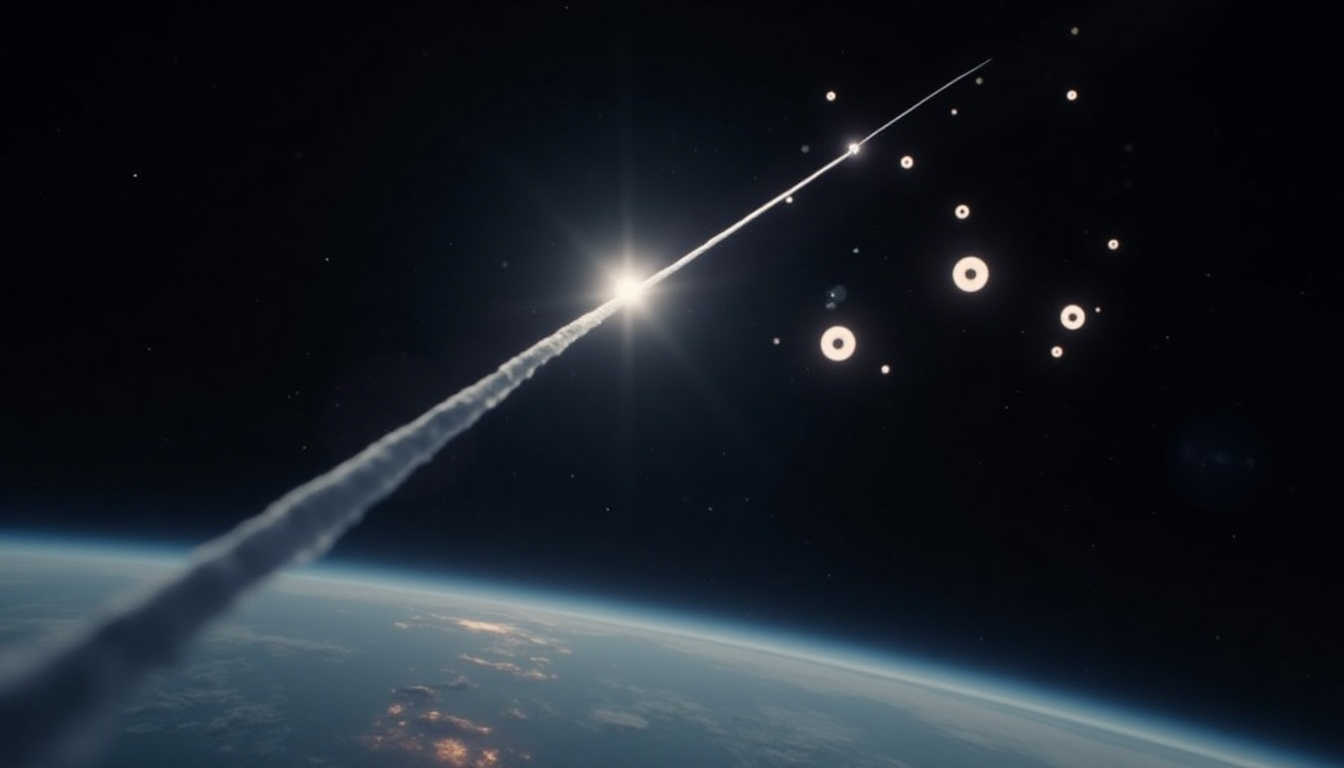






Introduction: The Dawn of a New Era in UAP Investigation
In today’s rapidly evolving landscape of scientific inquiry, few fields spark as much intrigue as the study of unidentified aerial phenomena (UAP). Modern initiatives such as Skywatcher UAP research are redefining how we explore mysteries that have long been relegated to the margins of scientific discourse. Drawing on lessons from an era defined by the fierce rivalry of intelligence agencies during the CIA vs KGB Cold War, today’s researchers merge cutting-edge technology with rigorous empirical methods and an unwavering commitment to transparency. As one researcher aptly remarked, “The truth is the ultimate defense against ignorance.” This article examines the evolution of UAP research, the innovative methodologies driving current investigations, and the collaborative spirit that bridges historical intelligence practices with modern scientific exploration.
Table of Contents
Historical Roots: From Cold War Secrecy to Modern Scientific Inquiry
The legacy of the CIA vs KGB Cold War continues to influence contemporary intelligence and research. During that tense period, both the United States and the Soviet Union invested heavily in secret programs designed to monitor and interpret aerial phenomena. Intelligence agencies of the time faced unexplained sightings with suspicion, attributing them to enemy technology or misinterpreting natural occurrences, sounds familiar right? Although the raw data from those early operations was often limited and cloaked in military jargon, it laid the groundwork for later generations of researchers committed to separating fact from fiction. Today’s UAP research builds on this legacy by employing advanced sensor arrays, high-resolution imaging, and controlled field experiments—methods that transform anecdotal sightings into credible evidence that withstands rigorous scrutiny.
Bridging Eras of Secrecy and Science
The quest to unravel UAP mysteries has evolved from Cold War-era secrecy to modern transparency—but the ghost of CIA and KGB methodologies lingers. Below, we analyze Skywatcher UAP Research’s 7-level investigation framework, a system echoing the rigor of Cold War intelligence ops while embracing today’s open science. By pairing their model with historical parallels, we uncover how yesterday’s spies inform tomorrow’s discoveries.
The Skywatcher Paradigm: Methodologies, Technologies, and Transformative Frameworks
At the heart of Skywatcher’s approach is an innovative framework that moves systematically from initial observation to in-depth analysis and, ultimately, public disclosure. The process begins with the collection of raw observational data using a combination of visual imaging, radar tracking, and multiband infrared sensors. This multi-modal approach ensures that phenomena are documented from multiple perspectives, reducing the risk of misinterpretation.
(Adapted from Skywatcher UAP Research with CIA/KGB Historical Context)
| Level | Skywatcher Protocol | Cold War Equivalent (CIA/KGB) | Transition Criteria |
|---|---|---|---|
| Level 1: Preliminary Observation | Initial reports, often anecdotal. | CIA’s Project BLUE BOOK Phase 1: Dismiss 90% as “swamp gas.” | Data passes basic validity checks. |
| Level 2: Structured Data Collection | Gather photos, radar hits. | KGB’s Fakel Division: Seize civilian footage, censor media. | – |
| Level 3: Analysis & Hypothesis Testing | Validate metadata, rule out aircraft. | CIA’s Project SIGN (1947): Classify “Lenticular Vehicles” as top secret. | Unexplained evidence warrants deeper study. |
| Level 4: Independent Verification | Cross-check via sensors, peer review. | KGB’s “Triplicate Rule”: Three agents must confirm anomalies. | Anomalies confirmed as genuine unknowns. |
| Level 5: Public Disclosure & Review | Publish preprints, invite scrutiny. | CIA’s 1960s “Grudge Report”: Redact 80%, leak disinformation. | Experts validate findings. |
| Level 6: Full Disclosure | Engage institutions for acknowledgment. | KGB’s 1983 “Cosmospies” leak: Plant fake UFO docs to confuse NATO. | Phenomenon gains legitimacy. |
| Level 7: Evaluation & Conclusion | Integrate into mainstream science. | CIA’s 1991 Gulf War UAP policy: Admit nothing, archive everything. | Accepted as knowledge. |
Source: Skywatcher UAP Research Framework. Adapted by UAPWatchers.com with historical CIA/KGB context for comparative analysis. [Fair Use Apply].
Electromechanical Signaling and Repeatable Results
In field experiments, specific electromechanical signaling techniques—often colloquially referred to as the “dog whistle”—have consistently produced observable and repeatable results. One team member noted, “100% of the time when our system is activated, we observe anomalies in broad daylight, verified by independent sensor data.”
Pattern Recognition and Neuromeditative Interaction
Following data collection, researchers employ advanced statistical methods and pattern recognition techniques to classify observed phenomena into distinct categories. For example, the “Tic Tac” class is characterized by unconventional flight patterns and elusive behavior, while the “jellyfish” category describes objects with organic, fluid-like motion. Complementing these technological methods, the Skywatcher team has developed neuromeditative interaction protocols. By training individuals to achieve a deeply focused, meditative state, researchers tap into heightened human perception that can reveal subtleties beyond the reach of electronic sensors. As Jake Barber wisely stated, “Correlation is not causation, but when correlation is as robust as we have documented, it compels us to explore deeper.”
Government Collaboration and National Security Perspectives
Modern UAP research exists at the intersection of scientific inquiry and national security. The once-secretive practices of Cold War intelligence have evolved into a model of transparency and collaboration. Skywatcher actively engages with government agencies and intelligence bodies to ensure that sensitive information is handled with due care while respecting national security protocols. This collaborative approach marks a significant departure from the adversarial posture of past intelligence operations.
Today, government officials recognize that transparent, evidence-based research not only bolsters public trust but also enhances national defense by thoroughly investigating anomalies. Through partnerships with defense departments and regulatory agencies, researchers gain access to independent verification, technical expertise, and additional resources that help bridge the gap between classified intelligence and public knowledge.
Innovative Techniques: Electromechanical Signaling and Neuromeditative Interaction
Skywatcher distinguishes itself by combining advanced technological methods with human intuition.
The “Dog Whistle” Technique
The electromechanical signaling technique—dubbed the “dog whistle”—is designed to trigger and capture anomalous phenomena. By emitting a specific signal, the system reliably produces repeatable observations under various environmental conditions.
Human Consciousness as a Sensor
Complementing this is the neuromeditative interaction approach, which harnesses the power of focused human consciousness. Through specialized training, participants achieve a heightened state of awareness that enables them to detect subtle environmental cues. Together, these methodologies create a synergistic effect: while the electromechanical signaling lays the groundwork for detection, neuromeditative interaction enriches the collected data with human insights. As Jake Barber insightfully remarked, “In our work, technology and human perception are not competitors but partners in the quest for truth.”
Historical Analysis and Modern Relevance
The evolution of UAP research is deeply intertwined with the historical context of the CIA vs KGB Cold War. Early aerial investigations were characterized by secrecy and limited public disclosure. Over time, as technology advanced and the demand for UAP Disclosure grew, a new paradigm emerged—one in which empirical evidence and rigorous analysis replaced speculative methods.
The systematic approach pioneered by Skywatcher, with its meticulous data collection, rigorous hypothesis testing, and open peer review, serves as a blueprint for transforming unexplained observations into verified scientific knowledge. By applying historical lessons to modern methodologies, researchers are not only redefining the field of UAP investigation but also influencing broader scientific and strategic domains such as aerospace technology, cognitive science, and national security policy.
Conclusion: A Future Illuminated by Historical Lessons and Modern Innovation
The journey of Skywatcher UAP research—from its roots in Cold War intelligence methodologies to its current status as a beacon of modern scientific inquiry—illustrates the transformative power of merging historical insight with technological innovation. The enduring legacy of the CIA vs KGB Cold War inspires today’s researchers to pursue transparency, collaboration, and scientific rigor in the face of the unknown.
By adopting a multidisciplinary approach that combines advanced electromechanical signaling with the nuanced power of human intuition, Skywatcher is setting new standards for UAP research. As government agencies and independent researchers increasingly work together, the boundary between historical secrecy and modern discovery blurs, paving the way for breakthroughs that could redefine our understanding of the universe. In a world where the unknown continues to captivate our collective imagination, the synthesis of historical lessons and cutting-edge methodologies offers hope for a future where even the most elusive mysteries are brought to light.
Source(s): NewsNation