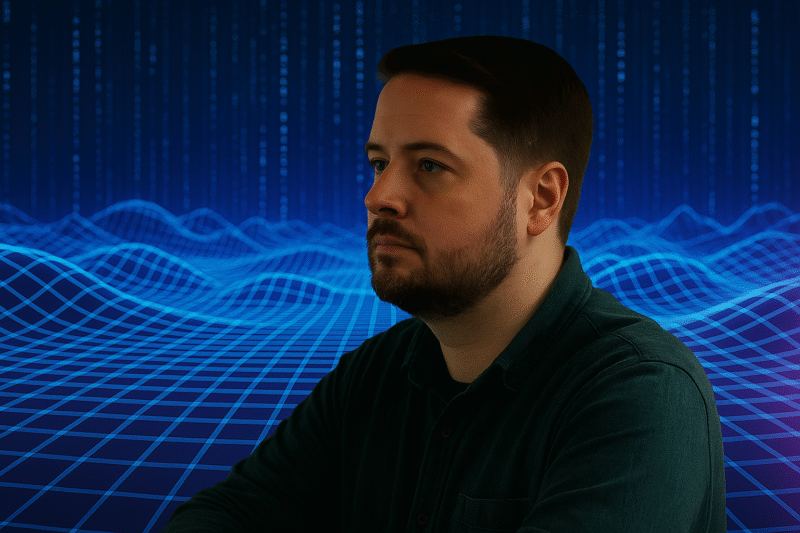







A Groundbreaking Alliance: Ryan Graves and the NSF Unite for UAP Research
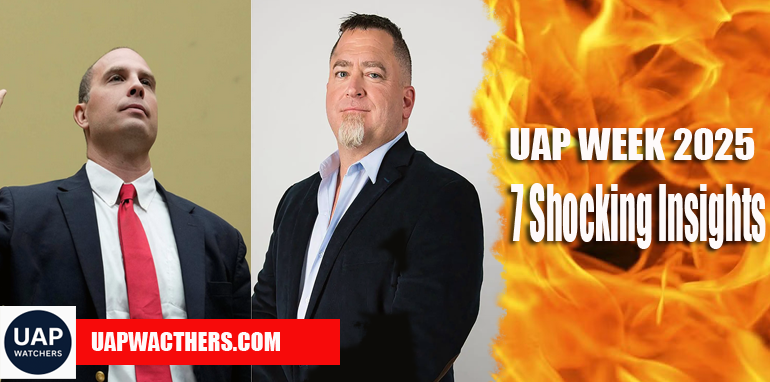
Ryan Graves collaboration with the NSF is quickly becoming a defining moment in the evolving landscape of UAP research. As the former U.S. Navy F/A-18F pilot who courageously stepped forward to testify on the routine presence of UAPs in U.S. airspace, Graves has emerged as one of the most credible voices in this once-taboo field. Now, by teaming up with the National Science Foundation (NSF), he is helping to pioneer a formal scientific approach to a topic that has long lingered in the shadows.
Ryan Graves collaboration with the NSF signals more than just another UAP headline—it represents the institutional legitimization of a phenomenon that has long evaded scientific scrutiny. With NSF’s research muscle and Graves’ credibility as both a military insider and UAP advocate, the program promises to fill the critical void between anecdotal testimony and data-driven inquiry.
Table of Contents
Why the NSF Chose to Partner with Ryan Graves
The National Science Foundation is one of the premier government agencies for scientific advancement in the United States, historically funding research in disciplines like physics, engineering, and atmospheric sciences. So why, after decades of sidestepping the subject, has the NSF decided to collaborate on Unidentified Aerial Phenomena—and why with Graves?
The answer lies in both political timing and scientific necessity. Graves, through his organization Americans for Safe Aerospace, has brought a level of transparency and integrity that has captivated both policymakers and scientific institutions. His repeated calls for structured reporting systems and UAP safety protocols have gained traction in Washington, especially in light of bipartisan concerns over national airspace incursions.
According to a statement shared by UAP advocate and commentator @UAPJames on X (formerly Twitter), the NSF’s Director of Technology & Innovation is working directly with Congress and Ryan Graves to initiate a new program designed to allocate natural resources and grant funding to UAP studies. This is the first formal initiative of its kind by a science-driven federal agency.
From the Cockpit to Capitol Hill: Graves’ Journey as a UAP Whistleblower

Ryan Graves’ transformation from military aviator to UAP advocate is no less than extraordinary. After over a decade of service, including deployments in Operation Enduring Freedom and Operation Inherent Resolve, he became the first active-duty pilot to publicly discuss near-daily UAP encounters off the U.S. East Coast—well before the 2017 “Tic Tac” videos shook the mainstream.
His 2023 testimony before the U.S. House Oversight Committee helped cement the urgency of his message: these phenomena are not rare, and they are not science fiction. In his own words:
“If UAP are foreign drones, it is an urgent national security problem. If it is something else, it is an issue for science. In either case, it is a problem we must investigate.”
Graves’ credibility has given him access to spaces that most whistleblowers can’t penetrate. Not only does he lead Americans for Safe Aerospace, but he also chairs the AIAA (American Institute of Aeronautics and Astronautics) UAP Integration and Outreach Committee—representing more than 30,000 aerospace professionals.
Why This Matters: Science, Safety, and Security
The stakes of Ryan Graves’ collaboration with the NSF extend far beyond curiosity. This initiative may be one of the most vital crossovers between science and security in modern aerospace history.
For decades, UAP discussions were marred by stigma, lack of data, and bureaucratic gridlock. Pilots were often discouraged from reporting encounters, creating dangerous blind spots in aviation safety. With Graves’ leadership and the NSF’s backing, the field is finally moving toward structured data collection, rigorous analysis, and peer-reviewed research.
Ryan Graves collaboration with the NSF may also serve as a catalyst for creating secure and anonymized channels for commercial and military pilots to report UAP sightings without fear of career repercussions. More importantly, it opens the door to fundamental scientific inquiry. Could these objects be demonstrating advanced propulsion systems? Are they atmospheric anomalies, foreign drones—or something entirely unknown?
Such questions require a dedicated, well-funded research apparatus—and this is exactly what the NSF, in conjunction with Graves, aims to build.
Conclusion: The Turning Point We’ve Been Waiting For
Ryan Graves collaboration with the NSF may one day be seen as the moment the study of UAPs transitioned from the fringe to the forefront of mainstream science. This partnership is not just a response to growing public interest; it’s a necessary adaptation to an emerging reality—one that blends aerospace innovation, national security imperatives, and the age-old human desire to understand the unknown.
As this new NSF-backed initiative rolls out, it could define a new era of transparency and scientific advancement. And perhaps, just perhaps, it will bring us closer to answering one of the most enduring mysteries of our time.