




Pioneering Scientific Investigation into Extraordinary Phenomena
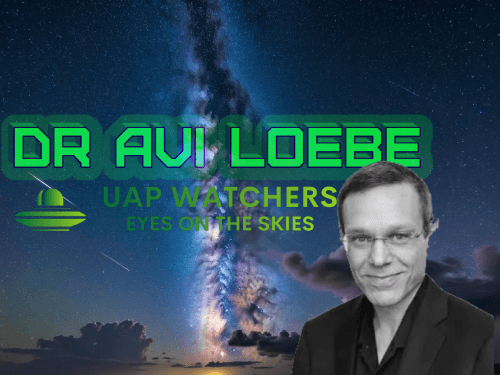
Dr. Avi Loeb stands at the forefront of a scientific revolution, challenging long-established paradigms in the study of Unidentified Aerial Phenomena (UAP). His groundbreaking approach represents a critical intersection of astrophysics, technological innovation, and interdisciplinary scientific inquiry.
Biographical Context and Scientific Foundations
Academic Credentials and Intellectual Trajectory
Dr. Loeb’s scientific journey is distinguished by an exceptional academic pedigree. As a Harvard University professor with over 800 peer-reviewed publications and multiple prestigious awards, he brings unparalleled academic credibility to UAP research. His background includes:
- Serving as the former Chair of Harvard’s Astronomy Department
- Publishing extensively in cosmology and astrophysics
- Developing theoretical frameworks in fundamental physics
- Receiving numerous international scientific honors
Comprehensive Research Initiatives
The Galileo Project: A Systematic Approach to UAP Investigation
Launched in 2021, the Galileo Project represents a quantum leap in scientific methodology for studying unexplained aerial phenomena. Unlike previous investigative efforts, this initiative distinguishes itself through:
- Cutting-edge technological infrastructure
- Multinational research collaboration
- Transparent and reproducible scientific protocols
- Advanced data collection and analysis mechanisms
Technological Infrastructure
The project employs an intricate network of observation systems, including:
- High-resolution optical and infrared cameras
- Advanced electromagnetic sensors
- Machine learning-powered data processing algorithms
- Geographically distributed monitoring stations
Interstellar Object Analysis: Beyond Traditional Astronomical Interpretations
Dr. Loeb’s research into ‘Oumuamua, the first confirmed interstellar object detected passing through our solar system, exemplifies his willingness to challenge conventional scientific narratives. His controversial hypothesis suggested the possibility of artificial origin, sparking global scientific discourse.
Methodological Innovations
Scientific Rigor and Investigative Approach
Dr. Loeb’s methodology is characterized by several fundamental principles:
- Empirical Evidence Collection: Prioritizing measurable, reproducible data
- Technological Integration: Leveraging advanced sensing and analytical technologies
- Interdisciplinary Collaboration: Engaging experts from multiple scientific domains
- Hypothesis Testing: Maintaining rigorous scientific skepticism while remaining open to extraordinary explanations
Theoretical Frameworks and Philosophical Underpinnings
Expanding Scientific Paradigms
Dr. Loeb argues that scientific progress necessitates challenging existing intellectual boundaries. His philosophical approach emphasizes:
- Critical thinking over dogmatic adherence to established theories
- Systematic investigation of anomalous phenomena
- Intellectual courage in pursuing unconventional research directions
- Transparent scientific communication
Technological and Computational Advancements
Machine Learning and Data Analysis
The Galileo Project has developed sophisticated computational frameworks that:
- Process vast quantities of multi-spectral data
- Identify potential anomalous patterns
- Eliminate mundane explanations through algorithmic filtering
- Generate statistically significant research insights
Global Scientific Collaboration and Impact
Interdisciplinary Research Network
Dr. Loeb has cultivated a global network of researchers, including:
- Astrophysicists
- Computer scientists
- Engineering experts
- Data analysis specialists
- Sensor technology developers
Challenges and Scientific Skepticism
Navigating Academic Criticism
Despite facing significant academic skepticism, Dr. Loeb maintains a principled stance:
- Welcoming peer review and critical analysis
- Publishing comprehensive research methodologies
- Presenting empirical evidence transparently
- Encouraging scientific debate and intellectual discourse
Broader Implications and Future Research Directions
Potential Scientific Breakthroughs
The long-term objectives of Dr. Loeb’s research extend beyond UAP investigation:
- Developing advanced sensing technologies
- Expanding scientific methodological approaches
- Challenging existing astronomical interpretations
- Exploring potential extraterrestrial technological signatures
Ethical and Scientific Considerations
Responsible Scientific Exploration
Dr. Loeb emphasizes the importance of:
- Maintaining scientific integrity
- Avoiding sensationalism
- Prioritizing empirical evidence
- Promoting intellectual humility
The ‘Oumuamua Controversy: A Pivotal Moment in Extraterrestrial Research
Discovery and Initial Observations
Discovered on October 19, 2017, by the Pan-STARRS telescope in Hawaii, ‘Oumuamua represented the first confirmed interstellar object passing through our solar system. Its unusual characteristics immediately captured the scientific community’s attention, with Dr. Loeb emerging as its most prominent and controversial interpreter.
Unique Characteristics that Sparked Scientific Debate
‘Oumuamua exhibited several anomalous properties that defied conventional astronomical explanations:
- Unusual Acceleration: The object demonstrated unexpected acceleration not attributable to gravitational forces
- Irregular Shape: Described as pancake-like or cigar-shaped, unlike typical asteroids or comets
- Reflective Properties: Demonstrated unusual light reflection characteristics
- Trajectory Anomalies: Displayed movement inconsistent with standard celestial object behaviors
Dr. Loeb’s Extraterrestrial Hypothesis
In his groundbreaking book “Extraterrestrial: The First Sign of Intelligent Life Beyond Earth,” Dr. Loeb proposed a radical interpretation: ‘Oumuamua could potentially be an artificial technological artifact, possibly a solar sail created by an extraterrestrial civilization.
Key Arguments Supporting the Hypothesis
- The object’s acceleration suggested potential propulsion mechanism
- Its structural characteristics diverged from natural celestial bodies
- Unusual light reflection indicated potential manufactured surface
- Trajectory suggested controlled movement beyond standard gravitational influences
Scientific Community Response
The hypothesis generated significant controversy within the astronomical community:
- Mainstream scientists largely rejected the extraterrestrial interpretation
- Many proposed alternative natural explanations, such as hydrogen iceberg or cosmic debris
- Loeb maintained that the scientific community should remain open to extraordinary possibilities
Methodological Significance
Dr. Loeb’s ‘Oumuamua research exemplified his broader scientific philosophy:
- Challenge existing scientific paradigms
- Pursue rigorous, evidence-based investigation
- Maintain intellectual openness to unconventional explanations
- Prioritize empirical observation over preconceived limitations
Broader Implications
The ‘Oumuamua debate highlighted critical aspects of scientific inquiry:
- The importance of challenging established theoretical frameworks
- Potential limitations in current astronomical understanding
- The need for comprehensive, multi-disciplinary investigation of anomalous phenomena
Personal Perspective
Dr. Loeb has consistently emphasized that his hypothesis does not assert definitive proof of extraterrestrial intelligence, but rather advocates for systematic, unbiased scientific investigation of extraordinary observations.
Conclusion: A New Frontier of Scientific Inquiry
Dr. Avi Loeb’s work represents more than a mere investigation into Unidentified Aerial Phenomena. It embodies a profound philosophical commitment to expanding human knowledge, challenging intellectual limitations, and pursuing scientific understanding with unwavering curiosity and rigor.
About the Researcher
Dr. Avi Loeb is the Frank B. Baird Jr. Professor of Science at Harvard University, an internationally recognized astrophysicist, and a pioneering researcher in the investigation of extraordinary astronomical phenomena.