





Understanding the ‘Spirit Molecule’
The ‘Spirit Molecule’ — scientifically known as Dimethyltryptamine — has gained attention for its powerful psychoactive effects and potential link to expanded consciousness. This compound occurs naturally in plants and even the human brain, and some researchers believe it plays a pivotal role in near-death experiences, dreams, and mystical states.
First synthesized by British chemist Richard Manske in 1931, this powerful psychedelic wasn’t recognized for its profound effects until the 1950s. Today, it stands at the frontier of consciousness research, challenging conventional understanding of the mind-brain relationship and the nature of reality itself.
The Chemical Structure and Natural Occurrence
The Spirit Molecule belongs to the tryptamine family of compounds, sharing structural similarities with the neurotransmitter serotonin. This molecular resemblance explains its powerful effects on perception and consciousness. What makes this compound particularly fascinating is its widespread natural occurrence:
- Plants: Hundreds of plant species across the globe contain this molecule, including Psychotria viridis (chacruna), used in traditional ayahuasca brews, and Mimosa hostilis, whose root bark contains significant concentrations.
- Animals: Several mammals, including humans, naturally produce this compound. It has been detected in rat brain tissues, human cerebrospinal fluid, and blood samples.
- Human Production: The pineal gland — a small endocrine gland in the brain often associated with the mystical “third eye” in various spiritual traditions — is theorized to produce this molecule, although this remains scientifically contentious.
The Science Behind the Spirit Molecule’s Effects
Studies indicate that the Spirit Molecule interacts with serotonin receptors in the brain, particularly the 5-HT2A receptor, which is linked to perception, cognition, and mood (Strassman, 2001). This activation often results in vivid visual hallucinations, profound spiritual encounters, and feelings of ego dissolution.
Some researchers propose that this compound may temporarily bypass the brain’s ordinary filters, allowing individuals to access alternate dimensions of consciousness. This aligns with theories in quantum mechanics, where consciousness may exist as a non-local field that transcends the physical brain (Hameroff & Penrose, 2014).
Neuroimaging and Brain Activity During Psychedelic Experiences
Recent neuroimaging studies have provided unprecedented insights into how this powerful compound affects brain function. Research using fMRI and EEG has revealed:
- Significant increases in neural entropy and complexity, suggesting a state of expanded information processing
- Decreased activity in the Default Mode Network (DMN), similar to patterns observed during deep meditation
- Enhanced connectivity between brain regions that normally don’t communicate, potentially explaining the synesthetic experiences often reported
- Activation patterns similar to REM sleep, supporting the connection between these experiences and dream states
In 2019, a groundbreaking study published in Scientific Reports demonstrated that the Spirit Molecule produces brain wave patterns that resemble a “waking dream state,” with increased delta and theta waves alongside decreased alpha waves. This neurological signature may help explain the dreamlike yet hyper-real quality of these experiences.
The “Machine Elves” and Entity Encounters
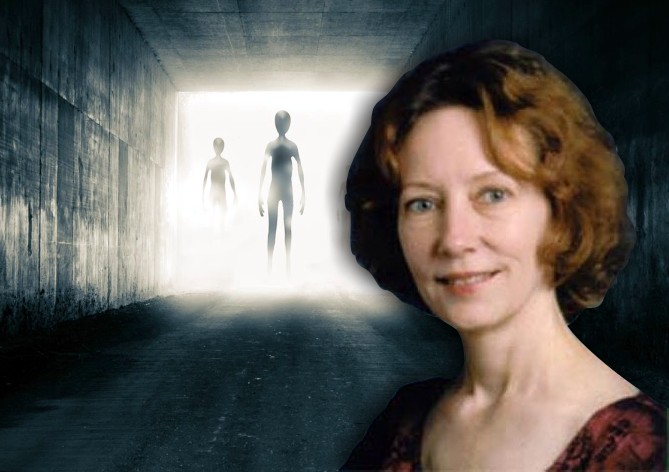
Perhaps the most intriguing aspect of experiences with this compound is the consistent reports of encounters with seemingly autonomous entities. Often described as “machine elves,” “self-transforming jeweled objects,” or “light beings,” these entities are reported across cultural backgrounds with striking similarities:
- They often appear to exist in geometrically complex realms
- They frequently communicate through visual language or direct thought transfer
- Many experiencers report that these entities are surprised or pleased by their arrival
- The entities often perform operations, demonstrations, or “teachings”
Dr. Rick Strassman’s research at the University of New Mexico found that approximately 60% of volunteers in his studies reported encounters with such beings. This phenomenon raises profound questions about the nature of consciousness and perception. Are these entities merely hallucinations generated by particular brain states, or could they represent access to normally imperceptible dimensions of reality?
The Spirit Molecule’s Role in Near-Death and Mystical Experiences
Anecdotal reports suggest that experiences induced by the Spirit Molecule often mirror accounts of near-death experiences (NDEs). Users frequently describe encounters with entities, feelings of timelessness, and out-of-body sensations. This has led some theorists to suggest that this compound may naturally release during extreme states of consciousness, such as birth, death, or deep meditation (Strassman, 2001).
Comparative Phenomenology: NDEs and Psychedelic Experiences
The parallels between Spirit Molecule experiences and NDEs include:
- Tunnel experiences: Both psychedelic users and NDE survivors report moving through tunnels of light
- Life review: Comprehensive reflection on one’s life and actions is common in both states
- Encounter with deceased relatives or spiritual beings: These meetings often convey profound messages
- Ineffability: Both experiences are described as beyond language, with participants struggling to articulate their full depth
- Transformative impact: Both experiences frequently lead to lasting positive psychological changes
A 2018 study in Frontiers in Psychology used the Near-Death Experience Scale to compare psychedelic experiences with documented NDEs, finding remarkable similarities in quality and intensity. This suggests a potential shared neurological mechanism, though the exact nature remains undetermined.
Endogenous Release Hypothesis
Dr. Strassman’s “Spirit Molecule” hypothesis proposes that the pineal gland may release significant amounts of this compound during birth, death, and other profound states. While this theory remains controversial, several findings support the possibility:
- The pineal gland contains all the necessary precursors and enzymes to produce this molecule
- The compound has been detected in human cerebrospinal fluid
- Studies have found increased levels in rats during cardiac arrest
If proven, this hypothesis could provide a physiological explanation for mystical experiences across cultures and throughout human history.
Cultural and Spiritual Significance
Indigenous cultures in South America have long used plants containing the Spirit Molecule in traditional ayahuasca ceremonies. Shamans claim these ceremonies allow participants to access the spirit world, communicate with ancestors, and gain insights into life’s deeper meanings.
Ayahuasca Traditions and Shamanic Knowledge
Ayahuasca, a brew combining Spirit Molecule-containing plants with MAO inhibitors that enable oral activity, has been used by indigenous Amazonian peoples for hundreds or potentially thousands of years. The ceremony’s cultural significance extends beyond mere psychoactive exploration:
- Healing practices: Shamans use ayahuasca to diagnose and treat illnesses believed to have spiritual origins
- Community cohesion: Ceremonial use strengthens social bonds and cultural identity
- Ecological knowledge: Many tribes attribute their extensive botanical and environmental knowledge to insights gained during ceremonies
- Initiation rites: Young shamans undergo intensive training involving regular ayahuasca use to develop their healing abilities
The Shipibo-Conibo people of Peru are particularly renowned for their sophisticated ayahuasca traditions, including complex geometric patterns (kené) said to represent the visual language encountered in the ayahuasca space.
Modern Adoption and Integration
In recent decades, ayahuasca use has spread globally, creating both opportunities and challenges:
- Religious movements: Groups like Santo Daime and União do Vegetal have established ayahuasca as a sacrament in syncretic Christian contexts
- Therapeutic applications: Clinical research is exploring ayahuasca’s potential for treating depression, PTSD, and addiction
- Tourism impacts: “Ayahuasca tourism” has created complex dynamics between indigenous communities and visitors
- Integration practices: Modern practitioners emphasize the importance of psychological integration following powerful psychedelic experiences
The Intersection of Science and Spirituality
Research into the Spirit Molecule represents a unique intersection of scientific inquiry and spiritual exploration. This convergence has created new paradigms for understanding consciousness:
The Entropic Brain Hypothesis
Developed by Dr. Robin Carhart-Harris and colleagues, this theory proposes that psychedelics like the Spirit Molecule increase neural entropy, temporarily breaking down rigid thought patterns and allowing novel configurations of brain activity. This may explain why these experiences often feel more real than ordinary reality—they engage more of the brain’s processing power simultaneously.
The Receiver Model of Consciousness
Some researchers, including Dr. Bernardo Kastrup, suggest that psychedelic experiences support a “receiver” or “filter” model of consciousness. This perspective views the brain not as generating consciousness but as receiving and constraining a broader field of awareness. The Spirit Molecule may temporarily alter this filtering function, allowing expanded perceptions.
Implications for Consciousness Research
The exploration of the Spirit Molecule’s effects has profound implications for our understanding of consciousness:
This compound may provide insights into the brain’s role as a “filter” of reality rather than a generator of consciousness.
These experiences could offer evidence for the Consciousness Cloud Theory, suggesting a shared mental network accessible through altered states.
Further research may reveal connections between the Spirit Molecule, lucid dreaming, and spiritual practices aimed at achieving higher awareness.
Therapeutic Potential
Beyond its theoretical significance, the Spirit Molecule shows promising therapeutic applications:
- Treatment-resistant depression: Preliminary research suggests this compound may have rapid antidepressant effects
- Addiction recovery: These experiences often facilitate insights that help break addiction patterns
- End-of-life anxiety: The mystical experiences occasioned by this molecule may help terminal patients reconcile with mortality
- PTSD treatment: The compound’s ability to facilitate emotional processing may help trauma survivors
A 2020 study published in Frontiers in Pharmacology demonstrated that a single ayahuasca session produced significant reductions in depression scores that persisted for weeks following administration.
Ethical Considerations and Responsible Research
As research with the Spirit Molecule expands, important ethical questions arise:
- How can indigenous knowledge be respected while advancing scientific understanding?
- What safeguards should be in place for clinical or research administration of such powerful compounds?
- How should society balance potential benefits against risks of misuse?
- What preparation and integration practices maximize beneficial outcomes?
The Multidisciplinary Association for Psychedelic Studies (MAPS) and similar organizations have developed protocols that address these concerns, emphasizing proper screening, preparation, setting, and integration.
The Future of Psychedelic Research
Current and upcoming research directions include:
- Extended-state experiences: Researchers are developing methods to maintain the psychedelic state for longer periods to facilitate deeper study
- Neuroimaging advances: New techniques are allowing for more comprehensive mapping of brain activity during Spirit Molecule experiences
- Comparative studies: Research comparing psychedelic states with meditation, lucid dreaming, and other altered states
- Therapeutic protocols: Development of standardized approaches for potential clinical applications
Key Takeaways
The ‘Spirit Molecule’ is a powerful compound linked to altered states of consciousness.
Studies suggest this compound may enable access to non-local realms of awareness, aligning with quantum theories of consciousness.
These experiences often mirror near-death experiences and share similarities with mystical encounters.
Indigenous traditions have utilized this molecule in ayahuasca ceremonies for spiritual exploration.
Scientific inquiry into the Spirit Molecule’s potential could unlock new insights about consciousness, perception, and human experience.
References and Further Reading
Footnotes
- Strassman, R. (2001). DMT: The Spirit Molecule. Park Street Press. ↩
- Nichols, D. E. (2016). Psychedelics. Pharmacological Reviews, 68(2), 264-355. ↩
- Rätsch, C. (2005). The Encyclopedia of Psychoactive Plants: Ethnopharmacology and Its Applications. Park Street Press. ↩
- Nichols, D. E. (2018). N,N-dimethyltryptamine and the pineal gland: Separating fact from myth. Journal of Psychopharmacology, 32(1), 30-36.