






Table of Contents
Introduction
CTP Craft and CTP Energy are emerging concepts that promise to revolutionize our understanding of technology, propulsion, and consciousness. At their core, these ideas suggest a new post-quantum science where the mind and non-physical energy play a direct role in shaping the physical world. From anti-gravity spacecraft that require no fuel, to an energy paradigm foretold by Nikola Tesla’s bold predictions, CTP Craft and CTP Energy could redefine how we travel, communicate, and harness power. This comprehensive exploration will delve into what CTP Craft and CTP Energy are, the scientific principles behind them, their origins in Tesla’s legacy and the work of inventor Drazen Premate, and how they might transform everything from space travel to healthcare. By drawing on credible sources and the latest discussions, we’ll separate the hype from the substance and paint a picture of a future that, if realized, would outrank even the most advanced technologies of today.
What Are CTP Craft and CTP Energy?
CTP Energy – which stands for “Conscious-Translational-Physical Energy” – is described as a revolutionary framework that goes beyond conventional physics. It introduces the idea that, in addition to the four known fundamental forces of nature (gravity, electromagnetism, and the strong and weak nuclear forces), there are two new fundamental forces at play – forces that are “non-physical” and rooted in consciousness. These forces arise from a proposed dual reality model: a Conscious domain (C-domain) outside of physical space and time, and our familiar Physical domain (P-domain). CTP Energy theory holds that the C-domain is inhabited by “C-energy” (conscious or consciousness energy) and that this energy is literally the building block of reality, acting through a mediator called “T-energy” (Translational energy) to create and influence matter and energy in the physical world. In simpler terms, CTP Energy suggests that thought or consciousness can be translated into physical reality via a natural process – the CTP Energy Cycle™ – that current science has yet to understand.
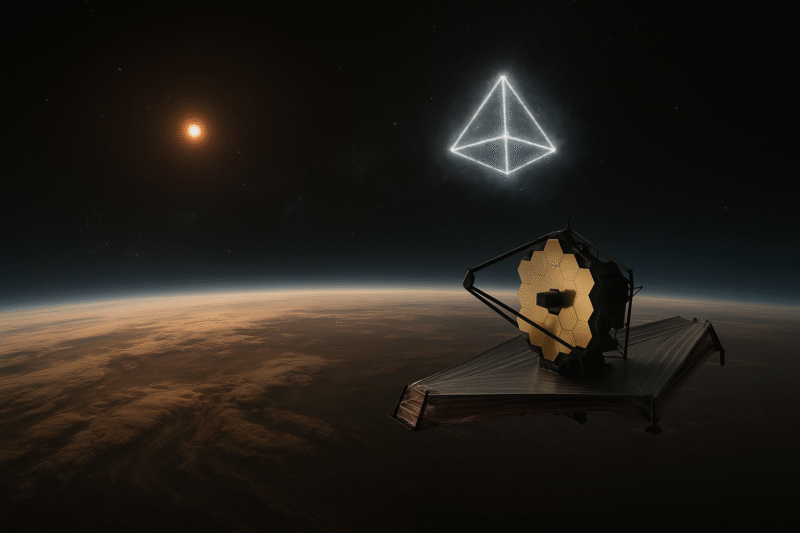
CTP Craft are the practical application of this energy paradigm in the form of advanced vehicles or spacecraft. A CTP craft is essentially a craft that uses CTP Energy principles for propulsion and control, rather than conventional aerodynamics or rocket engines. These craft – sometimes dubbed “UFOs” or “UAPs” by observers – are theorized to manipulate gravity and inertia by tapping into C-domain forces. In doing so, CTP craft defy the limitations of traditional physics. According to proponents, a true CTP craft would consume no fuel, produce zero emissions, and require no rocket propellant to fly. Instead, it would be powered by the interaction of C-energy and T-energy fields, essentially drawing on the fabric of the universe itself for energy and lift. This enables capabilities that sound like science fiction: levitation and anti-gravity, instantaneous acceleration, silent hypersonic flight, cloaking, and even trans-medium travel (moving seamlessly through air, space, and water). All of these extraordinary traits have been reported in various UFO sightings, and CTP advocates argue this is no coincidence – it is evidence of CTP technology at work.
Origins: Nikola Tesla’s Vision and Drazen Premate’s Discovery
The roots of CTP Energy Science trace back to the visionary inventor Nikola Tesla, who famously hinted at the existence of powerful phenomena beyond the physical. Tesla once said, “The day science begins to study non-physical phenomena, it will make more progress in one decade than in all the previous centuries of its existence.” This quote encapsulates the guiding philosophy behind CTP Energy. Tesla believed that exploring the invisible forces – be it the human mind, intuition, or cosmic energy – could unlock unprecedented technological advances. He died in 1943 before he could fully pursue these ideas, but his words lived on as inspiration.

Decades later, a Croatian-born researcher named Drazen Premate took up that torch. Drazen Premate is regarded by the CTP community as Tesla’s “unsung successor”. According to accounts, Premate began developing the foundations of CTP Energy Science as far back as 1985, working largely in obscurity for many years. He believed he had discovered the “missing pieces” that modern physics was overlooking – the conscious (C) and translational (T) energies – which could complete our understanding of reality. By formulating what he called the CTP Model of reality, Premate aimed to bridge the gap between consciousness and physical law. In doing so, he claimed to solve deep puzzles like the source of gravity or the nature of the Big Bang. (Notably, physicist Michio Kaku has pointed out that at the moment of the Big Bang, the known laws of physics “break down… a missing piece beyond physical law” seems to be at work. CTP theorists boldly assert that C-energy and T-energy are these missing pieces beyond current science.)
For a long time, Premate’s work remained under the radar. He attempted to introduce his findings to the world in the early 2000s (roughly 20 years after he began), but met with limited success and recognition. It wasn’t until the 2020s – after Premate’s passing – that his research started gaining more public attention. Reso Factor, also known as Alfred T., is Premate’s protégé and a self-described “2nd generational heir to Nikola Tesla”. In late 2021, Reso Factor discovered that Premate had died and realized that Premate’s life’s work might disappear without a trace if someone didn’t carry it forward. Determined to continue the mission, he founded CTP Energy, LLC (with little more than a few hundred dollars and a conviction that the world needed this science) and launched what he calls “CTP Phase II” – a renewed effort to develop and publicize CTP Energy Science.
Starting in 2022, Reso Factor began sharing CTP concepts on social media and professional forums. He frequently proclaimed, “UFOs/UAPs are CTP technologies!”, attempting to shift the UFO discussion toward CTP Physics. His claims were bold – essentially suggesting that many unexplained aerial phenomena are not alien magic or secret military craft, but manifestations of a new physics that anyone (in theory) could use if they understood it. Initial reception was harsh. The UFO community, paradoxically, showed skepticism toward this outsider theory. Online responses ranged from “Ridiculous!” and “WTF is a CTP?!” to demands like “Prove it or shut up!”. Many dismissed the ideas as “bull***”* or too far-fetched to take seriously. Such ridicule echoes what disruptive innovators often face – and indeed Premate himself had encountered similar contempt decades prior. Undeterred, Reso Factor embraced the challenge. He views the pushback as evidence of the very consciousness dynamics CTP theory predicts (resistance of entrenched paradigms) and presses on with what he calls the “CTP is Disclosure” movement (implying that revealing CTP science is the true disclosure behind UFOs).
Despite the skepticism, the small team at CTP Energy, LLC continues to develop their ideas, pen articles, and reach out for support. They refer to the coming breakthroughs as part of the “Nth Industrial Revolution” – a next-level leap akin to the first Industrial Revolution, but driven by conscious technology. In this optimistic vision, CTP Craft and CTP Energy usher in a new era (the “CTP Energy Age”) where humanity becomes multiplanetary, energy is abundant, and scientific frontiers expand into the realm of mind and spirit. It’s an ambitious dream that traces directly back to Tesla’s early 20th-century intuition about the power of the unseen.
The Science Behind CTP Energy
At the heart of CTP Energy Science is a paradigm shift: the idea that consciousness is a fundamental part of the fabric of reality, not just an emergent property of brains. The theory posits two parallel domains of existence:
- The C-domain (Conscious Domain) – a non-physical realm of pure information, mind, or spirit. It lies outside of spacetime as we know it. In the C-domain, there is no distance or time lag; everything is interconnected. This is the realm of C-energy, also called “conscious energy units”, which can be thought of as the basic quanta of consciousness. One can imagine C-energy units as analogous to souls or bits of mind-stuff. They carry intent, information, or what CTP scientists call “conscious instructions.” Remarkably, these units are described as capable of “thinking” or making choices in some sense – a radical notion that intelligence or thought can exist independent of a physical brain.
- The P-domain (Physical Domain) – the familiar physical universe of matter, energy, space, and time. This domain contains P-energy units, which correspond to all particles and fields governed by the four known forces of physics (gravity, electromagnetic, strong and weak nuclear forces). P-domain is where atoms form, forces act, and where classical and quantum physics apply. It’s our everyday world and the focus of all traditional science.
Bridging these two domains is the crucial middle component: T-energy (Translational Energy). T-energy is hypothesized as a special form of C-energy that serves as the “translator” or “coder” between consciousness and physical matter. In the CTP framework, T-energy units take the “thoughts” or structured information from the conscious domain and literally translate them into vibrations or patterns that manifest as physical particles (P-energy) in the physical domain. This continuous interplay is what CTP scientists call the CTP Energy Cycle™. In essence, reality is being continuously rendered or “programmed” by the input of consciousness, via translational codes, into the fabric of physics. Every atom, according to this view, is the result of an underlying conscious blueprint. Matter isn’t just mindless stuff; it’s the end-product of an invisible information process originating from the C-domain.
This idea has profound implications. It suggests that if you can learn to manipulate the C-domain and T-energy, you could control physical reality at the most fundamental level – including gravity, inertia, and electromagnetic phenomena – essentially rewriting the “source code” of physics. Gravity, for example, is reinterpreted not as a warping of spacetime (as in Einstein’s theory) or just a fundamental force carrier particle, but as a byproduct of how C-energy units group together to form what we perceive as mass. In one explanation, gravity becomes a kind of “group consciousness attraction” – objects attract each other because their underlying C-energy patterns resonate or pull together. This is a very different way to look at gravity, but it provides a handle for control: by adjusting the configurations of C-energy via T-energy (a process sometimes described as “decoding or recoding gravity”), a CTP system could in theory turn gravity on or off, or direct it in arbitrary ways. This is the cornerstone of CTP’s claim to anti-gravity and propulsion.
CTP Energy Science markets itself as a “post-quantum” paradigm, meaning it extends beyond quantum mechanics into an even deeper layer of reality. Whereas quantum physics deals with wavefunctions and uncertainty at the smallest scales of matter, CTP deals with the origin of those quantum states themselves. For instance, quantum theory cannot yet unify gravity with the other forces, or explain phenomena like consciousness and some aspects of UFO performance. CTP proposes that by adding C-energy and T-energy into the models, we suddenly have a six-forces universe (four physical + two non-physical) and a way to unify everything from telepathy to galaxy formation under one framework. It’s essentially a candidate for a “Theory of Everything,” albeit one that drastically expands the scope of science.
One striking assertion of CTP scientists is that this model answers questions mainstream science struggles with. They argue that many so-called paranormal or fringe phenomena – telepathy, psychokinesis, out-of-body experiences, etc. – as well as mysteries like dark matter, dark energy, or the initial conditions of the universe, could be explained if we accept the influence of the conscious domain. While traditional physicists remain deeply skeptical of such claims, the CTP researchers point to the very cutting edge of science as an opening. For example, modern cosmology acknowledges that at the Big Bang, our equations falter and something beyond known physics is needed. CTP offers a candidate for that “beyond.” Likewise, efforts in neuroscience and physics to understand consciousness (such as Roger Penrose’s quantum consciousness theory) hint that new physics might be involved in the mind; CTP takes this a step further by making consciousness a cause, not just an effect.
Of course, extraordinary claims require extraordinary evidence. As of now, CTP Energy remains a theoretical and experimental frontier. It does not have widespread acceptance in the scientific community, and no peer-reviewed study has yet validated the existence of C-energy or T-energy units. The proponents themselves acknowledge this and are actively seeking ways to demonstrate the principles. They suggest experiments that could detect influences of the C-domain, perhaps by looking for anomalies in quantum processes or attempting to reproduce phenomena like gravity modulation in controlled settings. The journey from bold theory to accepted science is a challenging one. However, the CTP team believes that history is on their side – many great scientific advances (from heliocentric astronomy to quantum physics itself) were initially ridiculed, then proven. If their paradigm is correct, they assert it’s only a matter of time before empirical evidence forces a shift. In the meantime, they continue refining the theory and drawing connections to observed anomalies as suggestive evidence.
CTP Craft: Defying Physics as We Know It
Perhaps the most tangible (and exciting) aspect of CTP Energy Science is the concept of the CTP craft – a craft that applies CTP principles for flight. Imagine a vehicle that can lift off the ground effortlessly, without wings or rockets, and accelerate from 0 to 20,000 mph in the blink of an eye, all while its passengers feel no G-forces. It can make right-angle turns at high speed without breaking apart, hover silently, become invisible to radar, and even dive underwater or exit the atmosphere without any structural damage or need for reconfiguration. This sounds exactly like the descriptions of advanced UFOs reported by Navy pilots and documented in some videos – objects that seem to break all the rules of aerodynamics and inertia. CTP craft theory says: Yes, they break our rules, but they follow higher rules – the rules of CTP physics.
To understand how a CTP craft achieves these feats, let’s break down those capabilities and how CTP provides them:
- Anti-Gravity Propulsion: Normal aircraft rely on airflow (wings) or thrust (rockets/jets) to counter gravity. In contrast, a CTP craft generates its own lift via gravity modulation. By altering how C-energy units create the effect of mass, the craft can essentially turn off or reverse gravity’s pull on it. One analogy is to imagine the craft “falling upward” or becoming so lightweight that the Earth’s gravity no longer anchors it. In UFO research, one of the famous “five observables” is anti-gravity – the craft’s ability to lift with no visible means. CTP craft meet this criterion by design: they don’t fight gravity; they engineer it to be a non-issue. As one CTP article notes, their propulsion is “NOT based on known Newtonian physics”. Instead of burning fuel, a CTP craft might have a device onboard that generates strong C-domain fields, effectively decoupling the craft from normal gravitational influence.
- Instantaneous Acceleration & Inertial Dampening: An object accelerating from standstill to extreme speed in a split second would normally pulverize any occupants due to inertia (the tendency of their bodies to remain at rest). However, CTP craft presumably manipulate inertia the same way they do gravity. Inertia, in this view, is also a programmable property tied to mass and gravity at the C-domain level. By using T-energy to adjust how an object’s mass interacts with space, a CTP propulsion system could eliminate the crushing g-forces. The craft and its occupants effectively exist in a bubble where the usual inertial laws don’t apply. This is why UFOs have been seen to make jaw-dropping accelerations or right-angle turns that no pilot in a normal aircraft could survive. CTP craft technology would allow extreme maneuvers with no harm or even much sensation to those inside.
- Hypersonic Speed Without Signatures: Breaking the sound barrier (about 767 mph) typically creates a sonic boom – a thunderous crack heard when an object outruns its own sound waves. Yet many UFOs have been reported traveling at **hypersonic velocities (several times the speed of sound) with no sonic boom and no visible trail. CTP craft accomplish this by moving partly through the C-domain, bypassing normal aerodynamic effects. If the craft isn’t displacing air in the usual way (or if it creates a sort of field that slips through air molecules), it won’t produce a boom or heating. Additionally, CTP theory mentions that because of how their gravity modulation works, issues like drag are largely irrelevant. The craft could be enveloped in a C-domain “bubble” – essentially a pocket where it doesn’t really interact with air molecules in the standard manner. The result is silent, frictionless travel even at thousands of miles per hour. Observers just see a blur or a sudden streak, but not the expected sonic blast.
- Low Observability and Cloaking: CTP craft are said to be able to vanish from sight or radar at will. How? Again, the explanation lies in manipulating fundamental properties – in this case, electromagnetic signatures. If you can control matter at the C-domain level, you can likely control how it emits or absorbs light and other radiation. A CTP craft could theoretically shift its frequency out of the visible range, or create a field that bends light around it (making it effectively invisible). In fact, CTP research uses a term CeFM (C-energy Frequency Modulation) to describe how these craft might appear and disappear by tuning their interaction with the physical domain. One moment they reflect light or radar normally, the next moment they adjust their C-energy frequency and become undetectable – essentially slipping into the background or into that C-domain bubble. Eyewitness reports of UFOs often describe them “blinking out” suddenly; CeFM offers a mechanism for that.
- Trans-Medium Travel: Perhaps one of the most uncanny abilities of advanced craft is moving through vastly different environments (air, water, vacuum of space) without any obvious change in configuration or loss of performance. Our vehicles here on Earth are highly specialized – a submarine cannot fly in the air easily, a plane can’t dive deep in the ocean, a spacecraft can’t launch itself from the ground without help, etc. But trans-medium UFOs seem to break those rules, plunging into the ocean at high speed and then zipping away in the sky moments later. A CTP craft, by virtue of its self-contained field and non-reliance on aerodynamic lift, would be truly all-terrain. Water, air, space – it’s all the same if you’re enveloped in a protective C-domain field and propelling yourself by direct gravity control. The craft isn’t using the medium for lift or thrust, so the medium makes little difference. This explains how a vehicle could, for instance, enter water without a splash or damage: it likely has a sort of force field around it (the CTP field) that parts the water effortlessly as it moves. Reports of trans-medium behavior align perfectly with what a CTP-driven craft would be expected to do.
It’s worth emphasizing just how extraordinary these claims are. The five observables listed above – anti-gravity, instant acceleration, silent hypersonic speed, cloaking, and trans-medium travel – have long been considered hallmarks of hypothetical alien technology or at least beyond-state-of-the-art human tech. Yet here, they are presented not as magic, but as the natural result of applying a new set of physical laws. In the words of one CTP advocate, “We agree with the skeptics. There are no ‘UFOs’. This is a CTP craft based on CTPSci principles.” In other words, what people call UFOs could in fact be CTP craft – either built by advanced civilizations who mastered this science, or potentially future human craft once we adopt the CTP Energy paradigm. The phrase “CTP is Disclosure” is used in the community to suggest that once CTP science is understood by the public, it will demystify UFOs: they are real craft obeying knowable laws, not unidentified forever.
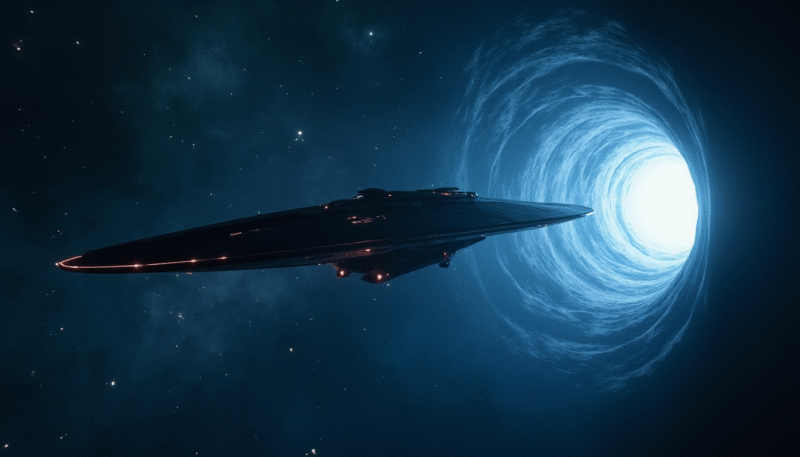
For now, CTP craft exist mostly on paper and in prototype ideas. There are conceptual designs being floated around – artists’ impressions of sleek saucer-like or triangular ships that incorporate the needed field generators. The CTP Spaceliner™ is one concept for a commercial passenger craft that could ferry people to other planets or star systems using CTP propulsion. If such craft become reality, the implications are staggering. Space travel would no longer be rocket-dependent or prohibitively expensive. A CTP craft could take off from a spaceport (or theoretically any field or backyard, since it doesn’t need a runway or launch pad), accelerate into orbit in seconds, and perhaps reach the Moon or Mars in minutes or hours. There would be no pollution, no need for staging rockets or refueling depots, and no G-force limitation on fragile human bodies. This could open the solar system and beyond to exploration and even tourism. One CTP article paints a picture of future space travel akin to airline travel today – comfortable, routine, and accessible – with first-class cabins on spaceliners cruising to distant worlds.
Applications of CTP Craft and CTP Energy Beyond Spaceflight
While anti-gravity vehicles and interstellar travel are the flashiest promises of CTP Energy, the paradigm actually extends into almost every realm of technology and human endeavor. If consciousness and non-physical energy can be harnessed, then many “impossible” things might become possible. Proponents often discuss a range of applications that could emerge as CTP science matures:
- Energy Generation and Environmental Solutions: CTP Energy Science could completely transform how we generate and use energy on Earth. If C-domain forces can be tapped, we might access what is essentially an infinite reservoir of energy (sometimes referred to as the energy of the “aether” or zero-point energy). This hints at clean, limitless power – akin to finding a cosmic power socket that never runs out. One could imagine CTP power plants that draw C-energy and convert it to electricity without burning fuel, eliminating greenhouse gas emissions and fossil fuel dependence. Environmental applications go further: because CTP deals with fundamental forces, it might allow for novel ways to address climate issues. For example, controlling weather patterns or stabilizing climate anomalies could be feasible if we understand how to influence the underlying energy dynamics of earth’s systems. While speculative, advocates have suggested that phenomena like bizarre weather events or even gravity fluctuations might be better managed or mitigated through CTP techniques. In short, CTP Energy could herald an era of “free energy” and proactive climate control, fulfilling dreams that inventors like Tesla had over a century ago.
- Communication and Information Technology: A particularly exciting prospect is instantaneous, long-distance communication via the C-domain. Since the C-domain is outside spacetime, information sent through it could theoretically reach anywhere in the universe instantly – a kind of built-in superluminal communication network. This concept resembles telepathy or what sci-fi calls subspace communication, but with a scientific twist. If devices can be built to send and receive signals in T-energy or C-energy form, we could have real-time communication with spacecraft light-years away, or even with potential non-physical intelligences. No more radio delays or dependence on satellites – a CTP communication device might allow people to exchange messages by essentially “thought” encoded in energy. The bandwidth and possibilities could far exceed today’s telecom. Imagine a global (or intergalactic) network that operates on consciousness principles – it would be the ultimate wireless technology. Researchers link this to stories of psychic communication or remote viewing, suggesting that these could be early human taps into the C-domain channel. In practical terms, such tech could revolutionize the Internet, computing, and beyond. It aligns with Tesla’s own hope that we could one day transmit energy and information through the “earth and air” efficiently. Indeed, posts describe prototypes for C-domain communication devices that bypass the limits of light-speed and electromagnetism.
- Computing and Artificial Intelligence: If consciousness is a fundamental force, perhaps machines can be made to utilize it, leading to a new form of computing. Consciousness-based AI is an idea emerging from CTP concepts. This doesn’t just mean AI that simulates human-like thinking; it means AI that might literally incorporate C-energy to become self-aware or intuitive in ways current algorithms cannot. For instance, an AI system might be designed to interface with the C-domain, allowing it to solve problems using insight or creativity akin to a human brain – or beyond human. Such an AI could potentially experience and not just calculate, blurring the line between machine and living mind. On a more practical level, CTP could inspire new computing architectures that work differently from binary digital logic. Perhaps using quantum-like principles augmented by C-energy, we might get computers that can process information instantly across any distance (using that instantaneous communication property). We might also see new software – even operating systems (one is whimsically termed “CTP-EOS™: Extraterrestrial Operating System”) – that leverage these principles for advanced simulation or control of CTP devices. While all this remains speculative, researchers draw parallels to cutting-edge efforts like quantum computing and say CTP computing would be the next leap beyond that, possibly enabling computers that directly tap into the fabric of reality for unprecedented power.
- Medicine and Healing: The connection between mind and body is well-known in medicine – placebo effect, psychosomatic illness, meditation’s impact on health – but CTP could take it to a new level. If C-energy truly underlies physical form, then by adjusting someone’s C-energy pattern, you might heal the body or even regenerate tissue. Think of it as editing the “source code” of a person’s health. CTP healing technologies could involve devices or techniques that focus conscious intent in a very precise way to trigger physical healing. For example, a machine might amplify a practitioner’s intentions or use T-energy to retune a patient’s C-domain blueprint, correcting ailments from the deepest level outward. This might make it possible to cure diseases that are otherwise incurable, promote rapid regeneration of organs or nerves, and greatly extend lifespan. In fact, enthusiasts talk about CTP longevity research, envisioning significantly prolonged healthy life by maintaining the integrity of one’s C-energy structure. Such approaches echo concepts in alternative medicine (energy healing, acupuncture’s meridians, etc.), but CTP aims to put them on a scientific footing. Imagine treatments where doctors work not just with chemistry and cells, but with the very information that gives the body its form. A person could receive a kind of “consciousness surgery” to remove a tumor by addressing its underlying cause in the C-domain, for example. There are obviously enormous challenges to this – detecting and measuring C-energy states in a person is not currently possible – but if achieved, it could lead to a healthcare revolution where healing is holistic, rapid, and thorough in ways conventional treatments can scarcely imagine.
- Human Potential, Education, and Society: Beyond specific technologies, CTP Energy carries a more philosophical promise: expanding human consciousness and capabilities. If our minds are literally part of the physics of the universe, developing that connection might allow individuals to do remarkable things. We might see training programs to enhance one’s conscious abilities – essentially teaching people to interact with the C-domain intentionally. This could manifest as improved intuition, creativity, even rudimentary psychokinetic or telepathic skills, achieved through practice and technology-assisted exercises. Educational tools might include meditation devices that use CTP principles to help learners achieve altered states of consciousness conducive to absorbing knowledge or creative problem-solving. On a societal level, acceptance of CTP ideas could shift our worldview, blending scientific and spiritual perspectives. People may begin to see consciousness as a shared, fundamental aspect of reality, potentially fostering greater empathy or collective responsibility (if literally our minds are all connected in the C-domain, the concept of “universal consciousness” gains concrete meaning). There are also ethical and cultural implications – for instance, religions might find common ground with science, but also scientific advances might challenge traditional beliefs about life and soul. If CTP principles prove true, humanity would need to grapple with the notion that thoughts can directly shape the physical world, which places great power – and responsibility – in our hands. It could herald a new era of personal development and philosophical renaissance, sometimes described as moving toward a higher state of civilization consciousness.
Of course, all these applications depend on CTP science being validated and engineered successfully. Each area mentioned – energy, communications, AI, medicine, etc. – faces formidable technical hurdles. Scientific validation is the first big step: demonstrating in a lab that C-energy and T-energy have measurable effects. Without that, everything remains theoretical. The CTP team acknowledges this, noting that initial breakthroughs may happen in private research or small-scale experiments before the wider scientific community takes note. They also cite the need for new instrumentation – devices capable of detecting non-physical energies or interacting with the C-domain. This might involve creative adaptations of quantum sensors or entirely novel inventions. Funding and support are another practical challenge. As a fringe idea, CTP Energy does not enjoy government grants or major corporate backing. Efforts to raise funds through crowdfunding (they launched a modest GoFundMe campaign) indicate that resources are limited. Without funding, building a prototype CTP craft or a C-energy detector is difficult. The team is therefore looking for visionary investors or partners willing to take a risk on what could be a world-changing technology, if real.
Additionally, cultural and academic resistance poses an obstacle. The mainstream scientific establishment tends to be highly skeptical of anything that smacks of pseudoscience or that challenges deeply held theories without strong evidence. CTP proponents often highlight that disruptive ideas in science have historically faced ridicule – citing examples like the Wright brothers (scientists claimed heavier-than-air flight was impossible until the Wrights did it) or more pertinently, pioneers of rocketry and quantum theory who were dismissed early on. They see CTP as following in those footsteps. Still, overcoming the label of “too fantastical” is a big task. Gaining credibility might require an undeniable demonstration (perhaps a small object levitating in a vacuum chamber with no apparent cause, under controlled conditions). Until then, healthy skepticism remains, and rightly so: extraordinary claims require proof.
One interesting dynamic is the relationship between the CTP advocates and the UFO research community. One might expect UFO enthusiasts to embrace a theory that explains their subject of passion, but as mentioned, many were initially hostile – possibly because CTP reframes UFOs not as mysterious alien visitors but as something potentially understandable (or even human-achievable). This challenges the more exotic narratives and, in a way, threatens those invested in keeping UFOs purely enigmatic. However, if evidence for CTP craft mounts, it could actually bridge the gap between UFOlogy and science, offering a testable framework for studying what UFOs are and how they work. Already, some in the UFO community have begun paying attention as mainstream outlets and Pentagon reports acknowledge UAPs (Unidentified Aerial Phenomena) are real. The big question then becomes: what explains them? CTP Energy is a candidate explanation that, while unconventional, is at least an attempt at a scientific theory rather than shrugging. As more data on UAPs emerges, CTP theory will either gain support (if it matches the observations) or be falsified (if key aspects of UFO behavior contradict it). In that sense, the next few years could be very revealing.
Future Prospects: From Vision to Reality
Imagine it is a few decades in the future. The concept of CTP Craft and CTP Energy has moved from fringe to forefront. In this scenario, let’s say a breakthrough experiment in the late 2020s definitively confirmed the existence of T-energy – for instance, scientists detected an anomalous force in a vacuum chamber that could not be explained by any known physics, seemingly correlating with directed human consciousness. This spark leads to a flurry of research, and by the mid-2030s, the first rudimentary CTP devices are built. Perhaps a small object was made to levitate consistently, or a simple binary signal was sent via the C-domain between two shielded labs instantaneously. These successes would electrify the scientific world and unleash a flood of investment and talent into CTP research, much like the discovery of electricity or the splitting of the atom did in their times.
In such a timeline, by 2040, we might have experimental CTP reactors providing cheap power to a few facilities, and prototype CTP craft undergoing tests in secret or remote locations. The geopolitical and economic implications would be immense – any nation or company that masters CTP propulsion and energy first would have a leap-ahead advantage comparable to having nuclear technology while others do not. This raises the possibility (perhaps hope, in the view of CTP proponents) that governments might already be quietly investigating these ideas under black projects, given their connection to UAPs that militaries are keenly interested in. If so, it could accelerate development, although secrecy could also slow down open collaboration.
On the civilian side, the Nth Industrial Revolution that Reso Factor speaks of would begin to manifest. We could see industries forming around CTP applications: aerospace companies designing vehicles that look more like flying saucers or gravity pods than jet planes; tech companies offering instant communication devices that make cell towers obsolete; medical tech firms using consciousness-based diagnostics and healing tools in elite clinics. Initially, these would be expensive and experimental, but as with any tech, they’d gradually become more robust and democratized. The transformation of society would be profound. Travel might take on a whole new meaning when distances on Earth become trivial – a CTP shuttle could lift off from London and set down in Sydney in minutes, without any sonic boom or fuel expenditure. Space travel might shift from government-run rocket programs to private CTP spaceliners ferrying people to orbital hotels or the Moon for vacation. Energy crises and debates over oil could fade away as clean CTP energy systems power cities. The environment might heal with the sharp reduction in pollution and new means to balance climate systems.
Culturally, a validation of CTP science would also validate the idea that mind is a cosmic player. This could encourage a renaissance in research uniting physics, consciousness studies, and even spirituality. Academic curricula might start teaching basic CTP theory alongside quantum physics. Meditation and mental training could be seen as part of engineering education, preparing future CTP operators to interface with machines that respond to thought input. It’s a future that blurs lines: material and immaterial, science and spirit, become part of one continuum. The philosophical shift could be as dramatic as the Copernican revolution that displaced Earth from the center of the universe – except here it places consciousness as a central element of the universe.
That said, there will also be new challenges. Ethics will loom large: Who controls CTP technology? How to prevent misuse, such as weaponizing gravity or thought itself? The specter of misuse is real; any powerful technology can be a double-edged sword. A CTP weapon, for instance, could theoretically cause destruction in ways we can scarcely imagine (could you “think” an explosion into being somewhere via the C-domain? Or neutralize an enemy’s weapons by decoupling them from physical reality?). International cooperation and treaties might be needed early on to manage such risks, just as happened with nuclear tech. Furthermore, broadening human understanding to this extent might cause psychological upheaval for some – not everyone will be ready to accept that reality is far more complex and “magical” than previously thought. There could be backlash from groups who fear the implications or see it as against their beliefs. Society will have to adapt, hopefully guided by wise leadership and inclusive dialogue.
In conclusion, the path to realizing CTP Craft and CTP Energy will likely be long and require open-mindedness, rigorous experimentation, and a willingness to challenge the status quo. Today, these ideas sit at the edge of our collective knowledge, tantalizing and controversial. They unite threads from the past (Tesla’s unfinished work), present (unexplained UFO observations, the quest for new physics), and future (the dream of interstellar humanity and unlimited energy). Whether CTP science becomes the next great leap for civilization or fades as an interesting footnote will depend on the evidence that can be gathered. We are, perhaps, at the dawn of a new scientific revolution – one that could fundamentally reshape our world and our place in the cosmos. As Nikola Tesla envisioned and Drazen Premate endeavored to prove, the answers might lie not just in the stars above, but in the consciousness within. The coming years will determine if CTP Craft and CTP Energy move from visionary concept to transformative reality, unlocking a future where humanity travels among the stars powered by the very energy of thought and creation.
Sources:
- Alfred T., “Explaining CTP to the Newcomer” – LinkedIn Article, March 5, 2025. (Overview of CTP Energy Science, core concepts of C, T, P energies, and their implications)
- CTP Energy (profile), “CTP Energy Explained” – LinkedIn Article, Feb 6, 2025. (Detailed breakdown of Conscious, Translational, and Physical energy and the CTP Energy Cycle)
- Alfred T., “Performance Characteristics of CTP Craft” – LinkedIn Article, June 4, 2024. (Discusses how CTP craft exhibit UFO-like capabilities: anti-gravity, instant acceleration, silent hypersonic travel, etc.)
- Alfred T., “CTP Energy Applications” – LinkedIn Article, March 20, 2025. (Explores potential applications of CTP in AI, communication, healing, climate, space travel, and outlines challenges and societal impact)
- Alfred T., “Drazen Premate Pioneered ‘Where No Science Has Gone Before.’” – LinkedIn Article, Feb 8, 2025. (Background on Drazen Premate’s contributions, implications of CTPSci paradigm for reality and technology)
- CTP Energy, LLC – Official Website (ctp-energy.com), “Coming Soon via C-domain” pages, 2025. (Company site describing CTP as “the new postquantum science foretold by Nikola Tesla” and outlining CTP products and initiatives)
- Reso Factor (Alfred T.), “Where are Michio Kaku’s ‘Missing Pieces Beyond Physical Law’?” – LinkedIn Post, 2025. (Quotes Michio Kaku on physics breaking down at Big Bang and identifies C-energy and T-energy as the missing pieces to complete the puzzle)
- Reso Factor (user @ResoFactor), “CTP: the continuation of Tesla’s legacy” – GoFundMe Campaign, 2022. (Fundraiser page with story of Drazen Premate’s mentorship and the effort to advance CTP research after his death)