



Introduction
In recent years, the discovery of the so-called Tridactyl Nazca mummies, mysterious three-fingered, mummified bodies unearthed near Nazca, Peru, has ignited worldwide fascination. These desiccated beings, some small and humanoid and others outright bizarre, have been touted by believers as potential evidence of non-human intelligence (NHI) from ancient times. Now, with the release of detailed DICOM imaging files (digital medical scans) and new forensic analyses, the Nazca mummies are yielding astonishing insights that challenge conventional archaeology.
Table of Contents
From tridactyl (three-fingered) hands with extra joints to possible eggs and even a fetus preserved within one specimen, the Tridactyl Nazca mummies are a trove of anomalies. This report delves into the latest findings, including data from Tridactyls.org researchers, and profiles key specimens like Louisa, Monserrat, and SUJ, examining their anatomical oddities, metallic implants, and the profound implications for UFO disclosure and our understanding of human history.
The Discovery of the Tridactyl Nazca Mummies
The saga of the Tridactyl Nazca mummies began around 2015 when a local tomb raider known as “Mario” reportedly uncovered a secret cache of mummified bodies in a remote desert tomb near Nazca. These were no ordinary Nazca mummies, many had elongated skulls and only three fingers and three toes on each limb. Mario’s haul eventually caught the attention of journalists and researchers. In 2017, famed ufologist Jaime Maussan helped unveil several of these Nazca mummies to the public, sparking intense debate. The Peruvian authorities and skeptical scientists initially dismissed the Nazca mummies as an elaborate hoax, suspecting they were constructed from pieced-together human and animal remains. However, Mario maintained he had found an entire hidden tomb of over one hundred such specimens, encompassing multiple distinct types of beings. Indeed, eyewitnesses claim that at least “five to seven different distinct specimens and varieties” were present among the Tridactyl Nazca mummies.

Despite early controversy, a dedicated group of researchers continued investigating these enigmatic bodies. Peruvian scientists from the Universidad Nacional San Luis Gonzaga de Ica (UNICA) were granted access to some of the remains, including a large female mummy nicknamed “Maria” and several smaller ones. By 2019–2020, this team, led by Dr. Roger Zuñiga, performed high-resolution CT scans and even biopsies on the Nazca mummies. Meanwhile, independent enthusiasts, often congregating in online communities, pursued their own analyses. In 2023 and 2024, with the public release of DICOM files from those scans, a wave of crowdsourced forensic research took off. Specialists and amateurs alike downloaded the Nazca mummies’ imaging data to scrutinize every bone and tissue in detail.

Before the release of the DICOM findings gained widespread attention, independent researcher and self-declared xenoanthropologist Ed Casas, drawing from his background in archaeology, offered a preliminary morphological assessment of the tridactyl specimens.
Casas analyzed the structural and developmental features of the Nazca specimens through a proto-amphibian lens. He argues that several of the smaller tridactyl Nazca mummies exhibit characteristics consistent with amphibian-like ontogeny, including signs of larval stages, rudimentary branchial arches, and specific cranial plate segmentation. According to Casas, these features point to an evolutionary biology unlike any known terrestrial vertebrate, possibly even converging with early tetrapods.

His observations align with emerging findings from DICOM scans that appear to show undeveloped larvae or embryos inside the abdominal cavities of certain mummies, suggesting a reproductive cycle similar to that of amphibians or oviparous reptiles. As researcher Gonzalo Chavez noted excitedly, “the larvae inside of the eggs have been found using the 60 cm tridactyl’s DICOMs”, one of many new revelations. Chavez gave “huge credit to Casas”, independent investigator known online, for locating and sharing these files that revealed an apparent embryo within an egg inside one of the small Tridactyl Nazca mummies.
Advanced Imaging Sheds New Light on the Tridactyl Nazca Mummies
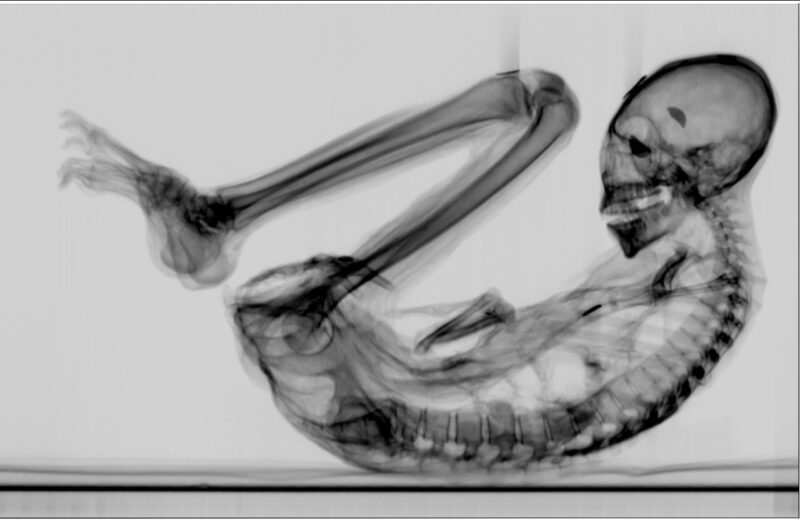
The availability of detailed CT scans and DICOM imagery has revolutionized the study of the Nazca mummies. Researchers can now inspect the interior of these beings without destructive methods, visualizing their bone structure, internal organs, and any foreign objects. The scans have produced startling evidence supporting the idea that these bodies were living organisms with natural anatomies (rather than assembled fakes). Key findings from the imaging include:

- Eggs and Embryos: Several of the diminutive Nazca mummies (~60 cm in height) have oval objects in their abdomens that were long suspected to be eggs. High-resolution scans confirmed that these are indeed biological eggs, complete with internal structures. One mummy, nicknamed Louisa, contains three ovoid eggs in her abdominal cavity. Even more astonishingly, detailed DICOM images revealed what appears to be larval or fetal forms inside these eggs. Chavez highlighted one scan frame showing a clear outline of a developing embryo, calling it a “larvae embryo and baby” inside the egg. Blood vessels or capillaries are seen surrounding and entering the eggs, suggesting they were organically connected to the creature’s body. In early 2020, a biopsy of one egg’s contents proved it was not a stone or fabricated object but contained organic tissue, confirming it was a real egg with biological material.
- Internal Fetus: Another Tridactyl Nazca mummy has pushed the boundaries of believability: a small tridactyl being was found to have a fetus inside its womb. This specimen, called Monserrat (or Montserrat), measures about 3 feet (90 cm) tall and was pregnant at the time of death. CT scans unveiled a tiny three-fingered fetus curled up inside Monserrat’s uterus. Remarkably, the fetus, nicknamed “Raphael” by some researchers, also has three fingers and three toes, mirroring its mother’s physiology. Medical experts noted intricate anatomical details, such as a complex uterine structure and even capillaries carrying blood to the fetus, which would be nearly impossible to fake. “According to four forensic experts who have analyzed it… these are completely original hands,” investigator Jois Mantilla said of Monserrat’s anatomy, emphasizing that the fetus and mother show no signs of artificial assembly. The presence of a tridactyl fetus inside a tridactyl mother has been hailed by proponents as “definitive proof” that these beings were once living creatures and not hoaxes. It directly counters the skeptics’ claim that the Nazca mummies are merely dolls made of random parts – after all, how could a fabricated mummy contain a naturally formed fetus?
- Tridactyl Skeletal Structure: The scans have allowed anatomists to examine the unique skeletal features of the Nazca mummies in detail. The hallmark trait is the tridactyl limb structure, each hand has three long, slender fingers and each foot has three toes. In the scans, the finger bones are continuous and jointed normally, with no visible breaks or graft points that would indicate they were assembled from separate bones. In fact, each finger has an extra phalanx bone (four in total per finger) compared to a human’s three, and the fingers lack an opposable thumb. This gives them an elongated, almost spidery appearance. X-rays of one large Nazca mummy’s hand were analyzed by radiologists and anatomists, all of whom concluded there was “no sign of manipulation… no clue of any forgery” in the bone joints. The fingers and toes seem naturally articulated and even show preserved nails at the. Dr. José de Jesús Zalce Benitez, a forensic expert who studied multiple specimens, pointed out that the wrist and ankle bones in these Nazca mummies differ from humans, aligning anatomically with the three-digit hands and feet rather than a five-digit limb. In one presentation, he carefully explained how the tridactyl anatomy, while humanoid, does not match any known human deformity or pathology, these beings appear to be a distinct biological category.
- Metallic Implants and Anomalies: The imaging has also revealed the presence of mysterious metallic objects embedded in some of the Nazca mummies. For instance, Louisa (the egg-bearing mummy) has a rectangular metal implant on her chest, right over the sternum. This object, often referred to as a “pectoral plate,” was analyzed by engineers at Peru’s National University of Engineering. To their surprise, it was found to contain traces of osmium, one of the rarest, densest metals on Earth, often used in high-tech applications. “The presence of this type of metal in Luisa’s implant is therefore legitimately surprising. Why would Mario, her discoverer, have gone to the trouble of putting osmium in such an object, assuming it was a fraud?” researchers mused, noting that Mario would have gained more by selling the osmium itself. Another mummy, Monserrat, has a small circular metallic disc inside her skull. Scans of Monserrat’s cranium show a round, coin-like object at the top of her elongated skull, possibly a surgically inserted plate or implant, perhaps even made of gold (as its appearance suggests in the scans). These metal pieces do not correspond to any known ancient Peruvian practice (such as trepanation plates), especially given their unusual material properties. Their function remains unknown, some speculate they could have been used in life (for health or even communication purposes), while others wonder if they had ritual significance. Additionally, the imaging detected what could be small implants or metal fragments in the limbs of certain Nazca mummies. One specimen nicknamed “Artemis” (56 cm long) reportedly had as many as seven metal implants distributed throughout its body. Clearly, if these beings were once alive, someone in antiquity performed surgeries or procedures on them, a detail that deepens the mystery.
- Preserved Organs and Tissues: Unlike typical dried, ancient mummies that often contain only desiccated skin and bones, the Nazca mummies show evidence of internal organs and soft tissues preserved in situ. The CT scans of the larger mummy Maria, for example, revealed structures in her chest cavity that resemble a heart and possibly lungs. In Monserrat’s case, the presence of a fetus also implied a preserved uterus and other organs. Some of the small Nazca mummies have what appear to be complete spines, rib cages, and even remnants of eyes and musculature. Researchers have noted that the skin of these Nazca mummies, while dried, is oddly greyish-white and covered in a powder. This powder has been identified as diatomaceous earth, likely used by whoever entombed the bodies to dry and preserve them. The skin’s texture also retains faint markings. Notably, the fingerprints and toe prints of several Nazca mummies have a very peculiar pattern: they are composed of straight lines running in parallel, rather than the whorled loops of human prints. U.S. attorney and researcher Joshua McDowell, who examined the mummy Maria alongside forensic specialists, remarked that “we did not see any loops or whirls on the prints of the fingers or on the toes” – the prints were unlike those of any human. Some have likened these dermal patterns to reptilian or avian scales, which tend to form more linear or geometric arrangements instead of swirling friction ridges. Such observations of preserved tissue give further credence to the idea that the Nazca mummies represent a previously unknown species (or several species) with significant anatomical differences from humans.
Profiles of Notable Tridactyl Nazca Mummies and Their Anomalies
Given the range of specimens uncovered, researchers have started assigning informal names to individual Nazca mummies. Each has unique traits that add pieces to the puzzle. Below, we highlight some of the most compelling mummies studied so far and what makes them extraordinary:
Louisa – The Egg-Bearing Nazca Mummy with Implants
One of the first small tridactyl Nazca mummies to undergo extensive analysis, “Louisa” (sometimes spelled Luisa) is a female humanoid about 60 cm (2 feet) tall. Louisa’s scans captured global attention because they clearly showed three large eggs inside her abdominal cavity. These eggs measure a few centimeters in length and have a hard shell-like exterior. Thanks to the DICOM data release, independent analysts were able to zoom in and even create 3D reconstructions of the eggs. Within one egg, they found a tiny embryo, a developing organism with a spine and limb buds visible. The embryo appears to be in a larval stage, which led to excited comparisons to reptilian or even insect life cycles (though it’s far too early to classify it). The fact that Louisa was carrying eggs internally suggests she was an egg-laying species (oviparous), potentially an egg-laying reptilian humanoid.
Besides the eggs, Louisa also bears a striking metal plate attached to her chest. This plate, located over her sternum, is rectangular and was likely affixed to her skin or bone. Peruvian scientists removed and analyzed this implant in 2020, discovering it contained traces of osmium. In modern times, osmium is extremely rare and used in specialized technology; its presence in an ancient Tridactyl Nazca mummy is hard to explain by hoaxers or any pre-Columbian culture. The plate’s purpose is unknown, it could be a form of prosthetic or protective gear, or perhaps something ceremonial. Regardless, its discovery has led to much speculation that these beings possessed technologies beyond what ancient humans are believed to have had.
Louisa’s overall anatomy is representative of the “small tridactyl” type of Nazca mummy: She has an elongated skull (though smaller than human), large eye sockets, and only three fingers per hand and three toes per foot. Her fingers are long and curved, tipped with nails. Notably, x-rays of her hands and feet show complete skeletal integrity, each finger has four jointed bones and the toes have an anatomically consistent structure. There are no extra bone fragments or mismatched joints that would hint at a forgery by assembling parts. In fact, forensic examiner Dr. Edson Vivanco (part of the UNICA team) stated that Louisa’s bone density and structure are homogeneous, meaning the bones belong to one same organism of organic origin. Additionally, the scans revealed that blood vessels and tendons in her body can be traced in the imaging, some even connecting to the eggs, reinforcing that her eggs were naturally occurring and nourished in life.
All these factors make Louisa a cornerstone piece of evidence for those who argue the Nazca mummies are genuine biological entities. As Thierry Jamin noted, “The eggs of Josefina, Luisa, Artemis and several other specimens currently being studied are of biological origin. They are not made of wood or metal objects, as critics have claimed. What’s more, a protein-based substance that once surrounded the eggs and was used in their development has recently been identified”. In other words, Louisa’s case suggests these beings reproduced and had life cycles, in stark contrast to the idea of them being static dolls or art pieces.
Monserrat – The Pregnant Nazca Mummy with a Fetus
Perhaps the most sensational of all the Tridactyl Nazca mummies is “Monserrat” (often spelled Montserrat in English reports). Monserrat is a small humanoid similar in size to Louisa (around 3 feet tall) but with some key differences: she appears more mature (adult) and, remarkably, was pregnant. Discovered a few years after the initial Nazca finds, Monserrat was presented to the world in late 2023 as a new example of the tridactyl species. According to researcher Jois Mantilla, Monserrat is thousands of years old yet “once walked amongst us mere humans”, emphasizing that she was an earthly being in antiquity, not a recent fabrication.
CT scans of Monserrat shocked scientists by revealing a tiny fetus inside her womb, positioned much like a human baby in utero. The fetus, estimated to be about 6 cm long, has an elongated head and three-fingered hands curled against its body. This is the first known instance of an ancient mummified non-human, non-primate entity found pregnant with an offspring. The implications are profound: it indicates the species was capable of live birth (viviparous reproduction), unlike the egg-laying smaller type, suggesting diversity in reproductive methods among Nazca beings, or perhaps that Monserrat’s eggs hatched internally. The fetus has been dubbed “Raphael” by some of the analysis community. Scans show that Raphael was in an early developmental stage but clearly formed, complete with spine, rib cage, and limb bones. Moreover, there are indications of a placenta or placenta-like structure attaching the fetus to Monserrat’s internal wall. Tiny calcified blood vessels are visible extending between mother and fetus, providing nutrients before death. All of these minutiae led experts like Dr. Zalce Benitez to comment that no modern hoaxer could fabricate such a scenario, the fine biological connections are exactly what one would expect in a genuine pregnancy, and they are plainly visible in the DICOM data.
Aside from the fetus, Monserrat boasts other peculiar features. Her skull contains a round metallic object roughly 1 inch in diameter. This could be a cranial implant or perhaps a piece of bone coated in metal, analysis is ongoing. Interestingly, this “disc” is positioned towards the back-top of the skull. In modern neurosurgery terms, that location might correspond to where one would insert something to affect the brain or monitor cranial pressure. Could it be an ancient medical implant? Mantilla called it a “golden disc” and it remains one of Monserrat’s mysteries. Additionally, Monserrat’s fingers and toes are even longer (proportionally) than Louisa’s, and she has well-preserved nails on each digit. Her dentition (teeth) was found to be oddly long and pointy. X-ray images of her jaw showed that her teeth extend significantly longer than a typical human’s, almost resembling small fangs or the teeth of a reptile. However, unlike humans (who have 32 teeth), Monserrat has fewer teeth, all of them uniform and peg-like. This could indicate a different diet or evolutionary path.
Genetic tests on Monserrat are still in preliminary phases, but Mantilla has claimed that analyses of her tissue revealed a “unique DNA makeup that simply couldn’t have been created by modern-day technology”. In other words, parts of the DNA did not match any known species in databases, fueling speculation that she might indeed be of non-human origin. (It must be noted that these DNA claims are contentious; skeptics argue any “unknown” sequences could be due to degradation or contamination. Even so, the believers point to consistency across samples from Monserrat’s fetus and body.) Authorities in Peru were certainly intrigued, after Monserrat’s unveiling, Peruvian officials attempted to seize the Tridactyl Nazca mummy for further study, given the possibility that she represents a discovery of immense archaeological importance. However, due to legal and jurisdictional complications (Monserrat was being presented outside of Peru at the time), the seizure did not occur, and she remains under the care of researchers affiliated with Jaime Maussan.
In sum, Monserrat’s case has been described by investigators as a “smoking gun.” As one presenter put it: finding a fetus inside an alleged alien mummy “means for us that these specimens are impossible to fake”. It brings a level of complexity no hoax has ever achieved. Little wonder that Monserrat has become emblematic of the Nazca mummies in the push for recognition of potential extraterrestrial (or at least non-human) life in Earth’s ancient past.
Suyay “SUJ” and the Winged Nazca Mummies
Not all Nazca mummies resemble humanoid “little grey” aliens. Among the catalog of bodies are some truly bizarre creatures with features that seem almost insect-like. The most famous of these has been given the code-name “SUJ”,otherwise referred to as Suyay, described as an insectoid being discovered alongside the other Nazca mummies. Suyay and similar specimens break the mold: they have wing-like appendages on their backs and a markedly different skeletal structure.
The insectoid Nazca mummies such as Suyay (also referred to by the name “Nukari” in some reports) are smaller, with bodies around 50–60 cm (about 2 feet) long. Their most striking feature is the presence of two flat, wing-like protrusions extending from the upper back. In the mummified state, these look like dried flaps or fins. Some researchers originally thought they might be some kind of extended shoulder blades or simply desiccated skin, but X-ray analysis showed that the structures have bony support. They resemble proto-wings, though it’s unclear if these beings could use them to glide or fly. The “wings” could even be another set of limbs (akin to an insect’s elytra or a flying squirrel’s patagium). Adding to the oddity, the winged Nazca mummies have a semi-rigid shell or exoskeleton-like coating over parts of their torso. One specimen’s spine and ribcage are greatly reduced, Dr. Robert Farrell, who examined images of these mummies, noted that the ribcage was very small or possibly absent, leading him to propose that this type of creature might not have needed a large lung capacity at all. Indeed, “Nukarri’s physiology looks even stranger (to us) because her tridactyl type did not need a rib cage at all!” an analysis post remarked, contrasting it with the small humanoids like Josephina and Alberto who did have ribs.
SUJ’s head is also different: it is more rounded and oblong, with eye sockets placed more laterally (to the sides) rather than front-facing. This gives an appearance more akin to a reptile or an amphibian than a hominid. The mouth is just a small slit with no obvious dentition seen on scans (it’s possible these insectoids had a beak or cartilaginous mouthparts instead of teeth). Their necks are shorter and seemingly more rigid than the other Tridactyl Nazca mummies’. They do have three fingers and three toes, but the limbs are skinny and elongated, almost stick-like. Some of the winged Tridactyl Nazca mummies were found in a crouched or curled posture, possibly how they died or were positioned in containers.
What were these strange “winged” beings? One hypothesis is that they might have been a different species altogether, perhaps a more primitive or specialized offshoot of the tridactyl humanoids. Another hypothesis is that they represent stages in a life cycle, could the insectoids be a larval or pupal form? This is speculative, but the concept of metamorphosis (like caterpillar to butterfly) is known in nature. If one of the Nazca species had such a cycle, the winged forms might be some transitional phase. However, it’s equally plausible they are simply a distinct species that coexisted. In the alleged tomb where these Nazca mummies were found, testimony from Mario and others indicated there were multiple niches or sections, hinting that different types of bodies were stored separately. This could mean an ancient burial or storage site sorted the beings by kind.
Interestingly, some enthusiasts assert that the ancient Nazca and Palpa cultures may have left clues that match these insectoid Nazca mummies. For instance, certain petroglyphs and textiles in the Nazca region depict anthropomorphic figures with outstretched arms that could be interpreted as wings. A few rock carvings show beings that appear to have only three fingers or toe-like protrusions. While these interpretations are far from confirmed, they spark the imagination. Even the famous Nazca Lines geoglyphs, giant ground drawings made by removing topsoil, include one dubbed “The Astronaut,” which is a humanoid figure with a large head and oddly shaped arms. Some see a resemblance between that geoglyph and the tridactyl Nazca mummies. As one commentator mused, the winged Nazca mummies “seem to have been depicted in ancient artwork… animate them as being on all fours”, as if artists tried to show how these creatures moved using both arms and wing-like structures as limbs. Could indigenous people 1,000 years ago have encountered these beings? The possibility is tantalizing if unproven.
In modern times, SUJ and its kin have drawn comparisons to mythological creatures. They have been called “Peruvian gargoyles” or “Nazca gremlins” in some media. But to the scientific-minded, they represent an unprecedented find: a seemingly vertebrate, quasi-reptilian species with an appearance unlike any catalogued in zoology or the fossil record. As with the other Nazca mummies, thorough testing is ongoing. If DNA can be extracted from SUJ, it would be fascinating to see how it compares to Louisa or Monserrat’s genetic profile, are they evolutionary cousins, or entirely unrelated? Early indications (based on morphological study) suggest they may belong to the same broad group (tridactyl beings) but perhaps a different genus or family, akin to the difference between Homo sapiens and, say, pterosaurs in our own prehistory. Whatever the case, the insectoid mummies add a new layer of intrigue to the Nazca discovery.
Other Specimens: Maria, Josephina, Alberto and More
Beyond the headline-grabbing mummies above, there are dozens more remains in the Tridactyl Nazca mummies collection, each with its own story. A full accounting is beyond the scope of one article, but a few deserve mention:
- Maria: The largest of the Tridactyl Nazca mummies, Maria is an adult female around 168 cm (5’6”) tall with a humanoid shape and three fingers/toes. She was one of the first bodies studied by Peruvian scientists. Maria’s body was intact enough to allow for C-14 radiocarbon dating, which indicated an age of roughly 1,000 years (give or take a century), placing her origin around ~900 AD. Her internal organs seem largely present; radiologists identified what might be lungs and a heart. Maria’s skin has a pale grey, scaly appearance, and crucially, her fingerprints are structured in perfectly straight lines, a feature that initially baffled investigators until it was seen on other Tridactyl Nazca mummies too. Joshua McDowell and colleagues took high-resolution images of Maria’s fingertips and noted the complete absence of papillary ridges (loops, whorls) seen in human prints. Maria has become a centerpiece in the debate, with believers pointing to her as a non-human intelligent being and skeptics insisting she’s a modified human mummy. Interestingly, analysis of her limbs and joints by Dr. Edson Vivanco found no evidence of dislocation or reattachment; all joints were intact as natural. DNA tests on Maria, according to one early report, suggested that while much of her genome matched primate or human DNA, a significant percentage (over 20–30%) was unknown – not aligning with any known species in genetic databases. This claim, sensational as it sounds, has yet to be confirmed in peer-reviewed literature.
- Josephina (Josefina): A small (60 cm) tridactyl female, Josephina was among the first publicly shown Nazca mummies (often displayed alongside Maria). She is very similar to Louisa in that she also has multiple eggs inside her body. In fact, Josephina was originally reported to have four eggs in her abdomen. One might think Josephina and Louisa are the same, but they are distinct individuals, the consistent difference noted is that Josephina’s eggs were slightly smaller and positioned differently. Josephina also had a metal chest implant akin to Louisa’s. She was part of the set of mummies handed over to UNICA for study in 2019. Her name “Josefina” actually came from Jaime Maussan’s team. In a fascinating twist, it’s said that the university team later renamed her as “Artemis” in their records, due to her being a fertility symbol with those eggs. Josephina/Artemis is the one noted to have seven metal pieces in her body per the Alien Project report. It’s possible these are fragments or small beads of a metal alloy, the full lab results are pending release.
- Albert (Alberto) and Victoria: These two are a pair of small tridactyl Nazca mummies (about 60 cm) that were also studied by UNICA. They were humorously nicknamed after the British royal couple, but there’s no indication they were actually paired in antiquity. Albert is notable because bone samples from his skull, rib, and pelvis were taken for DNA testing. The results showed something crucial: the DNA from all three parts was identical and belonged to one individual. In other words, Albert was not a chimaera of parts, a solid rebuttal to claims of fakery. However, the DNA recovered was degraded and incomplete; what could be sequenced indicated some relation to primate DNA, but with many unknown segments. Victoria has not been discussed as much publicly, but presumably she is similar. Neither Albert nor Victoria had eggs. They might represent male and female of the small tridactyl type (if one assumes sexual dimorphism and that only females carried eggs). One of them (sources differ on which) reportedly was found holding a small carved stone artifact in its hand, possibly something like a token or tool, though this is anecdotal.
- Wawita: In Quechua (the local indigenous language), “wawita” means little baby. This name was given to a tiny infant mummy discovered with Maria. Wawita is a mystery because her body appears largely human except for missing hands and feet. Some anthropologists think Wawita might actually be a human infant that had its extremities removed or fallen off, and got mixed into the collection inadvertently or through a hoaxer’s attempt. If Wawita is truly unrelated, it highlights that not everything found with the Tridactyl Nazca mummies is necessarily alien. But others suggest Wawita could be the offspring of one of the tridactyl beings, perhaps in poor condition. For now, Wawita remains an outlier case, often cited by skeptics as evidence of foul play (they argue it shows the finders might have been messing with remains), while believers often exclude Wawita from the “non-human” examples and focus on the clearly tridactyl ones.
The table below summarizes some of the most notable Tridactyl Nazca mummies and their key traits for a quick comparison:
| Name | Approx. Size | Eggs/Fetus | Metallic Implants | Distinct Features |
|---|---|---|---|---|
| Maria | ~168 cm (5’6”) | No | None noted | Adult female; elongated skull; straight-line fingerprints; full internal organs. |
| Monserrat | ~90 cm (3 ft) | Yes – fetus in womb | Yes – cranial disc | Pregnant tridactyl female; 3-fingered fetus (Raphael) inside; extra phalanges in fingers; long teeth. |
| Louisa | ~60 cm (2 ft) | Yes – 3 eggs | Yes – chest plate | Small tridactyl female; eggs with embryos; osmium-rich “pectoral” implant on torso. |
| Josefina | ~60 cm (2 ft) | Yes – 4 eggs | Yes – chest plate | Small tridactyl female; similar to Louisa; multiple implants (7 reported); possibly called “Artemis.” |
| Alberto | ~60 cm (2 ft) | No | Unknown (none obvious) | Small tridactyl (male?); DNA same across body parts; robust skeleton, no eggs. |
| Nukari (SUJ) | ~50 cm (1.6 ft) | No | Unknown (none obvious) | Insectoid-type; wing-like appendages on back; reduced ribcage; possibly an exoskeletal shell. |
(Table: Key Nazca Mummy Specimens and their Notable Traits. “Eggs/Fetus” denotes reproductive elements found, and “Metallic Implants” notes any artificial metallic objects present on the body.)
As research progresses, this table may expand with new entries, indeed, additional Nazca mummies have been reportedly found or are under analysis (such as one named “Paloma,” a recently revealed tridactyl mummy delivered to Peruvian investigators in 2023). The individuals listed above, however, represent the core exemplars frequently cited in discussions about the tridactyl Nazca mummies.
Scientific and Forensic Analysis of the Tridactyl Nazca Mummies
From the beginning, the tridactyl Nazca mummies have posed a challenge to scientists: do they represent a groundbreaking discovery or an elaborate deception? Over the last few years, a number of professionals in various fields, anatomy, radiology, genetics, forensics, and more, have weighed in with observations. Here we gather the major scientific findings and how they support (or contradict) the idea that these tridactyl Nazca mummies are authentic beings.
Anatomical Integrity and Pathology
One of the first things forensic anatomists looked for is evidence of assembly or tampering, cuts, glue, mismatched bones, etc. In legitimate ancient mummies, even those altered in antiquity (for instance, Egypt’s pharaohs were sometimes reassembled in new coffins), there are telltale signs when body parts don’t belong together. In the case of the Nazca mummies, early skeptics alleged the small bodies could have been made by combining human or animal bones, for example, using llama or vicuña bones for limbs, or baby skulls modified to create alien heads. However, detailed examinations have not found the expected inconsistencies.
Radiologist Dr. Raymundo Salas Alfaro in Peru examined dozens of X-ray plates and noted that the joints in the tridactyl limbs show proper articulation and even the presence of epiphyses (growth plates) in the long bones, consistent with an organism that grew naturally. If bones from different sources had been glued together, one would expect abrupt angles or density changes at the junctions, but those aren’t observed. Additionally, in at least one case, multiple bones from the same individual were DNA tested and found to match exactly, refuting the idea of a composite skeleton. Dr. Jesús Zalce Benitez, who presented to the Mexican Congress in 2023, affirmed that the skeletons exhibited no cuts or resin that would indicate modern assembly; instead, they had continuous morphology with signs of age-related wear, some joints even show arthritic lipping, indicating the beings lived long enough to develop such conditions.
The tridactyl hands were a focus of analysis. To skeptics who posited they might be human hand bones rearranged, experts counter that humans simply don’t have the bone count to make a three-fingered hand of that length. You would have to break and fuse bones, which would leave obvious marks. No such marks are present. Each finger’s bones are sleek and naturally fuse at the knuckles as expected. Moreover, small sesamoid bones (tiny bones embedded in tendons) appear in the scans near joints, a level of detail unlikely to be fabricated. “These are completely original hands… they’re real, real tridactyl beings,” Mantilla emphasized after summarizing the verdict of multiple specialists.
That said, not all analyses have been favorable. In late 2023, a separate team from the Peruvian Institute of Legal Medicine (which had not been involved in the original research) gave a press conference claiming two mummy-like figures they examined were made of “animal bones joined with modern glue”. Those two small figures, however, are now thought to be a different set of artifacts that surfaced illicitly around the same time, possibly copies or fakes that someone created to sell, capitalizing on the Nazca mummy buzz. It’s important to discern these from the primary tridactyl Nazca mummies; unfortunately, media reports sometimes conflated them. The reputable researchers insist the core Nazca mummy specimens (like Maria, Monserrat, etc.) are biologically coherent and not the same as the crude fake dolls that were seized at an airport in 2024.
DNA and Biochemical Tests
Genetic testing on the tridactyl Nazca mummies has been an ongoing saga. Early attempts were plagued by contamination and insufficient sample quality. However, progress has been made. As noted, one clear outcome was that within an individual (like Albert), the DNA is self-consistent, which supports authenticity. The next question: what is the DNA similar to? Initial reports from tests done in 2017–2018 (by biologist José de la Cruz Ríos and others) claimed that the DNA contained a mix of identifiable sequences, some aligning with human DNA, some with various microorganisms (likely due to environmental contamination), and a portion that was unknown. The figure of “30% unknown DNA” was bandied about in UFO circles. This doesn’t mean alien per se; it simply means no match in existing databases, which could be due to degradation or an organism that hasn’t been sequenced before. Critics quickly pointed out that if these tridactyl Nazca mummies were hoaxes made of disparate parts, of course the DNA might be weird or mixed.
More compelling are the results from controlled extractions by the UNICA team. When Dr. Zuñiga’s group sampled Maria’s tissues under sterile conditions, the preliminary analysis reportedly found predominantly human-like DNA, suggesting Maria might be an ancient human with deformities. But conflicting results emerged: another lab (identity not public) supposedly found that while much of Maria’s mitochondrial DNA was human-like (indicating the maternal lineage might be human), the nuclear DNA had anomalies not matching Homo sapiens. This raises the prospect of a hybrid or unknown species. Thierry Jamin mentioned in 2023 that a prestigious American university was involved in DNA analysis and that sequencing efforts were ongoing to clarify these discrepancies. As of this writing, no peer-reviewed genetic paper has been published, but there is anticipation that more definitive data will come out in 2024–2025 as techniques like next-generation sequencing are applied.
In addition to DNA, biochemical tests have looked at proteins and elements in the bodies. The presence of proteins associated with skin and bone (like collagen, keratin) has been confirmed, showing these are organic remains. One fascinating find was mentioned by Jamin: a “protein-based substance” was identified around the eggs of the small Nazca mummies, likely analogous to egg white or yolk, which had dried up. Such a find reinforces that the eggs were once viable and developing.
Radiocarbon Dating
Knowing the age of the Nazca mummies is crucial to understanding their context. Several samples have been carbon-dated by labs in countries including the U.S. and Russia. The dates have ranged roughly from 800 to 1,800 years old. For example, Maria was dated to around 1,100 years BP (circa 900 AD), Josefina around 1,050 years BP, and another smaller one at about 1,800 years (which might push it to around 200 AD, nearly two millennia old). This spread suggests that if genuine, the tridactyl Nazca mummies could have been entombed over a broad period or that some are older than others. It’s possible the cave they were found in was a repository used over many generations. These dates also happen to correspond to the Nazca and possibly late Paracas culture eras in Peru (Paracas predates Nazca culture and is known for cranial elongation practices, interestingly enough).
Skeptics sometimes argue that carbon dating might reflect the age of genuine mummy cloth or an animal bone used, rather than the constructed “alien.” To mitigate that, researchers have carbon-dated the actual bones of the creatures. The consistent centuries-old dates and lack of any modern materials strongly favor that the bodies are genuinely ancient and not a recent fabrication.
Skeletal Anomalies and “Non-Human” Characteristics
Beyond the three fingers and toes, several other skeletal anomalies set the tridactyl Nazca mummies apart from normal humans or primates:
- Elongated Skulls: Many of the tridactyl Nazca mummies have stretched crania, reminiscent of the skulls found in the Paracas region of Peru (where ancient people practiced head-binding to elongate skulls). However, the mummy skulls lack the cranial suture patterns you’d expect in a human skull, and some are missing the frontal sinuses entirely. The volume of the braincase is also smaller in the small tridactyl Nazca mummies, meaning they likely had smaller brains than humans. In Maria’s case, her skull is large but the shape is different from typical cranial deformation, it’s higher and more dome-like, with eye sockets that are larger. Some experts have tentatively said that while the big skulls could theoretically be human variants, the combination of traits (like three fingers with it) points away from known human abnormalities.
- Neck Vertebrae: The neck of the humanoid Nazca mummies consists of around 7 cervical vertebrae (like humans), but they are very straight and not curved in an S-shape. The atlas bone (which connects skull to spine) is oddly shaped to fit the elongated skull base. Some have noted that the necks could retract slightly (like tucking the head in), which reminds one of turtles or certain reptiles. Indeed, one of the X-ray videos demonstrated that the skull could be slightly pulled out from the neck, possibly an artifact of drying, but an eerie sight nonetheless, as if the creature could extend its neck.
- Shoulders and Arms: The shoulder blades are narrower and positioned differently from a human of comparable size. The arms of the small Nazca mummies are somewhat longer proportionally, reaching near the knees. This is a bit like some primates (e.g., small monkeys) but also could suit an arboreal or climbing creature. The joint surfaces in the elbows and shoulders are highly intact, and joint surfaces show normal wear patterns, again indicating they were once moving limbs. Interestingly, the musculature attachment points (where muscles would attach to bone) are present, which has allowed some digital reconstruction of what their muscle strength might have been. They likely had lean but strong arms.
- Three-toed Feet: The feet of the tridactyl Nazca mummies have received less spotlight than the hands, but they are equally fascinating. They have a mesaxonic foot structure (middle toe is the largest, like a rhinoceros’ foot in skeletal structure). The toes show curled talon-like nails. Some of the small Nazca mummies’ feet were wrapped in textile when found, as if to protect them. There are no signs of shoes or sandals, raising the question how they walked in the rough desert, perhaps their feet had thick pads like an animal’s. One hypothesis is that these beings might have mostly lived in an underground or sheltered environment (given some have suggested the discovery site was a cave or subterranean complex), so walking on soft soil with bare tridactyl feet may have been normal for them.
Peer Review and Mainstream Reception
So far, much of the research on the Nazca mummies has been presented in conferences, media, or internal reports. But there is movement towards peer-reviewed publication. In late 2022, a paper by a group of Peruvian doctors was published analyzing one of the small skulls via CT scans, concluding it was not a known animal and had unique features. Additionally, in 2023, a conference of scientists (including doctors from countries like Mexico, Brazil, Russia, and the US) convened to discuss results; their consensus statement, presented to Mexico’s Congress on November 7, 2023, was that “these desiccated beings are veritable mummies. The bodies are biological and were alive at some point in our history. The implications are staggering. They show that we are not alone in the universe. We never have been. They are already here, among us”. In other words, a group of credentialed experts publicly affirmed that the Nazca mummies are not assembled fakes or recent corpses, but genuine ancient bodies of uncertain origin. They stopped short of declaring them extraterrestrial, but many implied it. As Thierry Jamin summarized;
“Even if it is difficult to affirm that these species are of extraterrestrial origin, I nevertheless believe that it is the most likely hypothesis, in view of the latest analyses”.
On the other side, the mainstream scientific community remains highly skeptical. No prominent anthropologists or zoologists (outside the immediate research team) have come forward to champion the cause. From their perspective, the extraordinary claims require extraordinary evidence, and until fully vetted data and samples can be independently verified, caution is warranted. The situation is further muddied by Peru’s cultural heritage laws and black market; some scientists worry that even if the Nazca mummies are real, they were obtained illegally and studying them might encourage looting. Peruvian paleontologist Dr. Rodolfo Salas was quoted saying:
“They are not extraterrestrials… they are not intraterrestrials, they are not a new species, they are not hybrids, they are none of those things … it’s totally a made-up story”, reflecting the stance of many who see the whole affair as a likely hoax.
However, as time goes on, the weight of the evidence is shifting the Overton window. Serious discussions are happening in academic circles about how to engage with the tridactyl Nazca mummy material in a rigorous way. There is a push to have samples inspected by multiple independent laboratories around the world. If even one of these bodies withstands scrutiny as a non-human organism, it would be one of the most paradigm-shifting discoveries of the century.
The Tomb of Mystery: Where Did the Tridactyl Nazca Mummies Come From?
While the physical analysis of the tridactyl Nazca mummies is crucial, an equally puzzling aspect is the context of their discovery. According to Mario, and corroborated by a few grainy videos that have leaked, the mummies were found in a remote underground tomb or complex in the Nazca-Palpa region of southern Peru. This site has been variously described as a cave, a series of tunnels, or even a “citadel.” One leaked video (of uncertain authenticity) shows a small stone chamber with niches in the walls, each holding a tridactyl Nazca mummy wrapped in white powdery cloth. Another clip shows what looks like a larger space with stone artifacts laid out, including carved figures and metal plaques.
Researchers and hobbyists have dubbed this mysterious site the “Citadel” of the Nazca mummies. In some images, you can see a partial excavation, perhaps done by the looters, revealing a pyramid-like stone structure inside a cavern. Artifacts allegedly retrieved from the site include metal breastplates, ornaments, and tools unlike typical Nazca culture items. One striking piece is a carved stone relief that looks like a stylized face or mask, which some interpret as depicting an alien visage with large eyes. There are also accounts of two large sarcophagi or stone coffins found, which might have contained the larger bodies like Maria.
Perhaps the most astonishing claim about the discovery site is that there were not only dead bodies but possibly living creatures encountered. A witness (possibly one of Mario’s team) allegedly described seeing at least one living being deep in the tunnels, small, grey, and quick, which disappeared into a warren of passageways. Photographs surfaced that purport to show a living tridactyl being in situ: a blurry image of a short, brownish entity peeking from behind a rock, with big eyes reflecting the camera light. Another photo shows what appears to be a recently dead body of a similar being, not yet mummified, lying on a stone slab with clothing or fabrics around it. These particular claims are extremely controversial and hard to verify. If true, it would imply an entire hidden ecosystem or surviving colony of these beings as recently as the 2010s. Many consider it far-fetched, suspecting these images might be hoaxes or misidentifications. Yet, those open to the idea point out that if the beings had a refuge underground, it’s conceivable a few descendants or preserved specimens remained.
Peru’s government, for its part, has shown a renewed interest in locating and securing the site. In 2023, congressional hearings in Peru featured discussions on these “Three-Digit Beings of Nazca”. Congressman Germán Tacuri pushed for an official expedition to the discovery location, both to verify Peru’s cultural patrimony and to potentially find more evidence. By late 2024, it was reported that at least one expedition had set out to Nazca to find the “cave of the tridactyl Nazca mummies,” but results have not been publicized. Thierry Jamin hinted that major announcements may come if the site is confirmed, noting that the consensus among his team is that “the site discovered by ‘Mario’ in 2015 is some kind of hybridisation and cloning laboratory”. This jaw-dropping hypothesis is based on the variety of species found and the technological items like implants, it suggests the cave wasn’t a natural burial ground but perhaps a facility (by whom is the big question) where experiments were conducted.
Is there any precedent for such an idea? In local lore and legends of the Andes, there are indeed stories of ancient underground cities and strange creatures. The Incas spoke of “Chinkana,” secret subterranean places. The Nazca culture, known for their geoglyphs, also left behind extensive underground aqueducts (puquios) which show they were capable of significant subterranean engineering. However, nothing in acknowledged archaeology comes close to a “genetics lab” in pre-Columbian times. If the Nazca mummy site truly was a sophisticated complex, it raises the possibility of an unknown civilization or an extraterrestrial outpost. Some have drawn parallels to mythic locations like the Hall of Records or even Atlantis, but those comparisons are speculative.
What we do have are the physical tridactyl Nazca mummies themselves as undeniable evidence that something unusual happened in Peru’s past. The context suggests they were carefully interred and preserved. Whether they were cherished individuals, lab specimens, or even captives is an open question. Until archaeologists can examine the site directly, much of the context will remain educated guesswork.
Implications of the tridactyl Nazca Mummies for UFO Disclosure and Human History
The tridactyl Nazca mummies occupy a unique intersection of archaeology and ufology. For decades, UFO and ancient astronaut enthusiasts have searched for tangible “smoking gun” evidence that intelligent extraterrestrials visited Earth in antiquity. Here we have, potentially, the preserved remains of non-human intelligent entities with physical form. If validated, this would be a form of UFO disclosure that doesn’t come from leaked documents or military encounters, but from the ground, literally unearthed from the sands of history. As one commentator exclaimed, “We’ve got bodies, y’all… and this is huge!”, emphasizing that no amount of government denials can negate the reality of physical bodies that can be tested and studied.
The revelation of the tridactyl Nazca mummies has already sparked public imagination and debate in government forums. In Mexico’s Congress, the presentation of two small tridactyl Nazca mummies in September 2023 made international headlines. Lawmakers were astounded as experts like Dr. Zalce explained that these entities had skeletal features not found in humans and that one even had eggs inside. This prompted calls for greater transparency and investigation into anomalous findings. Peru’s own Congress, as noted, held hearings in 2024, indicating that even at official levels, the topic is being taken seriously and not just waved away as fantasy.
For the UFO research community, the tridactyl Nazca mummies could represent the long-sought bridge between UFOs and ancient history. The term NHI (Non-Human Intelligence) is often used now in government UAP (Unidentified Aerial Phenomena) discussions, and usually it’s hypothetical. But here we might have actual NHI remains. This raises profound questions: Are these mummies evidence of ET visitations in the past? Did these beings come to Earth and die here? Or conversely, are they a previously unknown intelligent species that evolved here on Earth alongside humans and perhaps even interacted with early Peruvian cultures?
One line of thought, embraced by some “ancient aliens” proponents, is that these could be the visitors or helpers mentioned in lore, perhaps the Nazca Lines (massive drawings only visible from the air) were made as signals to these beings. Another theory is that they could be related to legends of Homo capensis or other hypothetical non-sapiens humans that might have lived into recent times (some link the elongated skulls to a distinct species, not just cultural deformation). There is even speculation about interbreeding: the idea of a hybrid origin has been suggested in a DNA report abstract, which, if ever confirmed, would imply a genetic link between humans and these creatures.
On the flip side, anthropologists caution that extraordinary claims need airtight proof. They worry that declaring the tridactyl Nazca mummies alien too soon could overshadow real scientific discovery of a new human relative or unknown animal. There is also the ethical dimension: if these are bodies of sentient beings, we owe them respect and careful treatment, just as we do human ancestors. The DNA studies could even tell us if they are part human, raising the possibility of hybridization. Mantilla and others have floated the “hybrid origin” theory, which suggests perhaps a cross between humans and something else. If that wild idea proved true, it would imply some shared genetic compatibility, hinting at a link between us and “them” in the distant past, a concept with deep evolutionary and maybe theological implications.
The presence of implants of advanced metals like osmium also suggests technological capability. Were these beings technologically advanced? Did they have machines or vehicles (UFOs)? So far, no overt high-tech devices have been reported with the Nazca mummies, but the environment of the tomb might have been picked over by looters before scientists arrived. If any “alien gadgets” were there, they could be in private hands now, unfortunately. Nonetheless, the bodies themselves are technologies of biology, containing information in their cells that modern science can read like a book.
It is telling that as of late 2023, a group of scientists felt confident enough to state in Mexico that humanity is not alone and perhaps “never has been”. One speaker, Dr. Celestino Piñote, implied in his speech that “They are already here, among us”, referencing the tridactyl Nazca mummies. It appears we are on the cusp of a paradigm shift, where the existence of non-human intelligences in Earth’s history moves from fringe hypothesis to plausible reality.
Conclusion
The story of the Nazca mummies is still unfolding. From the initial clandestine discovery by grave robbers to the latest high-tech scans, each chapter adds both clarity and new puzzles. We now know there are tangible, physical bodies that challenge our understanding of life’s diversity: small humanoids with three fingers, possible alien “mothers” carrying eggs or fetuses, and even winged quasi-reptilian creatures. The evidence compiled, anatomical, genetic, metallurgical, strongly suggests we are dealing with genuine biological entities, not mere art projects. Yet, questions abound: Who were they? How did they end up in that Peruvian tomb? Did they live alongside ancient people, or were they the denizens of some hidden world beneath the desert?
For believers and open-minded researchers, the Nazca mummies represent validation that truth can indeed be stranger than fiction. Each new finding from the DICOM files or forensic tests inches us closer to confirming that humans were not the sole intelligent species on this planet. For skeptics, the burden is on the proponents to continue providing hard evidence, which, to be fair, they are doing methodically through scans, DNA, and expert examinations. The conversation has shifted from “Are these mummies fake?” to the more fascinating “If they’re real, what are they?”.
In a time of increasing efforts toward transparency in UFO/UAP phenomena (with governments slowly acknowledging unexplained encounters in the skies), the Nazca mummies could serve as a pivotal piece of the puzzle, a historical record of an encounter between humanity and the unknown. As researcher Gonzalo Chavez remarked, thanks to dogged analysis:
“we’re learning so much about them… the DICOM files are out now, there’s just a wealth of fascinating stuff coming out”.
Indeed, with every CT slice and DNA sequence, the veil lifts a little more on this ancient mystery.
Whether the final explanation for the tridactyl Nazca mummies points to extraterrestrials, a lost earthly civilization, or something even more exotic, one thing is already clear: the tridactyl Nazca mummies have made history. They have forced scientific institutions to confront the unknown with open eyes. They have captivated a global audience with the promise that we may not be alone in the universe, or even on our own planet. As the research continues, perhaps the Nazca desert will finally give up its greatest secret, and in doing so, expand the horizons of both science and spirit. The investigation of these three-fingered beings stands as a testament to human curiosity and the enduring quest to understand our place among the cosmos’s many wonders.
Sources: The above content incorporates analysis and quotations from recent community research and expert presentations on the Nazca mummies, including data published by Thierry Jamin’s Inkarri Institute, forensic examinations presented to Congress, media interviews with researchers like Jois Mantilla, independent investigations by enthusiasts such as Tridactyls, and reporting from news outlets on the ongoing controversy. These sources collectively highlight the evolving understanding and high engagement of the community in unraveling the mystery of the Tridactyl Nazca mummies.
Sources:
Tridactyls.org – DICOM File Repository and Independent Research
Central hub for DICOM imaging downloads and forensic 3D scan reviews of the Nazca mummies, featuring anatomical anomalies, embryos, and implants. Massive thanks to Ed Casas, for his in-depth research and dedication, also for getting fully hooked on the subject of the Tridactyl Nazca Mummies.
Thierry Jamin’s Inkarri-Cusco Institute
Official site documenting field investigations and academic presentations on the Nazca mummies, led by explorer Thierry Jamin.
Christina Gomez’s Interviews and Deep Dives
Features exclusive interviews with Jois Mantilla and other insiders revealing structural anomalies, radiology findings, and testimonies.
Mexican Congressional Hearing (Sept 2023)
Coverage of Dr. José Zalce Benitez’s forensic presentation of two tridactyl mummies and findings on metallic implants and eggs.
Peru Congressional Hearings (2024) – Rep. Germán Tacuri
Government-level inquiry into the origin, ownership, and scientific legitimacy of the Nazca specimens.
Jaime Maussan’s Official Archive
Investigative journalist who helped reveal the mummies to the public; his team coordinated with labs, Peruvian universities, and global researchers.
UNICA (Universidad Nacional San Luis Gonzaga de Ica)
Official academic institution that performed early DICOM scans, biopsies, and DNA tests on Maria, Josefina, Alberto, and others.
Gaia’s Documentary Series on the Nazca Mummies (Paid Subscription)
High-production documentaries chronicling early testing, controversies, and cultural context of the Nazca tomb site.
The Alien Project (France) (Archived)
A now-suspended but once-prominent research collective that collaborated with UNICA and published preliminary biological assessments.