






I'd like to share a fascinating but lesser-known series of aerial phenomena from East Asia - the remarkable UFO sightings that occurred during the Gwanghaegun period (1608-1623) of Korea's Joseon Dynasty. These events add an important East Asian perspective to our growing collection of historical aerial phenomena.
The Historical Record
The primary source for these sightings is the Gwanghaegun Ilgi (광해군일기/光海君日記), the official annals of King Gwanghaegun's reign. As part of Korea's meticulous royal record-keeping tradition, these annals documented daily events at court, including astronomical observations. Multiple entries describe unusual aerial phenomena:
From the entry dated February 1, 1609:
"A dark blue object, six feet in length, flew across the sky from the south to the north. It moved like a weaving shuttle and disappeared with a thunderous sound."
From March 7, 1610:
"In the hour of the dog (7-9 PM), a large star-like object with a tail of fire flew from the eastern sky, circling three times above the palace before departing toward the west. The king observed this himself and ordered the court astronomers to record the details."
From September 22, 1615:
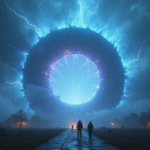
"Three wheel-shaped objects appeared in the southern sky at midday, spinning rapidly and emitting five-colored lights. They remained visible for the time it takes to eat a meal, then suddenly vanished."
Cultural Context
Several important factors shaped how these phenomena were recorded and interpreted:
- Astronomical Expertise - The Joseon Dynasty maintained a Bureau of Astronomy (Gwansanggam/관상감) with professional astronomers who systematically observed celestial events.
- Political Significance - Unusual celestial events were interpreted as portents reflecting heaven's judgment on the ruler. King Gwanghaegun was particularly sensitive to these, as his legitimacy was questioned.
- Neo-Confucian Worldview - The dominant philosophy interpreted natural phenomena as expressions of cosmic principles rather than supernatural events.
- Turbulent Era - The sightings occurred shortly after the devastating Japanese invasions (1592-1598) and during increasing tensions with the rising Manchu power to the north.
The Five Elements Theory Connection
Many of the accounts specifically mention five colors (red, blue, white, black, and yellow), corresponding to the Five Elements theory central to East Asian cosmology. Court astronomers classified the phenomena using this traditional framework, describing objects as exhibiting the "essence of fire" or "water energy."
The Wider Pattern of Sightings
What makes this period particularly interesting is the clustering of reports:
- At least 12 distinct aerial phenomena were recorded between 1609-1618
- Multiple witnesses were often present, including the king himself
- Reports came from different regions of Korea, not just the capital
- Similar phenomena were noted in Chinese records of the same period, particularly in the northern provinces bordering Korea
Modern Interpretations
Scholars have proposed several explanations for these historical accounts:
- Atmospheric Optical Phenomena - Sundogs, light pillars, or unusual cloud formations
- Astronomical Events - Cometary fragments, meteors, or unusual planetary conjunctions
- Geomagnetic Events - Korea lies within an area that occasionally experiences strong geomagnetic activity
- Political Fabrication - Some suggest reports may have been exaggerated to undermine Gwanghaegun's rule
- Early Fireworks or Lanterns - Though less likely, some suggest these might have been human-made aerial devices
Scientific Value of Korean Records
Korean astronomical records are particularly valuable to modern researchers because:
- The Joseon Dynasty maintained systematic observation protocols
- Records specified precise times, directions, and visual characteristics
- Observations were made by trained court astronomers using instruments
- Korea's isolated position meant observations weren't influenced by European or Middle Eastern interpretations
Questions for Discussion
- How do these Korean accounts compare with European reports from the same early 17th century period, like the Basel incident?
- What significance should we attach to the similar reports in Chinese records from the same time?
- How might the Neo-Confucian philosophy have influenced the interpretation of these phenomena compared to Christian interpretations in Europe?
- What natural phenomena might specifically create the "wheel-shaped" or "shuttle-like" objects described in the records?
- Could political tensions of the era have influenced how these phenomena were recorded and interpreted?
I find these Korean accounts particularly valuable because they come from a sophisticated astronomical tradition that developed independently from Western science, offering a different perspective on similar phenomena.