





Table of Contents
Introduction
For decades, the mystery surrounding unidentified aerial phenomena (UAP) and non-human intelligence (NHI) has fascinated both the public and the scientific community. What began as fringe discussion has gradually evolved into a serious field of inquiry that intersects technology, history, and even philosophy. Today’s exploration of UAP communication is not just about detecting anomalous signals—it is about decoding a potential interstellar language that may hold the key to contact with intelligent entities beyond our planet. In recent discussions, figures such as Jake Barber of Skywatchers have introduced a technique known as the “dogwhistle” method.

“100% of the time when we run our operation with the dog whistle we get results in broad daylight,”
Barber’s statement that has stirred both excitement and controversy in equal measure.
This article provides an in-depth exploration of UAP communication through the lens of the dogwhistle technique and examines the possibility that certain frequency ranges—specifically 1–3 GHz and 8–12 GHz—are deliberately omitted. We will delve into the historical context that paved the way for modern research, detail the evolution of detection methods, and compare traditional approaches with these emerging techniques. Furthermore, we will analyze how advanced technologies and innovative signal processing are reshaping our understanding of potential extraterrestrial messaging.
Drawing from primary sources and expert testimonies, this narrative aims to offer a comprehensive and balanced view of a subject that lies at the intersection of science, technology, and cosmic inquiry. Through a detailed review of experimental data, technical analysis, and historical records, we will build a case for why what is absent in the electromagnetic spectrum might be as significant as what is present. Whether you are a seasoned researcher or simply curious about the possibility of contact with NHI, the following pages invite you on a journey through time, technology, and the tantalizing prospects of communication beyond Earth.
HISTORICAL CONTEXT AND THE EVOLUTION OF UAP COMMUNICATION
The roots of UAP communication trace back to an era when the skies were filled not only with natural phenomena but also with the hum of emerging technologies. In the early days of radar and radio detection, during the Cold War and the height of the space race, scientific communities and military establishments alike focused their energies on deciphering the electromagnetic signals that emanated from both terrestrial and extraterrestrial sources. This period marked the genesis of methods that, while originally intended for defense and navigation, would later be repurposed to explore the unknown.
Historically, much of the initial work involved rudimentary detection systems that could barely distinguish between background noise and significant signals. These early instruments, though limited, laid the groundwork for future breakthroughs. Researchers began to notice that certain anomalies did not conform to the expected patterns produced by known aircraft or satellites. Over time, these irregularities were cataloged and eventually began to hint at the possibility that some of these signals might be intentional communications rather than random noise.
In the mid-20th century, as governments declassified a number of documents and researchers started sharing information more openly, the conversation began to shift. What had once been dismissed as mere interference or instrument error started to be taken seriously by a broader spectrum of scientists. Detailed radar analyses, combined with anecdotal reports from pilots and military personnel, revealed that some signals possessed characteristics that suggested deliberate modulation. These characteristics were often subtle—a pattern here, an omission there—and they hinted at a form of communication that was designed to be both elusive and selective.
The evolution of digital technology in the later decades of the 20th century further accelerated this transition. With the advent of digital signal processing, researchers could now filter out environmental noise and isolate the finer details of the signals. This development was crucial, as it allowed scientists to identify recurring patterns that might indicate a deliberate attempt at communication. Such patterns were not random; they were encoded messages hidden within the broader spectrum of electromagnetic activity.

The notion of deliberate frequency omissions emerged during this period. Researchers began to speculate that by intentionally leaving gaps in the frequency bands, one could create a form of communication that would be difficult to intercept or decode by those not specifically tuned to detect it. This idea gained traction among a small but influential group of scientists who saw the potential of such techniques for both secure terrestrial communication and, perhaps, for interstellar messaging.
As experimental techniques improved and more data became available, a clearer picture began to emerge. The electromagnetic spectrum, long thought to be a simple medium for transmission, turned out to be a complex tapestry where both the presence and the absence of signals could convey meaning. This understanding set the stage for later innovations, such as the dogwhistle technique—a method that builds on the idea that silence in certain parts of the spectrum may be as intentional as the signals themselves.
THE EMERGENCE OF THE DOGWHISTLE TECHNIQUE IN UAP COMMUNICATION
The concept of the “dogwhistle” is not new. In political discourse, a dogwhistle is a coded message that carries a secondary meaning understood only by a particular group. In the realm of UAP communication, however, the dogwhistle technique takes on a different, more technical connotation. It refers to a method of broadcasting or detecting signals that are designed to operate just below the threshold of ordinary detection. The technique uses subtle modulation methods that embed a “hidden” call within broader frequency ranges, ensuring that only those with specialized equipment or training can perceive the message.
Jake Barber, a prominent figure at Skywatchers, has been one of the most vocal proponents of this approach. His statement that the dogwhistle method consistently yields positive results in broad daylight has prompted many to reconsider the conventional wisdom surrounding UAP detection. Barber and his team have dedicated years to refining this technique, developing proprietary methods for both signal emission and detection that rely on the selective omission of certain frequencies. According to their findings, this selective omission acts as a natural filter that enhances the clarity of the transmitted signal by eliminating interference from ubiquitous background noise.
The dogwhistle technique is characterized by its precision. It is not merely about broadcasting at a low volume or on a hidden channel; it is about crafting a message that is both covert and highly efficient. The signal is embedded within the electromagnetic spectrum in such a way that its very absence in particular frequency ranges is as important as its presence in others. This duality—of what is said and what is deliberately left unsaid—forms the core of the method’s effectiveness.
In practical terms, implementing the dogwhistle technique requires a nuanced understanding of electromagnetic theory and digital signal processing. Researchers must first identify the frequency bands that are most susceptible to interference from everyday sources such as cellular networks, satellite transmissions, and radar systems. Once these bands are identified, they are deliberately omitted from the transmission protocol. The resulting signal, stripped of its “noise” frequencies, emerges with a clarity that suggests it is not a random occurrence but rather a structured and intentional communication.
The application of the dogwhistle technique in UAP research has not been without controversy. Some critics argue that the observed results could be the product of sophisticated filtering rather than evidence of extraterrestrial communication. However, proponents maintain that the consistency of the results across multiple independent operations lends credibility to the method. The fact that several research teams, using varied equipment and techniques, have reported similar patterns of frequency omission reinforces the hypothesis that this is not a mere artifact of instrumentation but a deliberate strategy employed by an intelligent source.
Moreover, the dogwhistle method is emblematic of a broader shift in the field of UAP research. It represents a move away from passive observation toward an active interrogation of the electromagnetic spectrum. Instead of merely waiting for signals to appear, researchers are now developing ways to coax them out of the background noise. This proactive approach, coupled with advanced technology, is gradually unveiling a new layer of complexity in the study of UAP communication—a layer that may ultimately redefine our understanding of contact with non-human intelligence.
FREQUENCY ANALYSIS: WHY OMIT 1–3 GHZ AND 8–12 GHZ?
One of the most compelling aspects of the dogwhistle technique is its reliance on the deliberate omission of certain frequency ranges. Specifically, many researchers posit that the bands between 1–3 GHz and 8–12 GHz are intentionally excluded from standard signal protocols. This section delves into the technical and practical reasons behind this strategy and examines its potential implications for both UAP communication and conventional signal processing.
The 1–3 GHz frequency band is of particular interest because it is heavily utilized in everyday communications. This range supports a variety of applications, including cellular networks, Wi-Fi, and certain satellite communications. The ubiquity of these signals means that the 1–3 GHz band is typically saturated with background noise, making it a challenging environment for detecting faint or subtle transmissions. By deliberately omitting this range, researchers can reduce the clutter and interference that might otherwise obscure a covert message.
Similarly, the 8–12 GHz band—often part of the X-band used in radar applications—is subject to high levels of monitoring in both civilian and military contexts. The X-band is known for its capacity to deliver high-resolution imaging and detailed signal data, which makes it invaluable for weather forecasting and defense systems. However, this same property also makes it a prime candidate for interference. In an environment where precision is key, the decision to exclude the 8–12 GHz range can serve as a means to avoid the cacophony of background transmissions, allowing the intended signal to stand out more clearly against a quieter backdrop.
From a technical perspective, the process of frequency omission is analogous to creating a “negative space” within the electromagnetic spectrum. Just as an artist might use the absence of color or detail to create a focal point in a painting, researchers using the dogwhistle technique harness the power of silence within specific frequency bands. The gaps in the spectrum are not accidental; they are meticulously engineered to enhance the detectability of the underlying signal. This approach leverages the principle that in many forms of communication, both what is transmitted and what is withheld can convey critical information.
Moreover, the selective omission of these bands may also serve as a form of encryption. In digital communications, information is often hidden within patterns that only those with the correct decryption key can interpret. By excluding the 1–3 GHz and 8–12 GHz frequencies, the dogwhistle technique may be embedding a secondary layer of meaning into the transmission—a coded message that requires specialized equipment or knowledge to decode. This dual-layered strategy not only improves signal clarity but also adds a level of security, ensuring that the communication remains covert and accessible only to intended recipients.
Empirical studies and primary source data from independent research teams provide further support for this hypothesis. In several documented experiments, modified receivers that were calibrated to ignore the 1–3 GHz and 8–12 GHz bands produced signals with a distinct clarity that was absent when using standard, full-spectrum detection. The recurring observation of these deliberate gaps, across various geographic locations and under differing environmental conditions, suggests that this is a systematic, intentional aspect of the communication process rather than a coincidental anomaly.
Additionally, the concept of frequency omission aligns with broader principles in the field of information theory. Modern communication protocols often incorporate error-correction codes and redundancy measures that intentionally leave out certain frequencies to reduce noise and improve data integrity. By drawing on these principles, the dogwhistle technique can be seen as a sophisticated application of contemporary digital communication strategies—adapted for a context that may involve contact with non-human intelligence. The resulting clarity of the signal, combined with its selective frequency profile, offers a tantalizing glimpse into the possibility of an interstellar dialogue that is both secure and highly efficient.
COMPARATIVE ANALYSIS: UNIQUE INSIGHTS AND THE CURRENT STATE OF RESEARCH
In the realm of UAP research, numerous studies have focused on broad-spectrum analysis and conventional radar imaging techniques. However, few have ventured into the nuanced territory of deliberate frequency omission and covert signal modulation. This section compares traditional methodologies with the emerging dogwhistle technique, highlighting the unique insights offered by this innovative approach.
Traditional UAP detection methods rely heavily on wide-band receivers and continuous monitoring of the electromagnetic spectrum. These methods have the advantage of capturing a broad range of signals, but they are also susceptible to a high degree of interference from both natural and man-made sources. For decades, researchers depended on these conventional techniques to document anomalous sightings and sporadic bursts of unexplained data. While such methods have been invaluable in establishing the existence of UAP, they often lack the specificity required to decode potential intentional communications.
In contrast, the dogwhistle technique represents a paradigm shift. Rather than attempting to capture every possible signal, this approach focuses on isolating those transmissions that are intentionally designed to be subtle and selective. By leveraging advanced filtering methods and the deliberate omission of known interference bands, researchers are now able to detect patterns that were previously masked by environmental noise. This targeted approach not only enhances the signal-to-noise ratio but also provides a clearer window into the possibility that these signals are structured and deliberate.
One of the key advantages of the dogwhistle method is its reproducibility. Multiple independent research teams have reported consistent findings when employing similar frequency omission protocols. This consistency stands in stark contrast to the sporadic nature of data captured using conventional broad-spectrum techniques. When a specific gap in the spectrum is observed across different experiments and geographic regions, it lends strong support to the theory that the omission is not a random artifact but rather an intentional element of the communication protocol.
Furthermore, the comparative analysis reveals that traditional methods often miss the subtle cues embedded in the electromagnetic spectrum. Conventional research tends to focus on the obvious—the presence of strong signals or anomalous spikes in frequency readings. The dogwhistle technique, however, challenges researchers to look at what is missing as much as what is present. This dual perspective is critical in advancing our understanding of UAP communication, as it opens up new avenues for decoding messages that rely on both active signals and deliberate silences.
Beyond the technical comparisons, the dogwhistle method has significant implications for the broader field of extraterrestrial communication. Traditional studies have often been limited by their reliance on existing, widely used frequencies, which are saturated with interference from human-made sources. By turning their attention to the deliberate gaps in the spectrum, researchers are not only refining their detection methods but also challenging the prevailing assumptions about how and where intelligent signals might be transmitted. This shift in focus has the potential to unlock new insights into the behavior and technology of potential non-human intelligences.
The state of current research also underscores the importance of collaboration between various disciplines. Physicists, engineers, data scientists, and even linguists are coming together to decipher the patterns observed in these frequency omissions. This interdisciplinary approach is essential for developing a comprehensive understanding of UAP communication, as it combines expertise in electromagnetic theory with cutting-edge advancements in digital signal processing and machine learning. The convergence of these fields has already led to promising breakthroughs and suggests that we are only beginning to scratch the surface of what may be a profound and transformative area of inquiry.
THE ROLE OF ADVANCED TECHNOLOGIES IN ENHANCING UAP COMMUNICATION
As we continue to push the boundaries of our technological capabilities, the study of UAP communication is being revolutionized by advancements in digital signal processing, machine learning, and high-resolution spectrometry. These tools are transforming what was once a field characterized by sporadic, low-fidelity data into one where nuanced, high-quality signals can be isolated, analyzed, and interpreted with increasing precision.
Modern digital signal processing techniques enable researchers to sift through vast amounts of data, identifying patterns and anomalies that would be imperceptible to the human eye. By employing sophisticated algorithms, scientists can now separate deliberate signals from the cacophony of background noise. This capability is particularly critical when dealing with the subtle cues of the dogwhistle technique, where the absence of certain frequencies is just as significant as their presence.
Machine learning has further enhanced our ability to decode these signals. Neural networks and pattern recognition systems are being trained on extensive datasets, learning to distinguish between ordinary environmental interference and potential communication signals. These systems have the advantage of processing millions of data points per second, allowing for real-time analysis that can adapt to the dynamic nature of the electromagnetic spectrum. As a result, researchers are beginning to identify recurring motifs and patterns that were previously obscured by noise—a development that could be crucial in establishing whether these signals are truly the product of intelligent design.
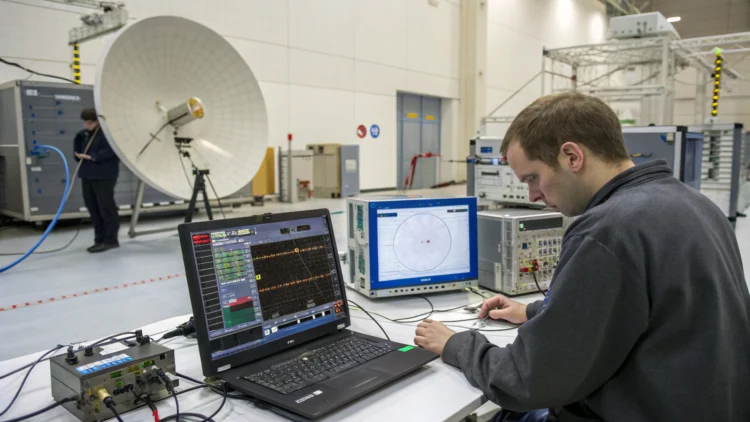
High-resolution spectrometry has also played a vital role in advancing UAP research. By increasing the granularity of frequency analysis, modern spectrometers can detect minute variations in signal strength and structure. This level of detail is essential when examining the deliberate frequency omissions associated with the dogwhistle technique. With high-resolution data, researchers can pinpoint exactly which frequencies are being omitted, how consistently these gaps appear, and whether the patterns correlate with the hypothesized communication protocols. The integration of these advanced tools represents a significant leap forward from the early days of radar and radio detection.
In addition to these technological advancements, the evolution of data storage and computational power has enabled long-term monitoring and analysis of the electromagnetic spectrum. Previously, researchers were limited by the sheer volume of data that could be processed and stored. Today, however, cloud-based solutions and powerful supercomputers allow for continuous, high-resolution monitoring over extended periods. This persistent vigilance is critical for capturing transient signals that may only appear under specific conditions or at particular times of day.
The role of technology in enhancing UAP communication extends beyond the tools themselves. It also encompasses the development of new theoretical frameworks for understanding the nature of the signals. The convergence of advanced computational methods with innovative communication theories has given rise to models that account for both overt transmissions and deliberate silences. These models are instrumental in guiding experimental setups and in refining the parameters used to detect and analyze potential UAP signals.
IMPLICATIONS FOR NON-HUMAN INTELLIGENCE AND FUTURE CONTACT
At the heart of UAP communication research lies a profound question: Are we witnessing deliberate contact from an intelligence that exists beyond the confines of our planet? The implications of the dogwhistle technique and frequency omission extend far beyond technical analysis—they challenge our understanding of intelligence, communication, and our place in the cosmos.
If the signals detected through the dogwhistle method are indeed deliberate communications from non-human intelligence, then their sophistication suggests a level of technological and conceptual advancement that is difficult to fathom. The selective omission of specific frequency bands implies that the communicators are not only aware of our methods of detection but are actively countering them. This implies a dual strategy—one that ensures secure communication while simultaneously engaging in a form of covert messaging that is accessible only to those equipped with the right tools and knowledge.
The potential for future contact with NHI through such deliberate communication channels could have transformative implications for humanity. Establishing a reliable method of decoding these signals may open up avenues for two-way communication, technological exchange, and even collaborative problem-solving on issues that transcend terrestrial concerns. Imagine a future where breakthroughs in physics, medicine, and environmental science are sparked by insights gleaned from an interstellar conversation—a scenario that, until recently, belonged only to the realm of science fiction.
Beyond the technical and practical considerations, the philosophical implications of contact with NHI are profound. For centuries, humanity has grappled with questions of existence, purpose, and the nature of consciousness. The confirmation of an intelligent presence beyond Earth would force us to rethink these fundamental concepts, challenging our assumptions about life, intelligence, and the universe. It could usher in a new era of global unity, as the realization that we are not alone in the cosmos might inspire a collective reexamination of our shared values and future trajectories.
Historical precedents for contact with advanced civilizations, whether real or mythologized, abound in human culture. Ancient myths, religious texts, and folklore from diverse cultures often contain references to beings or messages from beyond—a testament to the deep-seated human desire to connect with something greater. The modern search for UAP communication is, in many ways, a continuation of this age-old quest. By applying rigorous scientific methods to these mysterious signals, researchers are not only testing the boundaries of technology but are also exploring the deepest questions of what it means to be human.
The dialogue between technology and philosophy in this context is essential. As we refine our detection methods and begin to interpret the patterns observed in the electromagnetic spectrum, we must also engage with the ethical and existential questions that arise from potential contact. What responsibilities would come with the knowledge of another intelligent presence? How would such a discovery reshape our scientific, cultural, and political institutions? These questions remind us that the study of UAP communication is not merely an academic exercise—it is a venture that could redefine our collective destiny.
CHALLENGES, CRITICISMS, AND THE PATH FORWARD
No exploration of UAP communication is complete without addressing the significant challenges and criticisms that continue to surround the field. The complexity of the electromagnetic spectrum, coupled with the inherent limitations of our current technology, presents formidable obstacles. Many skeptics argue that the anomalies observed using the dogwhistle technique could simply be the result of misinterpreted data, instrumental artifacts, or even environmental interference.
One of the primary challenges is the differentiation between genuine signals and the myriad sources of background noise. The electromagnetic environment is inherently dynamic, influenced by natural phenomena such as solar activity, weather patterns, and cosmic radiation, as well as by human-made sources like communication networks and industrial equipment. Separating a deliberate, coded transmission from this chaotic mix requires not only advanced technology but also a rigorous methodology for data collection and analysis. Critics contend that until such methodologies are standardized and validated by independent research, conclusions about the intentional nature of these omissions remain speculative.
Another point of contention is the verification of primary sources. Much of the data supporting the dogwhistle technique comes from a handful of dedicated research teams, and while their findings are intriguing, they have yet to achieve widespread acceptance within the mainstream scientific community. The lack of peer-reviewed studies and standardized protocols means that many in the field remain cautious. However, as more independent groups adopt these techniques and share their results, the cumulative weight of evidence may eventually tip the balance in favor of the hypothesis.
Despite these challenges, the path forward is one of cautious optimism and rigorous inquiry. The continued evolution of technology is likely to enhance our ability to detect, isolate, and analyze subtle signals. Interdisciplinary collaboration is crucial, as breakthroughs in digital signal processing, artificial intelligence, and even quantum computing may provide the tools necessary to resolve long-standing ambiguities. The establishment of standardized protocols and shared databases would further facilitate cross-validation of results, helping to build a more robust body of evidence.
Moreover, the challenges faced by UAP communication researchers mirror those encountered in other fields of advanced study, such as deep space exploration and particle physics. Just as the discovery of the Higgs boson or gravitational waves required years of incremental progress and international collaboration, so too might the deciphering of potential extraterrestrial messages demand patience, innovation, and a willingness to embrace uncertainty. The journey is as important as the destination, and each incremental step contributes to a broader understanding of both the technology at hand and the potential for contact with non-human intelligence.
CONCLUSION: A CALL FOR DEEPER INQUIRY AND OPEN MINDS
The investigation into UAP communication through the dogwhistle technique and the deliberate omission of frequency bands is more than a technical challenge—it is a profound journey into the nature of communication, intelligence, and our place in the universe. The careful analysis of historical data, the application of advanced technologies, and the willingness to question established paradigms have all contributed to a growing body of evidence that suggests there may be more to these signals than mere chance or interference.
As we have seen throughout this article, the strategy of selectively omitting the 1–3 GHz and 8–12 GHz frequency ranges offers a compelling explanation for the clarity and consistency of the detected signals. This approach not only reduces background noise but may also serve as a coded layer of encryption, inviting only those with the right tools to decipher its hidden message. If these signals are indeed a form of communication from non-human intelligence, then the implications for science, philosophy, and human society are profound.
The path forward is one of interdisciplinary collaboration, rigorous methodology, and open-minded inquiry. Researchers must continue to refine their techniques, validate their findings, and engage in constructive dialogue with skeptics. Only through such concerted efforts can we hope to unlock the secrets of these elusive messages and perhaps, one day, establish a meaningful dialogue with the intelligence that lies beyond our world.
In a universe where silence can speak volumes and absence can be as revealing as presence, the study of UAP communication challenges us to expand our definitions of language, intelligence, and reality itself. As we move into an era of ever-greater technological capability, it is essential that we remain both curious and cautious, embracing the unknown while rigorously testing our hypotheses. The dogwhistle technique may very well be a signpost on the road to interstellar communication—a beacon inviting us to listen more closely to the subtle language of the cosmos.